


Trending Now
 Pune Metro Line 3 targets September-end opening with 17 stations on Hinjawadi–Shivajinagar corridor
 Jupiter Wagons Limited forms New Subsidiary to expand Railway Mobility Business
 Five major firms bid for ₹1,878 crore Underground Section of Lucknow Metro Phase 1B Project
 DMRC focuses on Technology, Financial Sustainability and Global Expansion: Dr. Vikas Kumar
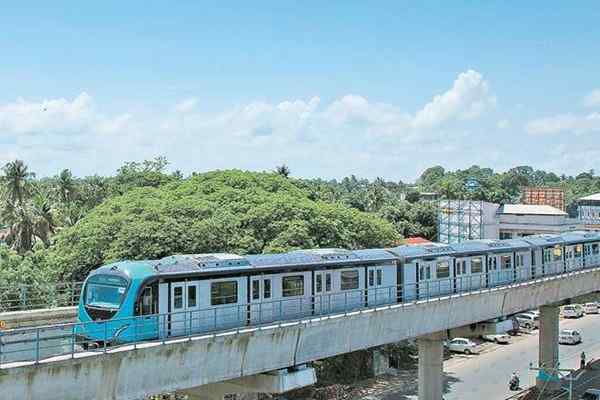 DMRC seeks opportunity to take up operation and maintenance of the Kochi Metro Rail network
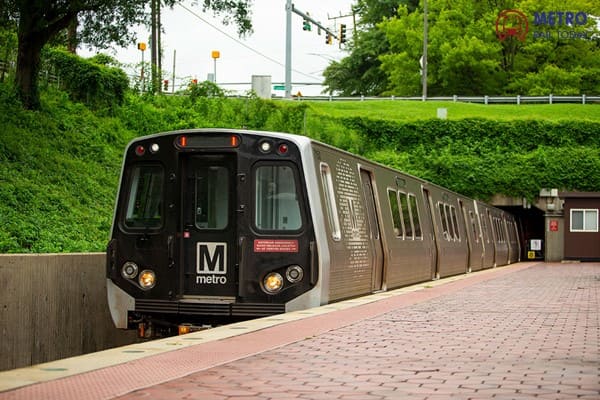 New Zealand opens country's first Underground City Rail Link in Auckland
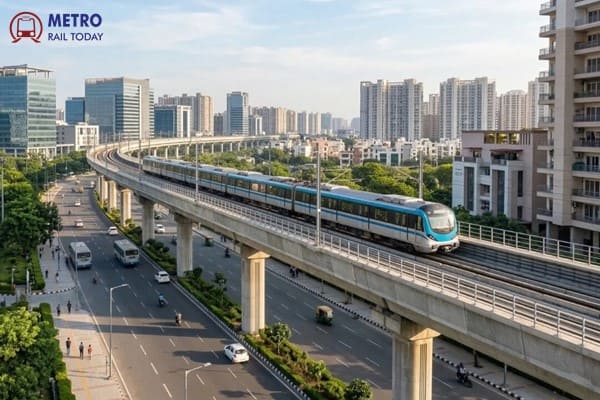 Ireland approves construction of €15.7 billion Dublin MetroLink, tender to be launched soon
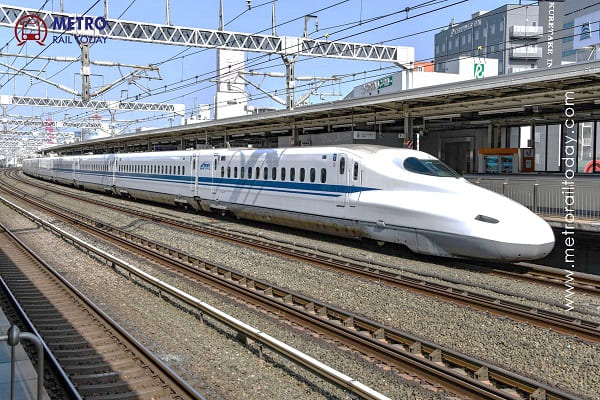 India's Mumbai-Ahmedabad Bullet Train project completes construction of over 365 km Viaduct
 Metro Rail Expansion in India: 1,155 Km Network Across 26 Cities and the Road Ahead
 Mumbai BKC Pod Taxi project faces Architects’ concerns over cost, capacity and environment
Chandigarh Metro project faces potential delay due to land acquisition issues
MRT Online Desk
Posted on: 2024-01-08 10:00:00
Viewer: 2,767
Comments: 0
Country: India
City: Chandigarh
Chandigarh, India (Metro Rail Today): In a setback to Chandigarh's ambitious Metro project, the initiative is likely to face delays, as the Punjab government has expressed its inability to provide the required 30 acres in Sector 87 for the construction of one of the depots, as per the Alternative Analysis Report (AAR) prepared by Rail India Technical and Economic Services (RITES).
Land Acquisition Challenges
The UT administration aimed to kickstart the Metro project by April this year, but the unavailability of land in Sector 87, Mohali, poses a significant hurdle. The AAR outlines the need for two depots of 30 acres each, one in Mohali’s Sector 87 and another in New Chandigarh (Mullanpur). However, the Punjab government, citing the high cost of land in Sector 87, proposed constructing one depot in Chandigarh instead of Mohali.
Haryana's Cooperation and Concerns
On a positive note, Haryana has committed to constructing one depot in Sector 27, Panchkula, and has already submitted a proposal to the UT administration. This cooperation contrasts with Punjab's delay, leaving the UT administration concerned about the project's Detailed Project Report (DPR), which is crucial for obtaining central government approval.
Metro Network Configuration Debate
The delay in land allocation has triggered discussions on the configuration of the Metro network. The Unified Metro Transportation Authority (UMTA) suggested writing to the central government to decide whether the project should have an elevated or underground network. The decision, however, awaits the completion of the DPR.
Elevated vs. Underground Network Dilemma
The debate over an elevated or underground network hinges on factors like the impact on Chandigarh's heritage and aesthetic appeal and the substantial cost difference. An elevated Metro network may impact the city's heritage, while underground tracks could escalate project costs by over 70%.
In a recent meeting, the Chandigarh Heritage Conservation Committee (CHCC) sub-panel advocated for an entirely underground Metro project, and these recommendations will be forwarded to the Union Ministry of Housing and Urban Affairs (MoHUA).
Phase-wise Development and Cost Implications
The Alignment Option Report, prepared by RITES, outlines three corridors in Phase 1, covering Chandigarh, Mohali, and Panchkula. The corridor along Madhya Marg, part of Chandigarh's heritage sectors (1 to 30), is planned to be entirely elevated, while the other two will have a mix of elevated and underground sections.
For Phase 2 in Mohali and Panchkula, a predominantly elevated network is envisioned. However, the choice of underground corridors could escalate expenditures by nearly ₹8,000 crore, bringing the total project cost to around ₹19,000 crore.
The fate of Chandigarh's Metro project hangs in the balance as stakeholders navigate through land acquisition challenges, network configuration debates, and funding considerations. The city eagerly awaits a resolution to ensure the timely and efficient implementation of this transformative transportation initiative.

MRT Online Desk
Metro Rail Today is an authentic and global news provider for the Rail & Metro industry from and around the world.