

Trending Now
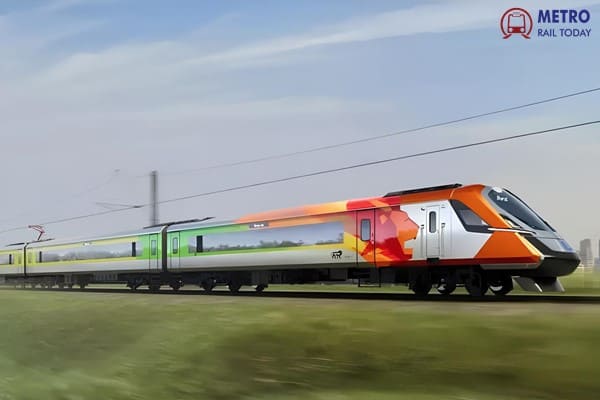 KINET Railway's 24-coach Vande Bharat Sleeper Train Prototype may miss March 2027 deadline
 Siemens Mobility bags two Signalling contracts for Taoyuan Metro Extensions in Taiwan
 Bi-RIDE issues ₹1,017 crore Global Hybrid Signalling Tender for Bengaluru Suburban Rail Line 2 and 4
 India to host First Rail Chamber Day & Railway Leadership Summit 2026 in New Delhi on December 19
 L&T awarded ₹1,234 Crore Civil Contract for Noida Metro Aqua Line Extension Project
 Alstom signs €460 million contract to supply additional Driverless Trains for Riyadh Metro
 First Tunnel Boring Machine arrives to construct Pune Metro's Swargate–Katraj Extension Line
 Alstom commences manufacturing of Rolling Stock Trains for Chennai Metro corridors 3 and 5
- The Not-So-Far South: Metro Manila LRT-1 Cavite Extension Timeline
 Bangladesh signs four major contracts for Depot and Civil Works on Dhaka Metro Lines 1 and 5
KINET Railway's 24-coach Vande Bharat Sleeper Train Prototype may miss March 2027 deadline
MRT Online Desk
Posted on: 2026-11-10 16:51:00
Viewer: 30
Comments: 0
Country: India
City: New Delhi
New Delhi, India (Rail & Metro Today): The first Russian-Indian Vande Bharat sleeper train prototype being developed for Indian Railways may miss its latest scheduled rollout deadline of March 2027, with unresolved technical issues and pending manufacturing approvals reportedly delaying progress.
The prototype is being developed by Kinet Railway Solutions, a consortium comprising Russia's Transmashholding (TMH) and India's Rail Vikas Nigam Limited (RVNL). According to official sources cited in reports, differences over several technical specifications and outstanding clearances are affecting the manufacturing schedule.
Indian Railways awarded Kinet a contract worth approximately ₹14,400 crore in March 2023 for the manufacture of 120 Vande Bharat sleeper trainsets, initially comprising 16 coaches each. The order was subsequently amended in 2024 to increase the configuration to 24 coaches per trainset.
A separate Indian joint venture between Titagarh Rail Systems and Bharat Heavy Electricals Limited (BHEL) was awarded a contract for another 80 sleeper trainsets at a reported price of ₹120 crore per train.
Prototype Rollout Delayed Repeatedly
The Kinet project has faced multiple schedule revisions. Under the original agreement, the prototype was expected to roll out in June 2026. The deadline was later shifted to December 2026 and subsequently extended to March 2027.
In October 2026, Indian Railways reportedly cautioned the consortium that no further extensions would be granted and that contractual penalty provisions could be invoked if the latest deadline was not met.
The trains are being manufactured at the Marathwada Rail Coach Factory in Latur, Maharashtra. The delays have partly been attributed to the consortium's limited experience in passenger rolling stock manufacturing and the challenges involved in establishing the required production and technology-transfer arrangements.
Technical Differences Holding Up Manufacturing Approvals
Several technical issues reportedly remain unresolved between Kinet and Indian Railways. These include the design of traction motors, converters, ladders, berths and pantry arrangements.
Another point of difference concerns passenger amenities. Indian Railways reportedly wants four toilets in each coach instead of the three originally planned. While basic design approval has been obtained, final clearances required to proceed with manufacturing are still outstanding, according to the reports.
Kinet, however, disputes responsibility for the delays. A company official has reportedly attributed the schedule slippage to modifications introduced at later stages, including changes to the brake system configuration and standardisation of the driver display unit. The consortium maintains that these changes were beyond its control and does not expect to face penalties.
Technology Transfer and Sanctions-Related Challenges
Kinet Railway Solutions was established in 2023 to execute the sleeper train manufacturing programme through technology transfer and technical expertise from companies within the TMH group, including Metrowagonmash.
However, Metrowagonmash has been subject to US sanctions since May 2023 following Russia's invasion of Ukraine. The restrictions have reportedly created challenges in accessing suppliers and securing certain critical components, some of which are sourced from Europe. The programme also envisages training Indian technicians in Russia.
To address the sanctions-related concerns, Kinet's ownership structure was reorganised. Metrowagonmash's stake was reduced from 70% to 35%, while Locomotive Electric Systems, which is not subject to the same sanctions, increased its holding from 5% to 40%. RVNL retained its 40% stake.
Although the restructuring enabled Kinet to continue operating, supply-chain constraints and component availability have remained challenging.
Implications for India's Sleeper Vande Bharat Programme
The Vande Bharat sleeper train programme is an important part of Indian Railways' efforts to introduce modern, semi-high-speed overnight passenger services. The trains are intended to combine improved passenger comfort with contemporary onboard systems and upgraded amenities for long-distance travel.
The Kinet project is one of two major manufacturing programmes planned for the sleeper version of Vande Bharat. Any further delay could affect the intended production and deployment schedule, although the extent of the impact on the overall programme remains to be established.
With the March 2027 prototype deadline approaching, the resolution of outstanding technical differences, completion of manufacturing approvals and stabilisation of component supplies will be crucial to moving the project forward. The next phase will test the consortium's ability to meet Indian Railways' requirements while delivering the technology-transfer and manufacturing commitments under the contract.


MRT Online Desk
Metro Rail Today is an authentic and global news provider for the Rail & Metro industry from and around the world.