


Trending Now
 Ayesa India wins Design Consultancy Contract for Noida Metro Aqua Line Extension
 Vossloh Cogifer bags Track Infrastructure Contract for Delhi Metro Phase 4 Corridors
 Railway finalised revised alignment for ₹16,000-crore Pune–Nashik Semi High-Speed Rail Corridor
 India’s First High-Speed, Signalling-Integrated CMV launched for Namo Bharat RRTS Corridor
 TuTr Hyperloop secures First-Ever Order from Deendayal Port Authority
 BEML bags ₹157 Crore Order from Loram Rail for Switch Rail Grinding Machines
 MxV Rail and KRRI forge Global Research Alliance to accelerate Next-Generation Rail Technologies
 Uttarakhand seeks Pre-Feasibility Study for Meerut-Haridwar-Rishikesh RRTS Corridor
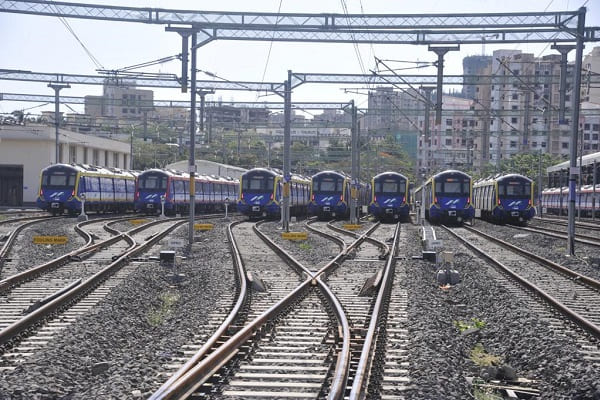 RIFTEK achieves major milestones in partnership with Indian Metro Rail Systems
 Egypt all set to launch Alexandria Metro Phase 1 by 2026
Mumbai Metro Line 3 gears up for Phase 1 Operation with arrival of Ninth Train
MRT Online Desk
Posted on: 2023-11-03 17:30:00
Viewer: 1,911
Comments: 0
Country: India
City: Mumbai
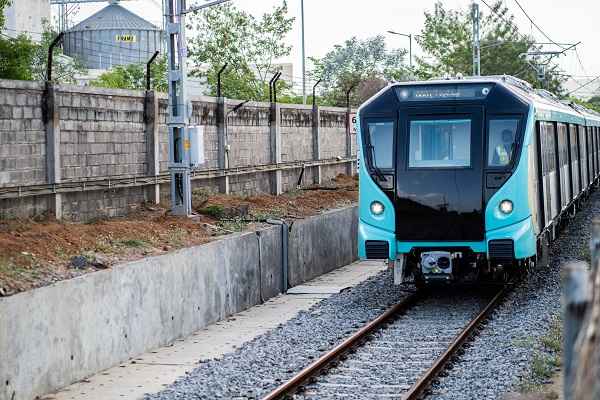
Mumbai, India (Metro Rail Today): The Mumbai Metro Line-3 project has received a significant boost with the arrival of the ninth train at the Aarey Car Depot in the city. With this addition, all nine trains required for the Phase I operation of the line, connecting Aarey and Bandra-Kurla Complex (BKC), are now ready for deployment.
The Mumbai Metro Rail Corporation (MMRC), responsible for executing Metro Line 3, awarded a contract valued at approximately 315 million Euros to the French manufacturer Alstom for the supply of 31 metro trainsets, each consisting of eight cars. The complete design and development of these metro cars are being undertaken at Alstom's engineering center in Bangalore, while the manufacturing of the 248 metro cars is being carried out at their state-of-the-art rolling stock manufacturing unit in Sri City, Chennai.
According to an MMRC official, trials for the metro trainsets are scheduled to commence around mid-November. Following the trials, the agency will seek the Research, Design, and Standards Organisation (RDSO) for further evaluations.
These Aqualine trainsets have been custom-designed for Mumbai and are capable of accommodating at least 3000 passengers on a single trip, aiming to ease the daily commute for Mumbaikars. What makes this project particularly noteworthy is that these trains will have 75% motorization, facilitating quick acceleration and deceleration, thereby enhancing operational efficiency.
Moreover, the trains will be equipped with a regenerative braking system, significantly reducing carbon emissions, contributing to a more sustainable and eco-friendly mode of transportation.
The 33.5-km long Line-3 corridor, running from Colaba to Bandra-SEEPZ, is Mumbai's first underground metro corridor. It will connect the bustling Cuffe Parade business district in the extreme south of the city to SEEPZ in the north-central area, with 26 underground and one at-grade station.
The Mumbai Metro Rail Corporation is now preparing for the trial run of the first phase between Aarey and BKC, set to commence in November. This follows the successful completion of the first long-distance trial from MIDC to Vidyanagari Metro station and back to SEEPZ, covering a total of 17 kilometers.
Upon the conclusion of the trial runs, MMRC will approach the Commissioner of Metro Rail Safety (CMRS) for network inspection. Commercial operations can begin once the CMRS grants the green signal.
An interesting aspect of Mumbai Metro Line 3 is that it is Mumbai's first Unattended Train Operation (UTO) project. In the initial phase, these trains will have a pilot onboard. However, MMRC intends to seek CMRS approval for the operation of the trains in driverless mode in the near future, reflecting the ongoing advancements in Mumbai's rapid transit system.

MRT Online Desk
Metro Rail Today is an authentic and global news provider for the Rail & Metro industry from and around the world.