


Trending Now
 K-RIDE to appoint Detailed Design Consultant for Bengaluru Suburban Rail Project
 Prime Minister Narendra Modi inaugurates first 15-km stretch of Chennai Metro Phase 2
 Karnataka proposes 270-km RRTS Network linking Bengaluru with Tumakuru, Mysuru and KGF
 Alstom and Vingroup sign MoU to supply up to 200 Metro Trains for Hanoi Urban Rail Projects
 Afcons Infrastructure wins ₹1,383 crore Civil Contract for Lucknow Metro Phase 1B Corridor
 GMRL issues ₹1,662 crore Civil Tender for Sector 9–Cyber City Gurugram Metro Rail Corridor
 Madrid unveils €1.57 billion Metro Rail Expansion Programme with 27.8 km of New Corridors
 Global Tender launched for Project Management Consultancy for Abu Dhabi Tram Line 4
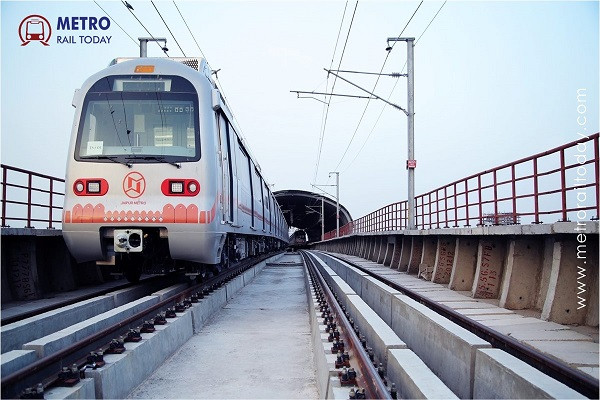 NV Dynamics awarded Noise and Vibration Study contract for Jaipur Metro Phase 2 Project
 Two global consortia bid for India’s 350 kmph High-Speed Rail Design consultancy contract
ADB approves ₹2,600 Crore Loan for Delhi–Meerut Namo Bharat RRTS Corridor
MRT Online Desk
Posted on: 2025-10-02 11:30:00
Viewer: 1,985
Comments: 0
Country: India
City: New Delhi
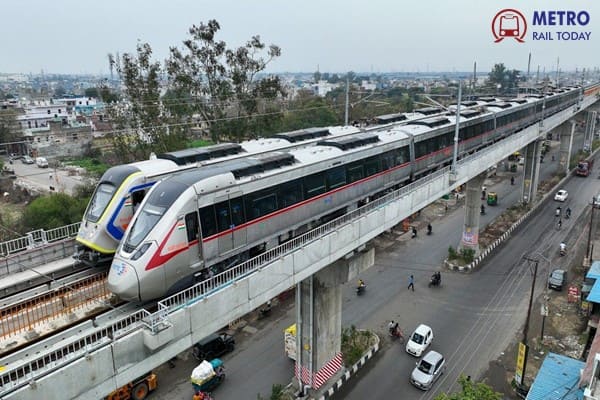
New Delhi, India (Metro Rail Today): The Asian Development Bank (ADB) has approved the fourth and final tranche of its loan commitment for the Delhi–Meerut Regional Rapid Transit System (RRTS), amounting to ₹2,600 crore (approx. $312 million). With this, ADB’s total financial support under the multi-tranche financing facility has reached ₹9,200 crore, according to an official statement released on Wednesday.
The Delhi–Meerut RRTS, India’s first high-speed regional transit corridor, is being developed by the National Capital Region Transport Corporation (NCRTC) at a total cost exceeding ₹30,000 crore. The project spans 82 km and is set to drastically reduce travel time between Delhi and Meerut — from over three hours to just one hour — using semi-high-speed Namo Bharat trains capable of reaching speeds of 160 km/h.
“The project marks a transformative step in India’s urban transport landscape,” said Mio Oka, ADB’s Country Director for India. “It not only enhances mobility but also promotes inclusive growth, environmental sustainability, and is expected to serve as a model for future regional rapid transit systems across India and the Asia-Pacific region.”
Current Status: Operational & Upcoming Sections
Out of the total 82 km, a 55-km stretch — connecting New Ashok Nagar in Delhi to Meerut South station — is already operational, with 11 modern stations in service.
Trial runs and final systems work are underway on:
-
The remaining 4.5 km stretch in Delhi (Sarai Kale Khan to New Ashok Nagar)
-
The final 23 km segment in Meerut (Meerut South to Modipuram)
NCRTC has successfully completed timetable trial runs of Namo Bharat trains across the entire corridor, ensuring readiness for seamless full-line operations in the near future.
“The speed, comfort, and reliability of RRTS will redefine intercity commuting in the National Capital Region,” said Mrs. Mamta Shah, MD & CEO of Urban Infra Group. “It represents a shift from traditional urban transit to a futuristic, multimodal ecosystem focused on connectivity, efficiency, and sustainability.”
Funding & Global Collaboration
ADB’s funding is supported by joint co-financing from the Asian Infrastructure Investment Bank (AIIB) and the Japan Fund for Prosperous and Resilient Asia and the Pacific, reflecting strong multilateral confidence in India’s transit ambitions.
This financial collaboration supports:
-
Civil construction
-
Rolling stock procurement
-
Advanced signalling systems
-
Station development and safety infrastructure
-
Multimodal integration with local transit networks
National and Regional Impact
The Delhi–Meerut RRTS is the first of eight planned RRTS corridors intended to connect key economic zones within the National Capital Region (NCR). The project is aligned with India’s Gati Shakti Mission and National Transit-Oriented Development (TOD) Policy, aimed at boosting sustainable urban growth, job creation, and real estate development along high-density transit corridors.
Encouraged by Delhi–Meerut’s progress, the government is preparing to green-light the next major RRTS line: the Delhi–Alwar corridor (106 km) via Gurugram, Shahjahanpur, Neemrana, and Behror. Union Housing Minister Manohar Lal Khattar confirmed that the proposal is awaiting Cabinet approval.
With ADB’s final tranche of funding secured and trial operations nearing completion, the Delhi–Meerut RRTS is poised to become a national benchmark for high-speed regional mobility, reducing emissions, enhancing economic integration, and setting the stage for the next generation of intercity rail infrastructure in India.


MRT Online Desk
Metro Rail Today is an authentic and global news provider for the Rail & Metro industry from and around the world.