


Trending Now
 RITES submits fresh DPR to UPMRC for ₹12,000 crore Prayagraj Metro Rail Project
 Paras Railtech wins ₹84.72 crore Ballastless Track Contract for Jaipur Metro Rail Project
 Indian Railways announces 3,548 Graduate-Level Vacancies under NTPC Recruitment 2026
 European Union sanctions €10 million to support extension of Hanoi Metro Line 3
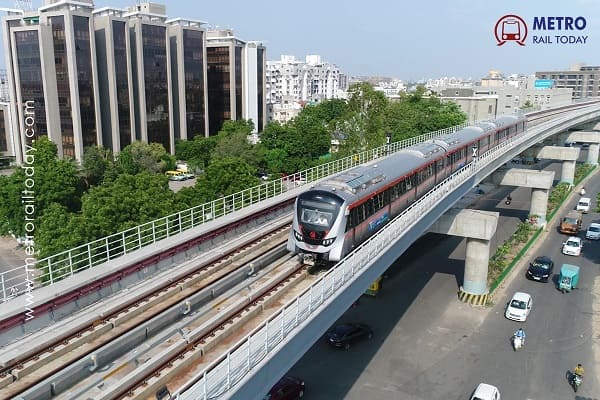 GMRC issues ₹683 crore Tender for construction of 8.68 km stretch for Ahmedabad Metro
- GMRC launches ₹439 crore Tender for construction of 5 New Ahmedabad Metro Stations
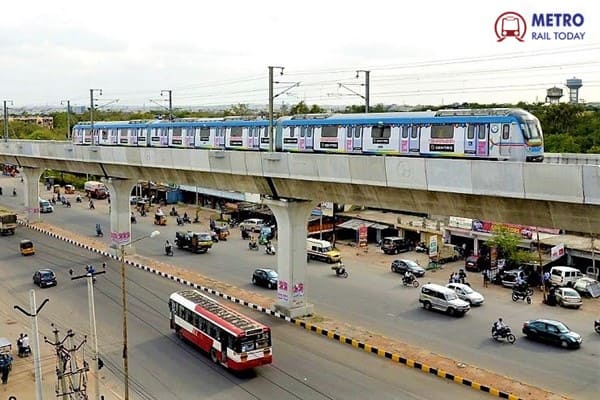 Global tender issued for procurement of 60 Rolling Stock coaches for Hyderabad Metro Rail Project
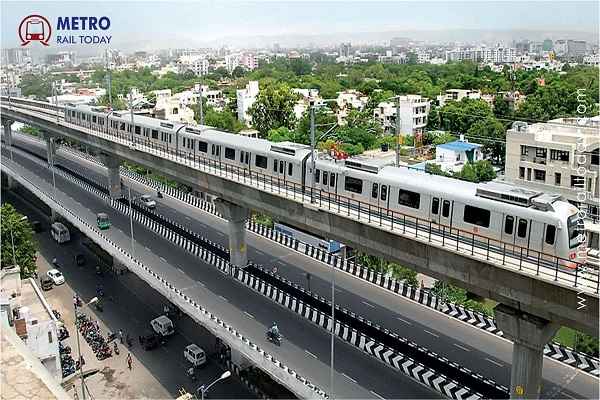 Global tender issued for procurement of 102 Rolling Stock coaches for Patna Metro Rail Project
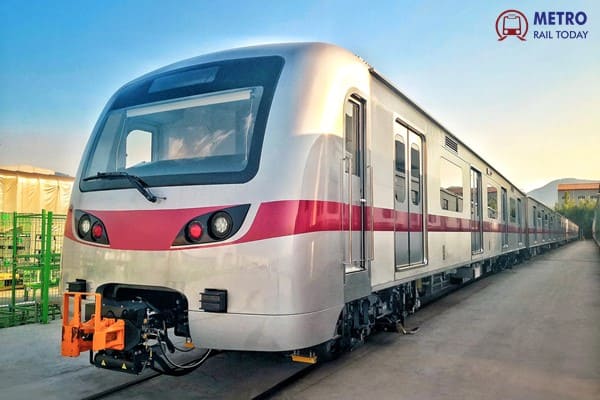 Gamuda awarded RM3.7 billion contract to build Keelung Mass Rapid Transit in Taiwan
 Maharashtra forms special Task Force to plan Rail, Metro and RRTS expansion
India’s Metro Network reaches 1,159 km; Government allocates ₹30,942 Crore for FY 2026–27
MRT Online Desk
Posted on: 2026-07-21 15:44:00
Viewer: 4,383
Comments: 0
Country: India
City: New Delhi
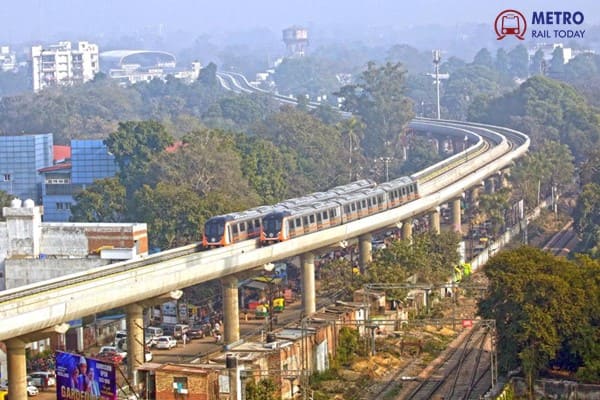
New Delhi, India (Metro Rail Today): The Ministry of Housing and Urban Affairs (MoHUA) has presented a comprehensive update on the status of metro rail projects across India during the Monsoon Session 2026 of Parliament, highlighting the country's rapid progress in expanding urban mass transit infrastructure. According to the ministry, India's operational metro and regional rapid transit network has now reached approximately 1,159 kilometres, including the Delhi–Meerut Namo Bharat (RRTS) corridor, serving 26 cities across the country.
The report provides an overview of physical progress on ongoing metro projects, financial assistance provided by the Central Government, and recently approved metro corridors, reaffirming the government's continued focus on strengthening sustainable urban mobility.
Metro Investment Continues to Rise
MoHUA informed Parliament that the Central Government has earmarked ₹30,942 crore for metro rail projects in the Union Budget for FY 2026–27, reflecting sustained investment in expanding urban transit systems nationwide.
The ministry noted that annual budgetary allocations for metro rail have steadily increased over the past four financial years, demonstrating the government's commitment to developing efficient, low-carbon public transport systems capable of supporting India's rapidly urbanising cities.
The funding is being utilised to support metro rail projects implemented by state governments and special purpose vehicles under various cost-sharing models approved by the Government of India.
Several Metro Projects Near Completion
Among the projects currently under implementation, Bengaluru Metro Phase 2 has emerged as one of the most advanced, achieving 95.70% physical progress as of June 2026.
Closely following is Pune Metro Line 3 (Maan–Hinjawadi–Shivajinagar) under the Public-Private Partnership (PPP) model, which has reached 95.73% completion.
Other projects recording significant progress include Delhi Metro Phase IV (Priority Corridors) at 82.20%, Kanpur Metro at 82%, Surat Metro at 81.10%, Bengaluru Metro Phase 2A & 2B at 72.75%, Agra Metro at 72%, Indore Metro at 64.15%, Bhopal Metro at 59.94%, Patna Metro at 53%, and Chennai Metro Phase II, which has achieved 54.62% physical progress.
Several recently approved projects, including Lucknow Metro Phase 1B, Noida Metro extensions, Jaipur Metro Phase II, Ahmedabad Metro Phase 2A & 2B, and Noida Sector 142–Botanical Garden, are currently in the preliminary implementation stage.
Overall, 30 metro projects covering approximately 886 kilometres are presently under various stages of construction across the country.
"India's metro rail ecosystem has evolved into one of the fastest-growing urban transit networks in the world. Sustained government investment, timely project approvals and strong execution capabilities are enabling cities to develop modern, efficient and environmentally sustainable public transport systems. As metro connectivity expands into more Tier-II and Tier-III cities, it will play a transformative role in reducing congestion, lowering emissions and improving the quality of urban life," said Mrs. Mamta Shah, MD & CEO of Urban Infra Group.
Major Metro Projects Approved Since 2024
The ministry also highlighted metro rail projects approved by the Government of India since January 2024.
These include Delhi Metro Phase IV (remaining corridors), Delhi Metro Phase V(A), the Rithala–Kundli Red Line extension, Bengaluru Metro Phase 3, Chennai Metro Phase II, Thane Integral Metro, Lucknow Metro Phase 1B, Pune Metro Phase 2, Pune Metro Line 4, Jaipur Metro Phase II, Jaipur Metro Phase 1D, Noida Metro extensions, and Ahmedabad Metro Phase 2A and 2B.
Collectively, these newly sanctioned projects represent 328.63 kilometres of additional metro network with a total approved investment of ₹1.59 lakh crore, underscoring the scale of India's urban transport expansion.
Among the largest investments are Chennai Metro Phase II, with an approved cost of ₹63,246 crore, Bengaluru Metro Phase 3 at ₹15,611 crore, Jaipur Metro Phase II at ₹13,037.66 crore, Delhi Metro Phase V(A) at ₹12,014.91 crore, and the Thane Integral Metro Rail Project valued at ₹12,200.10 crore.
Metro Expansion Driving Sustainable Urban Mobility
The latest parliamentary update highlights the remarkable pace at which India's metro infrastructure is expanding. Alongside new metro systems, projects such as the Delhi–Meerut Namo Bharat corridor are redefining regional connectivity by integrating high-speed commuter rail with urban transit networks.
As India's cities continue to grow, metro rail is expected to play an increasingly important role in reducing traffic congestion, lowering vehicular emissions and providing reliable, high-capacity public transportation.
With multiple corridors nearing completion and several new projects entering the implementation phase, India's urban rail network is poised for another significant leap over the coming years. The continued financial support from the Central Government, combined with coordinated efforts by state governments and implementing agencies, is expected to accelerate the delivery of world-class metro infrastructure and further strengthen sustainable urban mobility across the country.

MRT Online Desk
Metro Rail Today is an authentic and global news provider for the Rail & Metro industry from and around the world.