


Trending Now
 Three Global Firms bid for General Consultancy Contract of Lucknow Metro Phase 1B Project
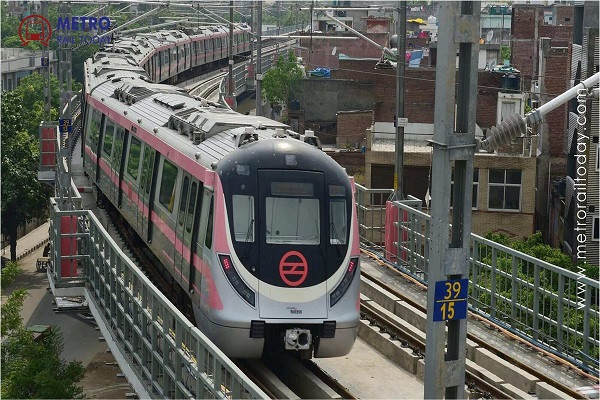 ETA Engg - PISCESIA JV awarded ₹225.87 crore E&M Contract for Delhi Metro Phase 5A Project
 Mumbai–Ahmedabad Bullet Train cost rises to ₹2.03 Lakh crore; ₹92,761 crore spent by March 2026
 Global Rail & Metro Infrastructure Market to Reach USD 462.13 Billion by 2033
 Malaysia awards RM2.69 billion contract for Penang Mutiara Line’s Cross-Sea LRT Extension
 Afcons Infrastructure wins ₹876.51 crore contract for Pune Metro Viaduct and Elevated Road Project
 SYSTRA–led JV wins ₹228.78 crore Design Consultancy Contract for two 350 kmph Bullet Train Corridors
 Paras Railtech wins ₹84.72 crore Ballastless Track Contract for Jaipur Metro Phase 1C Project
 SYSTRA India wins DPR Consultancy Contract for Chennai Metro Phase II Corridor 5 Extension
 BEML plans manufacturing of Tunnel-Boring Machines for upcoming Rail & Infra projects in India
ETA Engg - PISCESIA JV awarded ₹225.87 crore E&M Contract for Delhi Metro Phase 5A Project
MRT Online Desk
Posted on: 2026-11-19 16:32:00
Viewer: 87
Comments: 0
Country: India
City: New Delhi
New Delhi, India (Rail & Metro Today): The Delhi Metro Rail Corporation (DMRC) has awarded a contract worth ₹225.87 crore, including 18% Goods and Services Tax (GST), to a consortium of ETA Engineering Pvt. Ltd. and PISCESIA for electrical and mechanical (E&M) works at four underground stations under its Phase 5A expansion programme.
The contract covers the section from Shivaji Stadium Station to Kartavya Bhawan Station on the Rama Krishna Ashram Marg–Indraprastha Corridor, also identified as the Line-8 Extension. The assignment includes design verification, detailed engineering, supply, installation, testing and commissioning of essential station and tunnel systems.
Under the awarded package, the ETA Engineering–PISCESIA consortium will execute a range of electrical and mechanical installations required for the operation and management of the underground stations.
The scope includes design verification and detailed engineering of E&M systems, along with the supply, installation, testing and commissioning of diesel generator (DG) sets, environment control systems, tunnel ventilation systems and building management systems (BMS).
These installations are essential for maintaining station operations, managing environmental conditions, ensuring adequate ventilation in underground spaces and supporting the monitoring and control of building services.
The tunnel ventilation and environment control systems will play an important role in maintaining suitable conditions for passengers and operational personnel, while the building management systems will support integrated monitoring of various station facilities.
The accepted contract value is ₹191.41 crore, excluding GST, comprising Indian rupee and US dollar components. The INR component amounts to approximately ₹124.42 crore, while the foreign currency component is US$6.96 million.
After adding 18% GST, the total equivalent contract value stands at approximately ₹225.87 crore.
The financial details are as follows:
-
Contract value excluding GST: ₹191.41 crore
-
Indian currency component: ₹124.42 crore
-
US dollar component: US$6.96 million
-
Total contract value including 18% GST: ₹225.87 crore
In addition to the main contract, the consortium has quoted ₹12.08 crore, excluding GST, for a Comprehensive Annual Maintenance Contract (CAMC). This includes an Indian currency component of approximately ₹7.85 crore and a US dollar component of US$439,299.16.
Including 18% GST, the total equivalent CAMC amount works out to approximately ₹14.26 crore.
However, the maintenance provision is optional and is not part of the confirmed main contract award. DMRC will decide whether to exercise this option before the expiry of the Defect Liability Period (DLP).
The awarded contract carries an execution period of 30 months. During this period, the consortium will undertake the specified engineering, procurement, installation, testing and commissioning activities across the four underground stations.
The contract represents an important package in the development of Delhi Metro's Phase 5A infrastructure, providing essential electrical, mechanical and environmental control systems required for the safe and efficient functioning of the new underground stations.


MRT Online Desk
Metro Rail Today is an authentic and global news provider for the Rail & Metro industry from and around the world.