

Trending Now
 Pune Metro Line 3 targets September-end opening with 17 stations on Hinjawadi–Shivajinagar corridor
 Jupiter Wagons Limited forms New Subsidiary to expand Railway Mobility Business
 Five major firms bid for ₹1,878 crore Underground Section of Lucknow Metro Phase 1B Project
 DMRC focuses on Technology, Financial Sustainability and Global Expansion: Dr. Vikas Kumar
 DMRC seeks opportunity to take up operation and maintenance of the Kochi Metro Rail network
 New Zealand opens country's first Underground City Rail Link in Auckland
 Ireland approves construction of €15.7 billion Dublin MetroLink, tender to be launched soon
 India's Mumbai-Ahmedabad Bullet Train project completes construction of over 365 km Viaduct
 Metro Rail Expansion in India: 1,155 Km Network Across 26 Cities and the Road Ahead
 Mumbai BKC Pod Taxi project faces Architects’ concerns over cost, capacity and environment
Govt of India gives In-Principle approval to Meerut–Haridwar–Rishikesh Namo Bharat RRTS Corridor
MRT Online Desk
Posted on: 2026-07-16 14:39:00
Viewer: 3,669
Comments: 0
Country: India
City: New Delhi
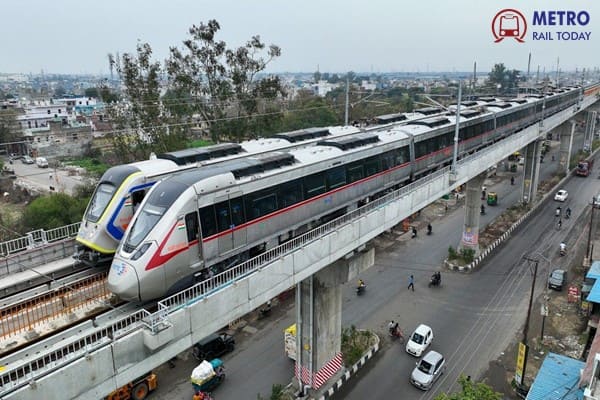
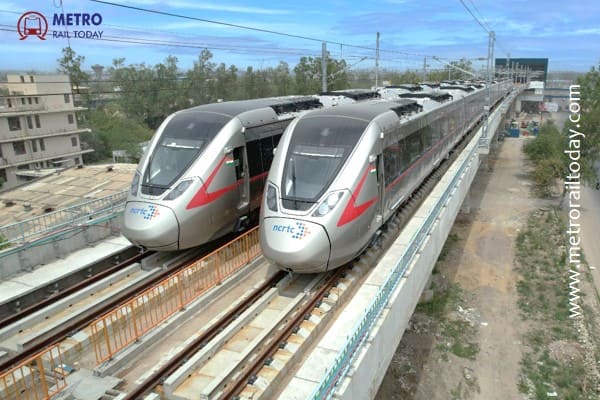
New Delhi, India (Metro Rail Today): The proposed Meerut–Haridwar–Rishikesh Namo Bharat (RRTS) corridor has taken a significant step forward after receiving in-principle approval, with work on the Detailed Project Report (DPR) now underway. The new regional rapid transit corridor is expected to transform connectivity between Delhi-NCR, western Uttar Pradesh and Uttarakhand, offering faster, greener and more reliable travel for millions of commuters, pilgrims and tourists.
The proposal was cleared during a meeting between Uttarakhand Chief Minister Pushkar Singh Dhami and Union Minister for Housing and Urban Affairs Manohar Lal Khattar. The project will be jointly developed by the National Capital Region Transport Corporation (NCRTC) in collaboration with the governments of Uttar Pradesh and Uttarakhand.
150-km High-Speed Regional Corridor Planned
The proposed corridor will span approximately 150 kilometres, extending from Modipuram, the terminal station of the under-construction Delhi–Meerut Namo Bharat corridor, to Rishikesh.
Of the total alignment, nearly 72 kilometres will pass through Uttar Pradesh, covering Meerut and Muzaffarnagar, while the remaining 78 kilometres will traverse Uttarakhand, connecting Roorkee, Haridwar and Rishikesh.
According to the proposed alignment, the Namo Bharat trains will operate via Modipuram, Daurala, Khatauli, Muzaffarnagar, Purkazi, Roorkee, Har Ki Pauri in Haridwar, before terminating near Lakshman Jhula in Rishikesh. The corridor is expected to provide seamless, high-speed regional connectivity between important religious, educational, commercial and tourism centres across the two states.
DPR Preparation Gains Momentum
To facilitate timely implementation, the Uttarakhand Government has appointed Additional Secretary Reena Joshi as the nodal officer for the project. Similarly, NCRTC and the Uttar Pradesh Government have nominated dedicated coordination officers to oversee route surveys, inter-departmental coordination and land acquisition activities during the DPR preparation stage.
The detailed project report will assess the corridor's technical feasibility, alignment, station planning, ridership projections, engineering requirements and financial viability before the project moves towards government approvals.
Seamless Integration with Namo Bharat Network
A key advantage of the proposed corridor is its integration with the expanding Namo Bharat Regional Rapid Transit System.
At Modipuram, passengers will seamlessly connect with the 82.15-kilometre Delhi–Ghaziabad–Meerut Namo Bharat corridor, enabling direct access to major stations including Sahibabad, Duhai, Guldhar, Anand Vihar and Sarai Kale Khan.
The project will substantially reduce travel time between Delhi-NCR and Uttarakhand while offering commuters from Noida, Ghaziabad and Meerut convenient access to Haridwar and Rishikesh through an integrated regional rail network.
"The proposed Meerut–Haridwar–Rishikesh Namo Bharat corridor has the potential to become a transformative regional mobility project by connecting major economic centres with some of India's most important pilgrimage and tourism destinations. Expanding the Namo Bharat network beyond Delhi-NCR will not only improve passenger convenience but also stimulate regional economic development, tourism, urban growth and sustainable transportation across northern India," said Mrs. Mamta Shah, MD & CEO of Urban Infra Group.
Expanding Regional Connectivity Across North India
The proposed corridor will also integrate with several other planned Namo Bharat routes, significantly strengthening regional mobility across northern India.
Passengers travelling from Uttarakhand will be able to access the proposed Delhi–Gurugram–Shahjahanpur–Neemrana–Alwar corridor through Sarai Kale Khan, which is being developed as the largest multimodal transport hub in Delhi-NCR.
Similarly, commuters will gain connectivity to the proposed Delhi–Sonipat–Panipat Namo Bharat corridor through interchange stations at Sarai Kale Khan or Hazrat Nizamuddin.
The corridor will also provide convenient access to the proposed Ghaziabad–Noida International Airport (Jewar) Namo Bharat route, enabling direct high-speed connectivity to the upcoming Noida International Airport.
In addition, passengers will benefit from seamless interchange with the Delhi Metro Blue and Pink Lines at Anand Vihar, along with connectivity to the Anand Vihar Railway Terminal and Inter-State Bus Terminal (ISBT), creating a fully integrated multimodal transport ecosystem.
Strengthening Sustainable Regional Mobility
The proposed Meerut–Haridwar–Rishikesh corridor reflects the government's broader vision of expanding high-speed regional public transport beyond metropolitan boundaries. By connecting rapidly growing urban centres with major religious and tourist destinations, the project is expected to reduce dependence on private vehicles, ease congestion on national highways and promote environmentally sustainable transportation.
Once completed, the corridor will significantly improve travel between Delhi, NCR, western Uttar Pradesh and Uttarakhand, while supporting tourism, pilgrimage, commerce and regional economic integration. As the DPR progresses, the project is poised to become another important milestone in the expansion of India's Namo Bharat Regional Rapid Transit System and the country's growing commitment to modern, fast and sustainable mobility solutions.

MRT Online Desk
Metro Rail Today is an authentic and global news provider for the Rail & Metro industry from and around the world.