


Trending Now
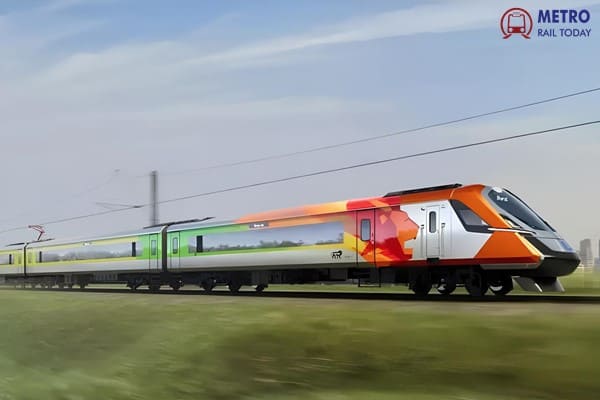 KINET Railway's 24-coach Vande Bharat Sleeper Prototype may miss March 2027 deadline
 Siemens Mobility bags two Signalling contracts for Taoyuan Metro Extensions in Taiwan
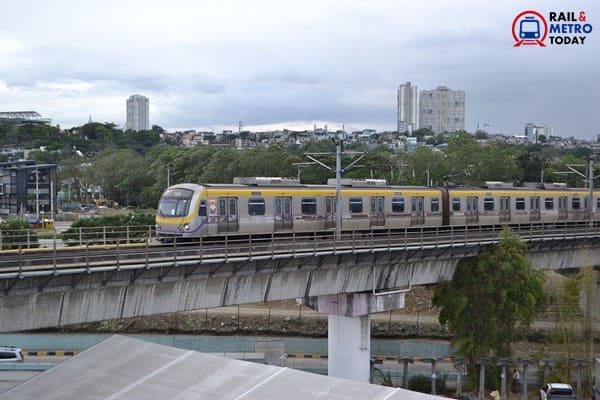 Bi-RIDE issues ₹1,017 crore Global Hybrid Signalling Tender for Bengaluru Suburban Rail Line 2 and 4
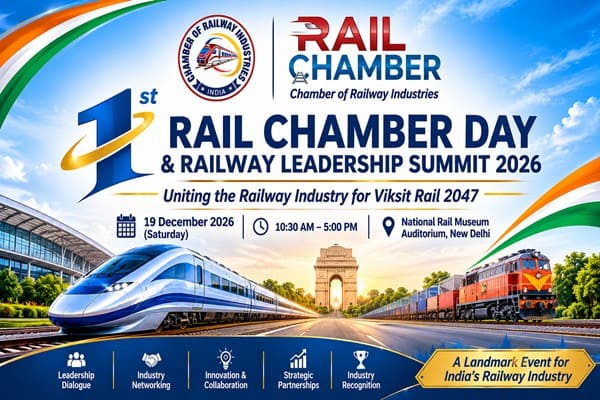 India to host First Rail Chamber Day & Railway Leadership Summit 2026 in New Delhi on December 19
 L&T awarded ₹1,234 Crore Civil Contract for Noida Metro Aqua Line Extension Project
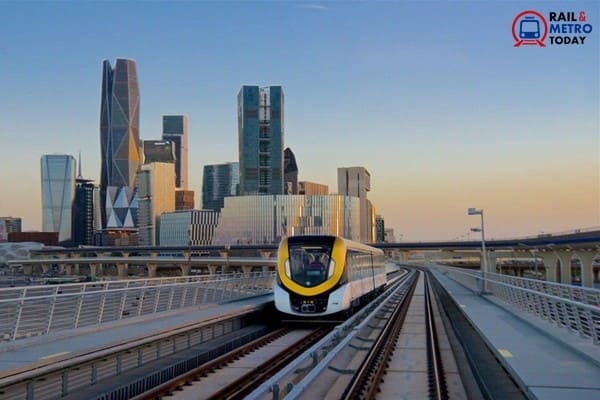 Alstom signs €460 million contract to supply additional Driverless Trains for Riyadh Metro
 First Tunnel Boring Machine arrives to construct Pune Metro's Swargate–Katraj Extension Line
 Alstom commences manufacturing of Rolling Stock Trains for Chennai Metro corridors 3 and 5
- The Not-So-Far South: Metro Manila LRT-1 Cavite Extension Timeline
 Bangladesh signs four major contracts for Depot and Civil Works on Dhaka Metro Lines 1 and 5
Siemens Mobility bags two Signalling contracts for Taoyuan Metro Extensions in Taiwan
MRT Online Desk
Posted on: 2026-11-10 15:51:00
Viewer: 39
Comments: 0
Country: Taiwan
City: Taoyuan
Taoyuan, Taiwan (Rail & Metro Today): Siemens Mobility has secured two contracts to supply advanced digital signalling systems for the Taoyuan Metro's Brown Line and Green Line Extension in Taiwan. The projects will deploy the company's Signaling X technology to enable fully automated, driverless train operations at Grade of Automation 4 (GoA4) and are scheduled to enter service in the mid-2030s.
The contracts were awarded by the Urban Solutions division of Singapore-based ST Engineering, which is responsible for project management and railway systems integration. The agreements were announced during Singapore Urban Mobility Week 2026.
Under the contracts, Siemens Mobility will supply its Signaling X platform and Automatic Train Supervision (ATS) system. The technology will support automated train control, real-time monitoring and coordination of train movements across the two metro extensions.
Brown Line and Green Line to Expand Taoyuan Metro Network
The Brown Line project involves the development of an approximately 11-km metro corridor comprising eight underground and elevated stations. It will improve connectivity between Taoyuan and the wider Taipei metropolitan area, strengthening public transport links between the two urban centres.
The second contract covers the 7.2-km extension of the Taoyuan Metro Green Line to Zhongli (A23), with five additional stations. The extension is expected to improve access to a major transport interchange and strengthen connections across the region.
Both projects are part of Taoyuan's broader metro network expansion programme. The main construction contracts were awarded to consortia involving ST Engineering and South Korean rolling stock manufacturer Hyundai Rotem.
Under the project arrangements, ST Engineering is coordinating systems integration and supplying various electronic systems, while Hyundai Rotem is responsible for the trains and power supply systems. Siemens Mobility's signalling package will form a key part of the integrated railway technology.
Signaling X to Enable Fully Automated Operations
At the centre of the contracts is Siemens Mobility's Signaling X platform, a software-defined signalling architecture designed to modernise railway control systems.
Unlike conventional signalling solutions that depend heavily on specialised proprietary hardware, Signaling X separates software applications from the physical equipment on which they operate. This allows railway signalling applications to use standard commercial IT infrastructure, offering greater flexibility in system upgrades and equipment management.
The architecture is intended to simplify maintenance, reduce dependence on specialised hardware and support more adaptable railway operations.
“We are implementing the new generation of software-defined signalling technology for the Taoyuan Metro,” said Marc Ludwig, Executive Vice President for Rail Infrastructure at Siemens Mobility.
He highlighted the partnership with ST Engineering as an opportunity to simplify the integration of different railway systems while supporting safe and fully automated operations.
SIL4 Safety and Cybersecurity Features
Signaling X combines safety-critical train control applications with operational management and monitoring functions. For safety-critical applications, the platform incorporates the DS3 (Distributed Smart Safe System), which is designed with redundancy and to meet Safety Integrity Level 4 (SIL4) requirements under applicable CENELEC railway standards.
SIL4 represents the highest safety integrity level in this framework and is intended for systems where failures could have severe consequences.
The platform also incorporates cybersecurity principles, including secure-by-design and zero-trust approaches, to strengthen protection of critical railway infrastructure.
With commissioning targeted for the mid-2030s, the projects will require close coordination between the signalling supplier, systems integrator, rolling stock provider and other railway contractors to deliver fully integrated driverless metro operations.

MRT Online Desk
Metro Rail Today is an authentic and global news provider for the Rail & Metro industry from and around the world.