

Trending Now
 Nippon Koei awarded ₹275 crore Consultancy Contract for Patna Metro Rail Project
 Tender floated for 4.94-km Underground Central Vista Corridor under Delhi Metro Phase V
 Portugal shortlisted Alstom and Talgo for €504 million High-Speed Train Tender
 Italy’s Lucchini RS and SIMEST invest €28 million in Jupiter Tatravagonka Railwheel Factory
 K-RIDE issues ₹986 crore Traction and Power Supply Tender for Bengaluru Suburban Rail Project
 Maharashtra Government approves ₹180 crore for Pune Metro Expansion Projects
 Johnson Lifts wins ₹129.86 crore AMC Contract for Lifts and Escalators for Chennai Metro Phase 1
 VinSpeed and Siemens sign €1 billion Turnkey Contract for Two High-Speed Rail Lines in Vietnam
 Tender floated for construction of Viaduct, Twin Tunnels and Underground Stations for Indore Metro
 Vietnam needs over 70,000 Engineers and Skilled Workers for Ho Chi Minh City Metro Project
BARSYL bags Feasibility Study Contracts for Three New RRTS Corridors in Tamil Nadu
MRT Online Desk
Posted on: 2025-07-08 08:10:00
Viewer: 5,012
Comments: 0
Country: India
City: Chennai
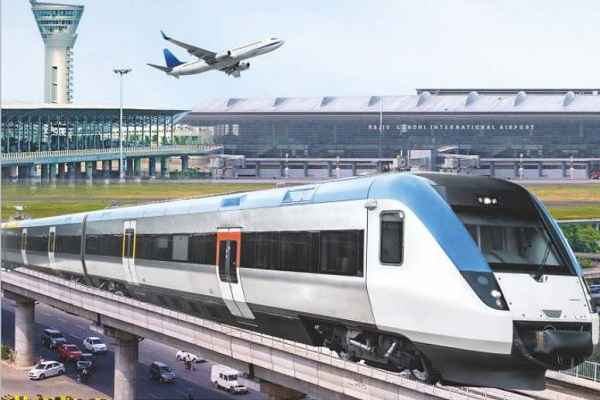
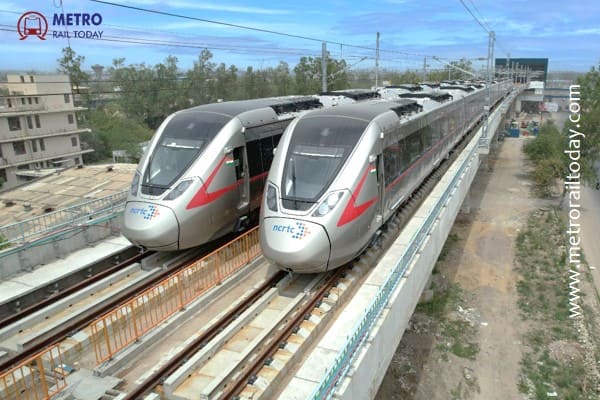
Chennai, India (Metro Rail Today): In a significant move towards enhancing regional connectivity in Tamil Nadu, Balaji Railroad Systems Pvt. Ltd. (BARSYL) has been awarded contracts for preparing Detailed Feasibility Reports (DFRs) for three proposed Regional Rapid Transit System (RRTS) corridors. These semi high-speed rail lines, similar to the RRTS network in Delhi–NCR, are being planned to connect major urban and industrial hubs in the state.
The proposed corridors include:
-
Chennai – Kanchipuram – Vellore RRTS Corridor
-
Chennai – Chengalpattu – Tindivanam – Villupuram RRTS Corridor
-
Coimbatore – Tirupur – Erode – Salem RRTS Corridor
The contract orders were issued by the Chennai Metro Rail Limited (CMRL), which invited bids in April 2025. After evaluating technical bids in May and financial bids in June, BARSYL was declared the lowest bidder for all three studies. Letters of Acceptance (LOAs) were officially issued to BARSYL on July 3, 2025.
Estimated Corridor Lengths
While final lengths will be determined based on the detailed studies and public consultations, early assessments suggest:
-
The Chennai–Vellore and Chennai–Villupuram RRTS corridors may each span around 110 km
-
The Coimbatore–Salem RRTS corridor is likely to be 150 km long
Each DFR is expected to be completed within 180 days and will cover route alignment, station planning, cost estimates, ridership forecasts, operational models, and multi-modal integration strategies.
Financial Bids (Exact Contract Values)
-
Chennai – Kanchipuram – Vellore RRTS
-
BARSYL: ₹72.88 lakh
-
UMTC: ₹1.20 crore
-
CEMOSA: ₹1.33 crore
-
Aarvee: ₹1.33 crore
-
Chennai Global Services: Disqualified
-
-
Chennai – Chengalpattu – Villupuram RRTS
-
BARSYL: ₹74.78 lakh
-
Aarvee: ₹1.36 crore
-
UMTC: ₹1.45 crore
-
CEMOSA: ₹1.61 crore
-
SYSTRA: ₹2.34 crore
-
Chennai Global Services: Disqualified
-
-
Coimbatore – Tirupur – Salem RRTS
-
BARSYL: ₹74.78 lakh
-
CEMOSA: ₹1.38 crore
-
Aarvee: ₹1.42 crore
-
UMTC: ₹1.57 crore
-
SYSTRA: ₹2.78 crore
-
With BARSYL's significantly lower bids across all three projects, CMRL appears to have prioritized cost-efficiency while assigning these preliminary contracts.
This marks a major first step in Tamil Nadu’s ambitions to establish semi high-speed rail corridors for faster regional travel, decongest roads, and integrate growth centers across the state. The proposed lines will strengthen linkages between Chennai and key industrial, educational, and pilgrimage cities such as Vellore, Villupuram, and Salem, while also addressing urban sprawl in fast-developing zones like Coimbatore, Tirupur, and Erode.
With RRTS systems enabling travel speeds of up to 160–180 km/h, these corridors could transform regional mobility and offer a sustainable alternative to both road and conventional rail.
While still at the feasibility stage, these projects reflect CMRL’s expanding role in overseeing multimodal transport solutions beyond metro rail. If implemented, Tamil Nadu will join the ranks of Delhi-NCR, Uttar Pradesh, Gujarat, and Maharashtra in planning modern semi high-speed systems.

MRT Online Desk
Metro Rail Today is an authentic and global news provider for the Rail & Metro industry from and around the world.