


Trending Now
 Modern Trainlines and the End of Coal Trains: Why Rail Networks Have Moved Forward
 Siemens Bags Order from Titagarh Rail Systems for Pune Metro Extension Trainsets
 Titagarh Rail Systems becomes Corporate Member of Chamber of Railway Industries (Rail Chamber)
 World Bank approves ₹1,400 crore Civil Tender for Gurugram Metro Phase 2
 Bi-RIDE invites ₹200 crore Tender for Soladevanahalli Depot of Bengaluru Suburban Rail Project
 GHV India awarded ₹107.79 crore Civil Contract for Lucknow Metro East-West Corridor
 Pune Metro Line 3 set to launch First 12-km Section on 15 July 2026
 DMRC gets approval to Fell or Transplant 364 Trees for Central Vista Metro Corridor under Phase IV
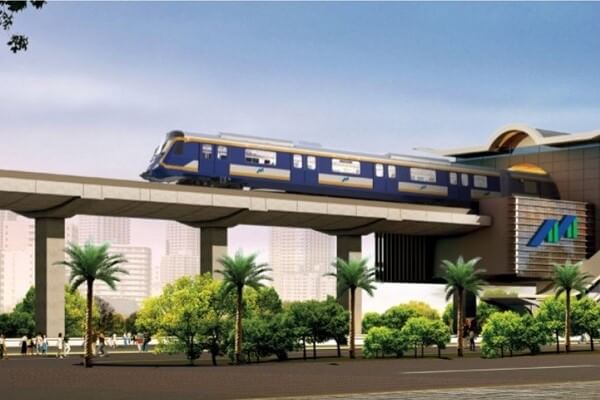 ₹4.5 Lakh crore Metro Rail Investment reaches less than 5% of Urban Population in India
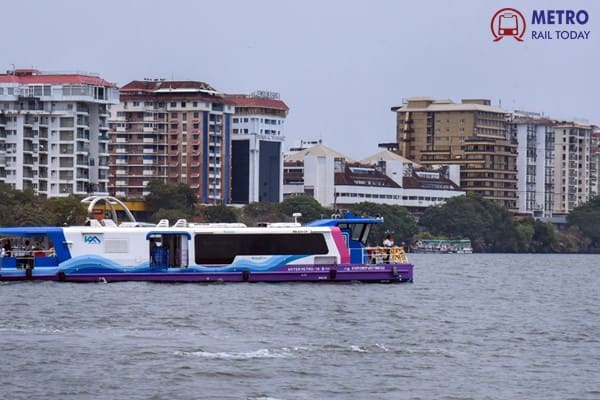 West Bengal plans to launch Water Metro Systems in Kolkata
Delhi Metro achieves key Tunnel Breakthrough on Aerocity–Tughlakabad Corridor
MRT Online Desk
Posted on: 2025-07-29 16:35:00
Viewer: 5,091
Comments: 0
Country: India
City: New Delhi
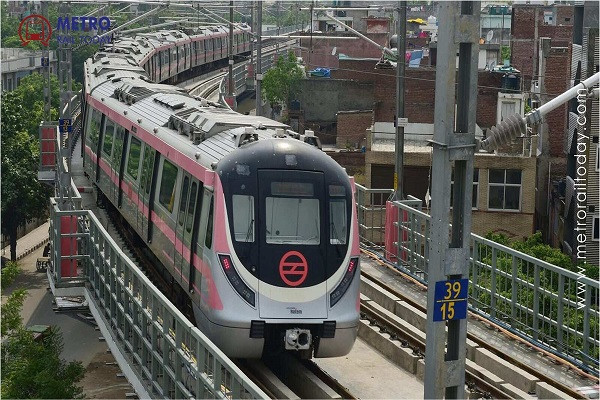
New Delhi, India (Metro Rail Today): In a major boost to its Phase 4 expansion, the Delhi Metro Rail Corporation (DMRC) has achieved a significant engineering milestone with the successful completion of a key underground tunnel between Tughlakabad and Tughlakabad Railway Colony on the Aerocity–Tughlakabad corridor. This breakthrough marks a crucial step forward in extending Delhi’s metro connectivity to underserved southern regions.
The breakthrough of the Tunnel Boring Machine (TBM) occurred at the Tughlakabad Railway Colony Station site in the presence of Shri Naveen Gulati, Member (Infrastructure) of the Railway Board, and senior DMRC officials. The TBM completed a 792-metre-long underground tunnel, forming one half of the twin tunnel system designed to carry metro trains in both up and down directions along this high-priority stretch.
Manufactured with cutting-edge technology, the 91-meter-long TBM utilized the Earth Pressure Balancing Method (EPBM), a proven tunneling technique particularly suited for densely populated urban environments. The tunnel has been built at an average depth of 18 meters with 559 concrete rings, each with an inner diameter of 5.8 meters, lining the circular bore.
The TBM operation was executed by civil contractor M/s Afcons Infrastructure Ltd, while the tunnel rings were precast at a fully mechanized casting yard in Mundka using steam curing systems for enhanced durability and accelerated construction timelines. Throughout the boring process, precision ground monitoring instruments ensured the stability of nearby structures, and no settlement or structural impact was reported—testament to the engineering rigor and safety protocols adopted by DMRC.
The Aerocity–Tughlakabad corridor, which forms a critical part of Delhi Metro’s Phase 4 expansion, includes 19.343 km of underground sections, out of a total 40.109 km of underground lines currently under construction in this phase. Once completed, this corridor will link key transit hubs like Aerocity (near IGI Airport) with southern and southeastern areas of Delhi, enabling faster, more reliable interconnectivity and reducing dependency on surface transport modes prone to congestion.
Tunnel Boring Machines have become a cornerstone of DMRC’s underground expansion strategy, especially in crowded cityscapes. Since Phase 1, Delhi Metro has been deploying TBMs for complex tunneling works, with over 30 TBMs used during Phase 3 alone, when around 50 km of underground metro lines were constructed.
Commenting on the milestone, Mrs. Mamta Shah, MD & CEO of Urban Infra Group, said, “The breakthrough on the Aerocity–Tughlakabad corridor reflects DMRC’s continued excellence in urban tunneling and project delivery. Underground metro infrastructure is essential for megacities like Delhi, and DMRC’s methodical use of TBMs ensures safety, speed, and minimal disruption to daily life. This achievement paves the way for seamless expansion in critical transit corridors.”
The successful tunneling operation further cements Delhi Metro’s reputation as a pioneer in modern urban transport engineering. As the city expands, the Phase 4 corridors—especially those like Aerocity–Tughlakabad—will play a transformative role in reducing travel time, enhancing last-mile connectivity, and supporting environmentally responsible mobility in the national capital.


MRT Online Desk
Metro Rail Today is an authentic and global news provider for the Rail & Metro industry from and around the world.