

Trending Now
 Ashish Chatterjee appointed as Managing Director of Chennai Metro Rail Limited
 Adani Group-arm wins ₹665.61 Crore Civil Contract for Bengaluru Suburban Rail Project
 Tamil Nadu reassesses Metro Expansion in Coimbatore, Madurai, Salem, Tiruchirappalli and Tirunelveli
 CMRS issues safety clearance for proposed Rolling Stock trainsets for Mumbai Metro 4 and 4A
- Japanese Delegation visits KRIDE to explore Bengaluru Suburban Rail Project opportunities
 GMRC issues ₹879 crore Civil Tender for Airport Extension under Ahmedabad Metro Phase 2A
 Global Mobility Leaders Alstom and Siemens become Corporate Member of Chamber of Railway Industries
 L&T-MHI JV wins contract for Automated People Mover at Dubai’s Al Maktoum International Airport
 Delhi Metro Rail Network to expand to 695 km by 2047, Six new RRTS Corridors planned
 HÜBNER at InnoTrans 2026: Global rail expertise and local capability for India’s Next-Gen Mobility
Hyundai Rotem signs $332 million Rolling Stock Contract with Vietnam for Ho Chi Minh City Metro
MRT Online Desk
Posted on: 2026-04-24 07:02:00
Viewer: 2,960
Comments: 0
Country: Vietnam
City:
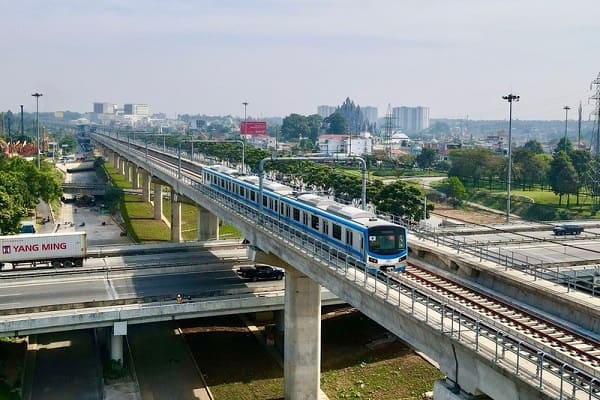
Ho Chi Minh City, Vietnam (Metro Rail Today): South Korea’s Hyundai Rotem has officially entered the Vietnamese rail market after signing a USD 332 million (₹2,750+ crore approx.) contract with Thaco Group for the Ho Chi Minh City Metro Line 2 project, marking a significant milestone in Korea–Vietnam infrastructure collaboration.
The contract, signed on April 23, 2026, covers the supply of automated metro trainsets, with a strong focus on localisation and long-term industrial cooperation.
Under the agreement:
- Hyundai Rotem will supply automated metro trains for Line 2
- A portion of the rolling stock will be manufactured locally in Vietnam
- Production will take place at a dedicated facility to be established by Thaco Group
This localisation strategy is expected to:
- Strengthen Vietnam’s domestic railway manufacturing ecosystem
- Enable technology transfer and skill development
- Build a foundation for future joint rail projects
MoU for Signalling Systems Opens New Export Avenue
In addition to rolling stock supply, both companies have signed a Memorandum of Understanding (MoU) for the supply of signalling systems for the corridor.
If finalised, this would mark:
- Hyundai Rotem’s first export of an automated rail operation system
- A broader expansion into integrated rail solutions, beyond rolling stock
About Ho Chi Minh City Metro Line 2
Metro Line 2 is one of Vietnam’s most critical urban transit projects:
- Total Length: 64 km
- Stations: 36
- Implementation: 3 phases
- Target Completion: 2030
The project is being developed by Thaco Group, one of Vietnam’s largest conglomerates, and is expected to play a transformative role in easing congestion and improving mobility in Ho Chi Minh City.
Government-Backed Strategic Entry
Hyundai Rotem highlighted that the deal was enabled by strong government-level support under South Korea’s “pragmatic diplomacy” policy.
Key developments include:
- Bilateral cooperation commitments during the Korea–Vietnam summit in Hanoi
- Active involvement of South Korean transport authorities in promoting railway exports
- Strategic push to position Korean rail technology in global markets
South Korean President Lee Jae-myung stated:
“We hope this railway export contract will contribute to improving Vietnam’s railway infrastructure,” expressing confidence in Korean rail technology.
Long-Term Growth Strategy in Vietnam
Hyundai Rotem’s entry is not a one-off deal but part of a broader expansion strategy:
- Collaboration with 500+ Korean suppliers for global projects
- Focus on joint R&D, localisation, and funding support mechanisms
- Ongoing partnership with Thaco for urban and high-speed rail manufacturing in Vietnam
Notably, the two companies had already signed an agreement last year to localise production of urban and high-speed trains, indicating a long-term commitment.
Gateway to Vietnam’s $67.5 Billion High-Speed Rail Market
This contract is expected to position Hyundai Rotem strongly for future opportunities, particularly:
- The proposed North–South high-speed railway project
- Estimated investment: USD 67.5 billion
- One of the largest infrastructure projects in Vietnam’s history
Commenting on the development, Mrs. Mamta Shah, MD & CEO, Urban Infra Group, said:
“Hyundai Rotem’s entry into Vietnam underscores the growing importance of localisation and strategic partnerships in global rail projects. By combining technology transfer with domestic manufacturing, this model not only accelerates infrastructure delivery but also builds long-term industrial capacity—something emerging economies increasingly prioritise.”
Hyundai Rotem’s $332 million contract for Ho Chi Minh City Metro Line 2 marks a strategic breakthrough in Southeast Asia, blending technology export, localisation, and diplomatic alignment.
As Vietnam accelerates its urban transit and high-speed rail ambitions, this partnership could serve as a launchpad for deeper international collaboration, setting the stage for the next phase of railway development in the region.

MRT Online Desk
Metro Rail Today is an authentic and global news provider for the Rail & Metro industry from and around the world.