


Trending Now
 Alstom and Siemens sign $1.5 billion Rolling Stock contract for Riyadh Metro Rail Project
 Bangladesh approves Tk 58,477 crore contracts for Dhaka Metro Lines 1 and 5
 RATP Dev–ComfortDelGro JV signs Operations & Maintenance Contract for Copenhagen Metro
 Rail Chamber explores India–Czech Railway Industry Partnerships at New Delhi Business Forum
 India must prove Safety before running different Bullet Train Systems on One Corridor: JTTRI Chief
 Tender issued for Feasibility Study to Transition Hubballi-Dharwad BRTS to Modern Tram System
 Tamil Nadu Chief Minister seeks Centre’s approval for Bengaluru–Hosur Metro Link
 K-RIDE to appoint Detailed Design Consultant for Bengaluru Suburban Rail Project
 Prime Minister Narendra Modi inaugurates first 15-km stretch of Chennai Metro Phase 2
 Karnataka proposes 270-km RRTS Network linking Bengaluru with Tumakuru, Mysuru and KGF
Global Metro Rail Infrastructure Market projected to reach US$ 78.3 billion by 2033
MRT Online Desk
Posted on: 2026-05-18 11:00:00
Viewer: 32,672
Comments: 0
Country: India
City: New Delhi
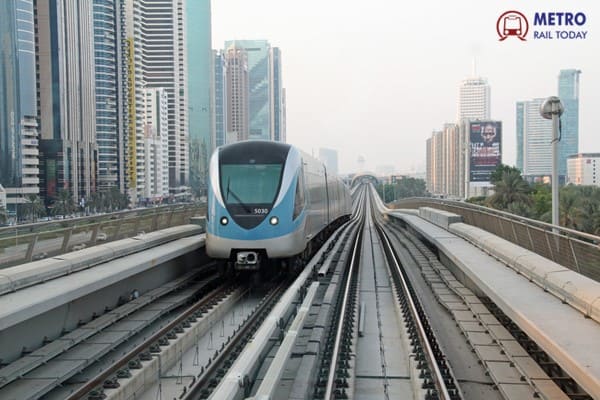
The global metro rail infrastructure market is poised for substantial expansion over the coming decade, driven by accelerating urbanization, rising investments in smart city development, and increasing demand for sustainable mass transit systems worldwide.
According to recent market estimates, the global metro rail infrastructure market is expected to grow from US$ 46.6 billion in 2026 to approximately US$ 78.3 billion by 2033, registering a robust compound annual growth rate (CAGR) of 7.7% during the forecast period.
The growth reflects the increasing importance of metro rail systems as cities worldwide seek cleaner, faster, and more efficient transportation solutions to address mounting traffic congestion, urban pollution, and mobility challenges.
Urbanization and Sustainability Driving Market Expansion
Rapid urban growth across Asia, the Middle East, Africa, and Latin America is significantly increasing pressure on existing transportation systems. Governments are increasingly turning toward metro rail infrastructure to support sustainable urban mobility while reducing dependence on private vehicles and fossil-fuel-based transportation.
Metro rail systems are widely recognized for:
- High passenger carrying capacity
- Reduced carbon emissions
- Lower operational pollution
- Enhanced urban connectivity
- Improved commuter efficiency
- Reduced road congestion
The market is also benefiting from growing global commitments toward climate action and green transportation infrastructure.
Technology Reshaping Modern Metro Systems
The metro rail sector is undergoing a major technological transformation as operators integrate advanced digital and automation technologies into modern transit systems.
Key technological trends driving the industry include:
- AI-based traffic and passenger flow management
- Predictive maintenance systems
- IoT-enabled infrastructure monitoring
- Automated train operations (ATO)
- Communication-Based Train Control (CBTC)
- 5G-enabled connectivity
- Smart ticketing and contactless payment systems
- Regenerative braking technologies
- Energy-efficient rolling stock
Industry analysts note that automation and digitalization are significantly improving operational reliability, reducing lifecycle costs, and enhancing passenger safety across metro systems globally.
Asia-Pacific Continues to Dominate Global Market
The Asia-Pacific region remains the largest metro rail infrastructure market globally, supported by extensive investments across:
- China
- India
- Japan
- South Korea
- Southeast Asian nations
China Leads Global Expansion
China continues to dominate the global metro rail landscape with ongoing expansion projects across multiple cities. The country has one of the world’s largest and fastest-growing metro networks, supported by aggressive infrastructure investments and urban development policies.
India Emerging as a Major Growth Market
India is rapidly emerging as one of the world’s most dynamic metro rail markets, with large-scale expansion projects underway in:
- Delhi
- Mumbai
- Bengaluru
- Chennai
- Ahmedabad
- Hyderabad
- Pune
- Patna
- Kochi
- Jaipur
- Lucknow
- Surat
- Kanpur
- Bhopal
- Indore
Government initiatives focused on sustainable urban mobility and multimodal integration are accelerating metro adoption across Tier-I and Tier-II cities.
Europe and North America Focus on Modernisation
Europe remains a mature metro market with strong emphasis on:
- Upgrading ageing infrastructure
- Expanding automation
- Sustainability initiatives
- Digital signalling integration
Meanwhile, North America is witnessing moderate growth driven by:
- Infrastructure renewal projects
- Smart transportation investments
- Urban transit modernization
Middle East Emerging as Fastest-Growing Region
The Middle East and Africa region is expected to witness the fastest market growth during the forecast period, fueled by:
- Smart city projects
- Economic diversification strategies
- Large-scale urban transit investments
Countries such as:
- UAE
- Saudi Arabia
- Qatar
are heavily investing in integrated metro and rail infrastructure as part of broader economic transformation plans.
Dubai’s recently announced Gold Line Metro Project, valued at around AED 34 billion, highlights the scale of future metro investments in the region.
Public-Private Partnerships Accelerating Development
Public-private partnerships (PPPs) and foreign direct investments (FDIs) are increasingly playing a crucial role in financing large-scale metro rail projects worldwide.
Governments are leveraging private sector participation to:
- Reduce funding pressure
- Accelerate implementation
- Improve operational efficiency
- Introduce advanced technologies
Modern construction techniques and prefabrication technologies are also helping reduce project timelines and overall infrastructure costs.
Market Segmentation Overview
By Structure Type
- Elevated
- Underground
- At-grade
By Infrastructure Component
- Station buildings
- Rolling stock
- Alignment and trackwork
- Electric power systems
- Signalling and telecommunications
- Other infrastructure systems
Competitive Landscape
The global metro rail infrastructure market remains highly competitive, with major players focusing on innovation, digital technologies, and international expansion.
Key industry players include:
- Alstom SA
- Siemens Mobility
- CRRC Corporation Limited
- Hitachi Rail
- Bombardier Transportation (now part of Alstom)
- Thales Group
These companies are actively investing in:
- Smart signalling systems
- Sustainable mobility solutions
- Automated operations
- Energy-efficient technologies
- Digital rail ecosystems
Recent Industry Developments
One notable development occurred in November 2023, when Hitachi Rail and Thales Group entered into a strategic alliance to jointly deliver integrated ETCS Level 2 and CBTC signalling solutions for metro upgrades across:
- United Kingdom
- Italy
- India
The partnership covers approximately 350 route-kilometres of rail infrastructure.
Future Outlook
Experts believe the metro rail infrastructure market is entering a long-term growth cycle as cities worldwide prioritize sustainable and integrated public transportation systems.
The future market outlook is expected to be shaped by:
- Smart city expansion
- Green mobility policies
- Digital transformation
- Autonomous train technologies
- AI-powered operations
- Increased urban population density
- Multimodal transport integration
Metro rail systems are increasingly becoming the backbone of future urban mobility strategies globally.

MRT Online Desk
Metro Rail Today is an authentic and global news provider for the Rail & Metro industry from and around the world.