


Trending Now
 Alstom to deploy DTG Signalling System for Jaipur Metro’s 5.2-km Phase-1 Extension
 RVNL floats ₹297.45-crore Power Systems Tender for Kolkata Metro Purple Line
 Siemens Mobility awarded $772 million Trainset Contract for California High-Speed Rail Project
 RITES submits fresh DPR to UPMRC for ₹12,000 crore Prayagraj Metro Rail Project
 Paras Railtech wins ₹84.72 crore Ballastless Track Contract for Jaipur Metro Rail Project
 Indian Railways announces 3,548 Graduate-Level Vacancies under NTPC Recruitment 2026
 European Union sanctions €10 million to support extension of Hanoi Metro Line 3
 GMRC issues ₹683 crore Tender for construction of 8.68 km stretch for Ahmedabad Metro
- GMRC launches ₹439 crore Tender for construction of 5 New Ahmedabad Metro Stations
 Global tender issued for procurement of 60 Rolling Stock coaches for Hyderabad Metro Rail Project
Delhi's Indira Gandhi International Airport to build India’s First Driverless Air Train
MRT Online Desk
Posted on: 2026-08-10 07:05:00
Viewer: 1,898
Comments: 0
Country: India
City: New Delhi
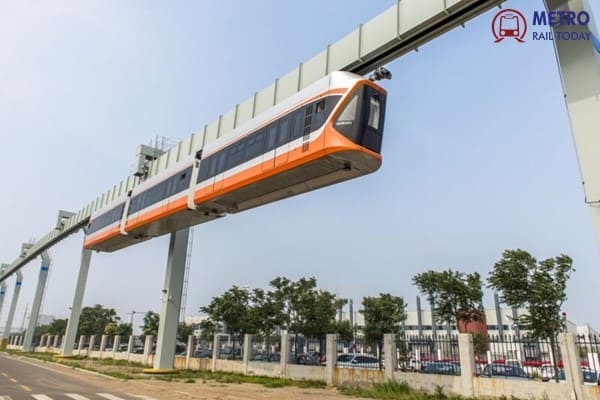
New Delhi, India (Rail & Metro Today): Delhi’s Indira Gandhi International Airport (IGIA) is set to introduce India’s first driverless Air Train, an Automated People Mover (APM) system designed to provide seamless connectivity between airport terminals and key facilities.
The proposed 7.7-km elevated transit system will connect Terminal 1, Terminal 2, Terminal 3, Aerocity and other major airport facilities, offering passengers a faster and more convenient alternative to road-based transfers within the airport complex.
₹3,000–4,000 Crore Automated People Mover Project
The Air Train project is estimated to require an investment of around ₹3,000–4,000 crore and will be fully funded by Delhi International Airport Limited (DIAL).
Unlike conventional airport shuttle buses, the proposed APM will operate on an elevated dedicated corridor without drivers, enabling automated and frequent passenger transfers between different parts of the airport.
The project is expected to significantly reduce dependence on road transport for inter-terminal journeys and help ease congestion on internal airport roads.
7.7-Km Network to Connect Delhi Airport Terminals
The proposed Air Train will establish a dedicated high-capacity connection between Delhi Airport's major passenger terminals and surrounding airport facilities.
The system will serve Terminal 1, Terminal 2 and Terminal 3, while also providing connectivity to Aerocity and other key facilities. This integrated connection is expected to become increasingly important as passenger traffic and airport infrastructure expand.
By shifting a significant share of inter-terminal movement to an automated rail-based system, the project could improve journey reliability and reduce transfer times for passengers.
Operations Targeted Between 2027 and 2029
Construction of the project is expected to begin soon, with operations targeted between late 2027 and 2029, subject to project execution and statutory approvals.
The proposed system is expected to use modern automated transit technology similar to Automated People Movers operating at major international airports.
Boost to Delhi Airport’s Global Connectivity
The proposed Air Train comes as Delhi Airport continues to expand its passenger-handling and aviation infrastructure. A dedicated automated transit system would provide an important internal mobility backbone as the airport develops into a larger global aviation hub.
Once commissioned, the 7.7-km driverless Air Train could mark a major milestone in India's airport transportation infrastructure by bringing automated, rail-based passenger mobility directly into one of the country's busiest airports.
The project is also expected to demonstrate how automated transit systems can be integrated with large aviation hubs to deliver faster, greener and more reliable passenger transfers while reducing pressure on conventional road-based airport transport.


MRT Online Desk
Metro Rail Today is an authentic and global news provider for the Rail & Metro industry from and around the world.