


Trending Now
 R Mohanraja appointed as new Secretary of Railway Board, Ministry of Railways
 Adani Group's construction arm bags first ₹1,024 crore Civil Contract of Delhi Metro Phase 5
 Govt approves permanent absorption of NCRTC Managing Director Shalabh Goel from Indian Railways
 Hyundai Rotem signs $332 million Rolling Stock Contract with Vietnam for Ho Chi Minh City Metro
 Maharashtra approves ₹18,130 Crore Mumbai Metro Line 5 Expansion & New Line 5A
 Telangana Govt approves ₹13,615 crore IRFC loan to takeover Hyderabad Metro from L&T
 DMRC appoints Sanjay Jamuar as First CEO of Delhi Metro International Limited
 India launches first High Speed Bullet Train Manufacturing Complex in Bengaluru
 Spain investigates CAF’s role in Jerusalem Light Rail Project amid Human Rights allegations
 Dr. Amit Kumar Jain conferred Delhi CM’s Award 2026 for driving Digital Innovation in Urban Mobility
Delhi Metro floated ₹456 crore tender for construction of Saket – Lajpat Nagar Golden Line
MRT Online Desk
Posted on: 2025-01-05 09:10:00
Viewer: 1,533
Comments: 0
Country: India
City: New Delhi
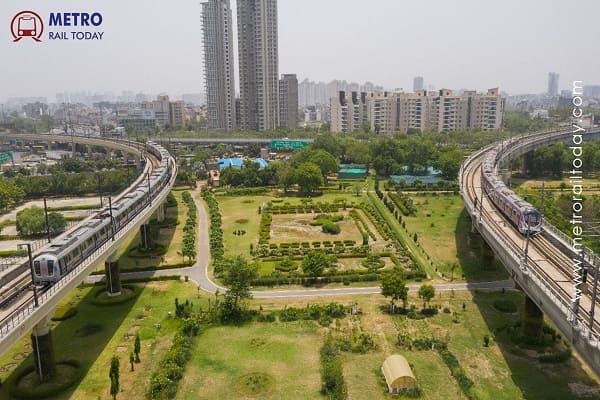
New Delhi, India (Metro Rail Today): The Delhi Metro Rail Corporation (DMRC) has officially invited bids for the civil construction of a key section of the Golden Line (Line-11). The project involves the construction of an 8.385 km spur connecting Saket G-Block and Lajpat Nagar as part of the Delhi Metro Phase 4 expansion.
The move comes nearly 10 months after the Central Government of India approved the spur’s construction under the larger 112.32 km Phase 4 of the Delhi Metro network. The Golden Line, also designated as Line-11, will provide much-needed connectivity in South Delhi.
Key Details of Package D2-C02
The project will be executed in two major packages, with D2-C02 covering the construction of a 7.298 km elevated viaduct, which will connect various crucial stations. The elevated stations will include:
- Pushp Vihar
- Saket District Court
- Pushpa Bhawan
- Chirag Delhi
- GK-1
- Andrews Ganj
- Lajpat Nagar
Tender Details for Package D2-C02:
- Estimated Cost: ₹456.06 crore
- Project Duration: 36 months (3 years)
- Pre-bid Meeting: January 14, 2025 at 11:00 AM
- Bid Submission Deadline: February 18, 2025 by 3:00 PM
- Technical Bid Opening: February 19, 2025 at 3:00 PM
The scope includes designing and constructing the viaduct, including platforms for seven stations, with pre-engineered building structures for all stations.
Project Background and Expected Impact
The Golden Line has undergone several alignment changes over the past decade. The current alignment ensures smoother connectivity between Saket and Lajpat Nagar, two key commercial and residential hubs in South Delhi. The stations will accommodate 3-coach trains, except for Pushp Vihar, which will be able to handle longer trains. The stations are designed to be compact, with Pushp Vihar being the longest at 140 meters.
The construction will be funded through a combination of equity participation by the Government of India and the Government of Delhi, along with other means.
With the tender for D2-C02 now open, attention is turning to other packages, including those for the Inderlok – Indraprastha Green Line extension. As part of the Phase 4 development, this expansion will help alleviate congestion and improve transport infrastructure in the city.


MRT Online Desk
Metro Rail Today is an authentic and global news provider for the Rail & Metro industry from and around the world.