


Trending Now
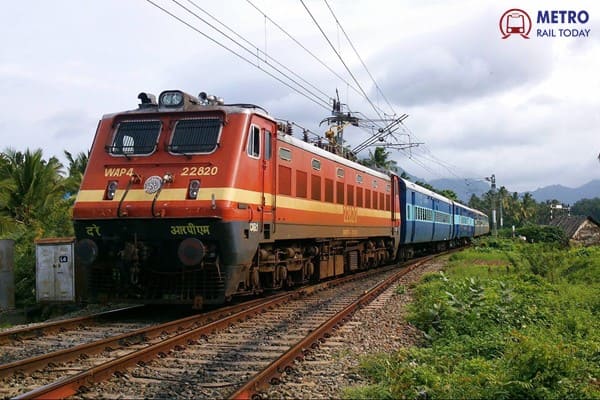 CLW sets Global Benchmark with record 800 Electric Locomotives production in FY 2025–26
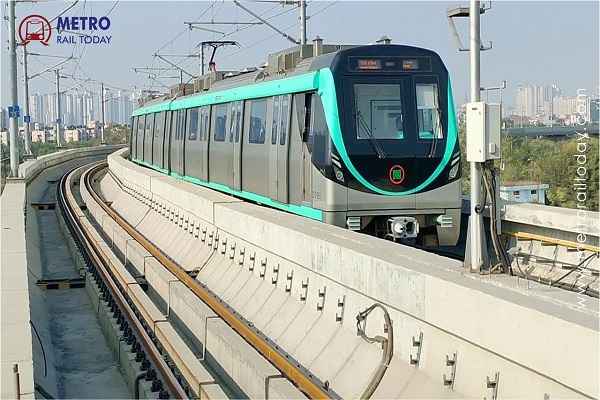 NMRC invites Applications for Key Executive Positions for Noida Metro Rail Project
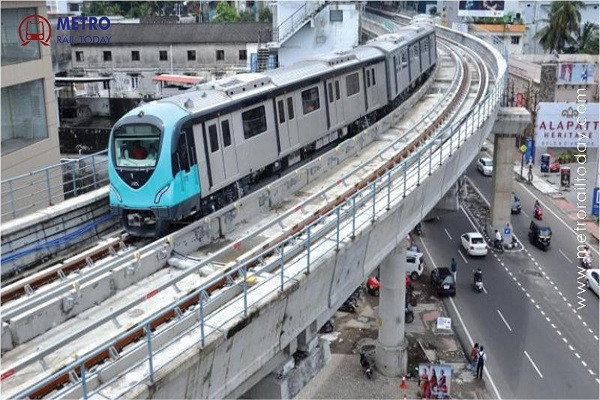 Central Govt rejects revised DPR of 7.5 km Noida-Greater Noida Metro Rail Extension Project
 Revised DPR of Prayagraj Metro focuses on seamless Rail-Air connectivity
 DMRC floats Tender for Central Vista Depot Design in Delhi Metro Phase V Expansion
 MMRDA seeks ₹14,100 Crore Loan for two upcoming Mumbai Metro Corridors
 Jupiter Wagons Eyes ₹20,000-Crore Mumbai Suburban Mega Rolling Stock Tender
 Mumbai Metro Chief Ashwini Bhide appointed as First Woman BMC Commissioner
 TBM ‘Parvati’ completes Underground Tunnelling on Kanpur Metro Phase 1 Project
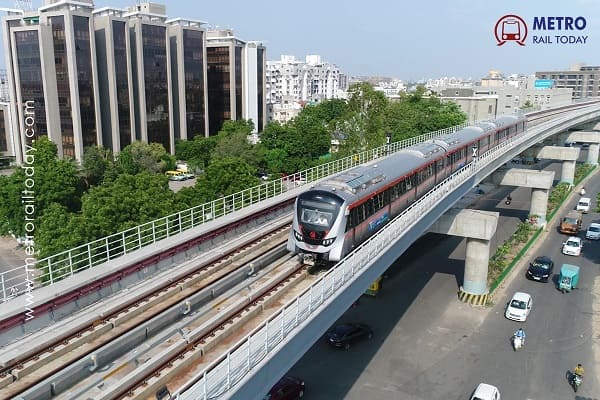 Surat Metro begins First Trial Run on 8.5 km Diamond Corridor between Dream City and Althan Tenement
Delhi Metro to expand the use of advanced AI technologies to enhance Operations and Passenger Safety
MRT Online Desk
Posted on: 2026-02-20 14:20:00
Viewer: 1,241
Comments: 0
Country: India
City: New Delhi

New Delhi, India (Metro Rail Today): The Delhi Metro Rail Corporation (DMRC) is actively leveraging Artificial Intelligence (AI) to strengthen operational efficiency, passenger safety, security and overall service quality. These AI-led initiatives are currently being showcased at the AI Impact Summit at Bharat Mandapam. The Hon’ble Union Minister for Housing & Urban Affairs and Power, Shri Manohar Lal, visited DMRC’s pavilion and appreciated the organisation’s proactive approach towards AI adoption.
One of the key initiatives is “Ask CHETNA” (Chatbot for Efficient Travel & Navigation Assistance), a conversational Agentic AI platform built on a BharatGPT-powered stack with a Sovereign AI architecture. Hosted securely within India, the solution enables interactive journey planning, fare information, real-time service updates and ticket booking across web and mobile platforms, offering passengers a seamless digital interface for metro services.
As part of its digital transformation, DMRC has also modernised its Complaint Management System. The upgraded system is being transitioned into an Agentic AI-based platform. In the first phase, AI-driven automation of written complaints has been introduced to reduce Average Handling Time (AHT) and enhance workflow transparency. The second phase will include the deployment of an AI-powered Voice Bot on Helpline 155370, enabling real-time intent recognition and automated complaint registration, with provisions for seamless escalation to human agents in complex cases.
On the infrastructure front, DMRC has introduced AI-based systems for monitoring the health of its Overhead Equipment (OHE) network. An Overhead Wire System Health Monitoring solution using the Pantograph Collision Detection System (PCDS) has been deployed on the Red Line, Yellow Line and Blue Line. The system utilises accelerometers and drop-off sensors installed on train pantographs to continuously assess contact with overhead wires, enabling early detection of alignment issues and hard points. Additionally, AI-based video analytics have been implemented on the Pink and Magenta Lines to analyse footage captured from trains and automatically detect and classify anomalies in the overhead wire network.
To further enhance train and track safety, DMRC has installed an Automatic Wheel Profile Monitoring System on the Pink Line. This system uses high-precision laser sensors to scan wheel profiles while trains are in motion, ensuring timely detection of wear and irregularities. An Automatic Axle Bearing Temperature Monitoring System has also been introduced on the Pink and Magenta Lines to identify overheating risks and prevent potential failures.
In another step towards smarter asset management, DMRC has implemented an AI-based predictive maintenance system for track circuits on the Green and Violet Lines. The system analyses performance patterns to anticipate faults, thereby reducing train delays and minimising on-track maintenance interventions. This approach is expected to improve service reliability, optimise manpower deployment and ensure smoother and safer metro operations.
DMRC plans to expand the use of advanced AI technologies in the coming years. The organisation is also strengthening its AI capabilities through collaborations with domain experts and structured training programmes for its workforce, reinforcing its commitment to innovation-driven urban mobility.


MRT Online Desk
Metro Rail Today is an authentic and global news provider for the Rail & Metro industry from and around the world.