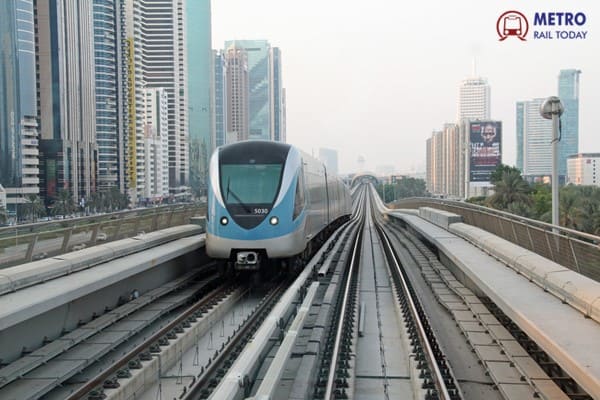


Trending Now
 IRPS R Mohanraja ppointed as new Secretary of Railway Board, Ministry of Railways
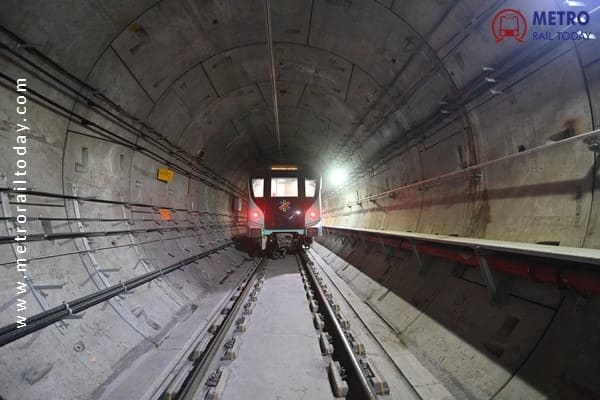 Adani Group's construction arm bags first ₹1,024 crore Civil Contract of Delhi Metro Phase 5
 Govt approves permanent absorption of NCRTC Managing Director Shalabh Goel from Indian Railways
 Hyundai Rotem signs $332 million Rolling Stock Contract with Vietnam for Ho Chi Minh City Metro
 Maharashtra approves ₹18,130 Crore Mumbai Metro Line 5 Expansion & New Line 5A
 Telangana Govt approves ₹13,615 crore IRFC loan to takeover Hyderabad Metro from L&T
 DMRC appoints Sanjay Jamuar as First CEO of Delhi Metro International Limited
 India launches first High Speed Bullet Train Manufacturing Complex in Bengaluru
 Spain investigates CAF’s role in Jerusalem Light Rail Project amid Human Rights allegations
 Dr. Amit Kumar Jain conferred Delhi CM’s Award 2026 for driving Digital Innovation in Urban Mobility
Israel invites Indian Firms to Bid for $50-Billion Tel Aviv Metro Rail Project
MRT Online Desk
Posted on: 2025-11-24 10:15:00
Viewer: 2,059
Comments: 0
Country: Israel
City:

Jerusalem, Israel (Metro Rail Today): In a significant boost to India’s global infrastructure footprint, Israel has expressed strong interest in partnering with experienced Indian metro rail companies for its ambitious $50-billion Tel Aviv Metro project. Commerce and Industry Minister Piyush Goyal confirmed that the Metropolitan Mass Transit System Ltd (NTA), the authority leading the project, is “keen that Indian companies come forward and bid aggressively” for one of the world’s largest upcoming urban transit systems.
The NTA recently opened the prequalification process for Phase 1 of the Tel Aviv Metro, which will eventually serve a region that hosts 44% of Israel’s population and nearly half of its jobs. The first phase alone includes 78 km of twin tunnels, 59 stations and an investment of $20 billion. The full network—spanning three lines, 150 km, 109 stations and four depots—is projected to transform urban mobility across the Tel Aviv metropolitan area.
Goyal highlighted India’s unmatched metro-building experience, with 23 operational metro cities and more than 1,000 km of networks already in service. “Several Indian firms, both public and private, have deep expertise in metro construction. Israel is keen that India becomes a key part of the project. I hope our companies show strong interest and join the bidding process,” he said.
India’s metro engineering capabilities have already gained global traction. Delhi Metro Rail Corporation has supported metro development in Bangladesh and Bahrain, while Larsen & Toubro has contributed to the Jakarta MRT and Mauritius Light Rail projects. Earlier this year, BEML secured its first overseas metro rail order in Malaysia. The minister noted that the Tel Aviv opportunity—valued at ₹4.5 lakh crore—dwarfs all previous international metro contracts combined. He added that discussions with NTA CEO Itamar Ben Meir confirmed the project would require nearly 300 km of tunnelling, reflecting its unparalleled scale.
Industry experts believe the development could mark a new chapter in Indian participation in global mega-projects. “Indian metro companies have consistently delivered complex projects with precision, speed and cost efficiency. Their involvement in the Tel Aviv Metro would not only enhance India’s global reputation but also showcase the strength of our engineering and construction ecosystem,” said Mrs. Mamta Shah, MD & CEO of Urban Infra Group.
The Tel Aviv Metro project had slowed following the October 7, 2023 attacks and the continuing conflict in Gaza, but design and execution activities are now regaining momentum. Goyal emphasised that winning supply or construction contracts would have far-reaching benefits, generating jobs in India while enabling young Indian engineers and technicians to contribute to one of the most expensive infrastructure projects in Israel’s history.
Israeli media outlets have reported that NTA is actively seeking interest from Europe, South Korea and India. Before meeting Goyal, CEO Ben Meir led a high-level outreach mission to South Korea to engage with major firms such as Hyundai and Samsung, underscoring the competitive global environment India will enter as bidding progresses.
As the prequalification window opens, all eyes are now on India’s leading metro and tunnelling companies to see whether they will step forward to capture one of the world’s most prized transit infrastructure opportunities.

MRT Online Desk
Metro Rail Today is an authentic and global news provider for the Rail & Metro industry from and around the world.