

Trending Now
 CLW sets Global Benchmark with record 800 Electric Locomotives production in FY 2025–26
 NMRC invites Applications for Key Executive Positions for Noida Metro Rail Project
 Central Govt rejects revised DPR of 7.5 km Noida-Greater Noida Metro Rail Extension Project
 Revised DPR of Prayagraj Metro focuses on seamless Rail-Air connectivity
 DMRC floats Tender for Central Vista Depot Design in Delhi Metro Phase V Expansion
 MMRDA seeks ₹14,100 Crore Loan for two upcoming Mumbai Metro Corridors
 Jupiter Wagons Eyes ₹20,000-Crore Mumbai Suburban Mega Rolling Stock Tender
 Mumbai Metro Chief Ashwini Bhide appointed as First Woman BMC Commissioner
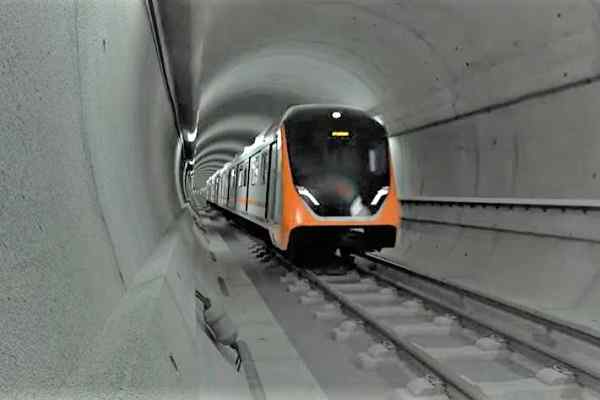 TBM ‘Parvati’ completes Underground Tunnelling on Kanpur Metro Phase 1 Project
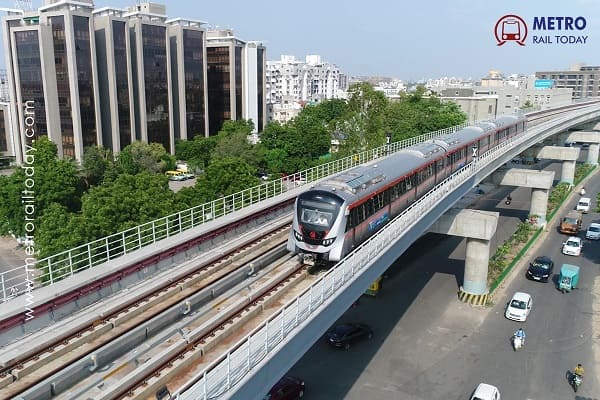 Surat Metro begins First Trial Run on 8.5 km Diamond Corridor between Dream City and Althan Tenement
Meerut Metro all set to launch for Public Service, Know all about
MRT Online Desk
Posted on: 2026-02-16 07:10:00
Viewer: 999
Comments: 0
Country: India
City: Meerut

Meerut, India (Metro Rail Today): Meerut is set to enter a new era of high-speed urban transit as the Prime Minister inaugurates the 21-km-long Meerut Metro corridor on February 22, 2026. Stretching from Meerut South to Modipuram and covering 12 stations in just 30 minutes, the project marks a pioneering milestone in India’s metro rail sector.
In a first-of-its-kind initiative, Meerut Metro services will operate on the same tracks and infrastructure as the semi-high-speed Namo Bharat trains. This integrated model will allow seamless interchange between the two services without inconvenience, ensuring faster and more comfortable journeys for commuters. With a design speed of 135 kmph and an operational speed of 120 kmph, Meerut Metro will become the fastest metro system in the country.
The 23-km corridor, comprising 16 km elevated and 7 km underground sections, features 13 stations. Key interchange stations including Meerut South, Shatabdi Nagar, Begumpul and Modipuram will serve both Namo Bharat and Meerut Metro, strengthening last-mile and regional connectivity across the city.
Designed for Speed, Safety and Comfort
Meerut Metro’s modern three-car trainsets, manufactured in India under the Make in India initiative at Alstom’s Savli plant in Gujarat, are built with commuter comfort at the forefront. Each train can carry over 700 passengers, offering cushioned seating, air-conditioning, luggage racks, CCTV surveillance, USB charging ports and dynamic route maps. Platform Screen Doors synchronized with operations will enhance safety and crowd management across all stations.
The trains feature selective door opening through push buttons to optimize energy use, while integrated safety systems such as emergency communication units, fire alarms and talk-back mechanisms ensure passenger security. Universal accessibility remains a core focus, with designated spaces for wheelchairs and stretchers, tactile paths for the visually impaired and spacious lifts at stations.
The vibrant exterior design in fluorescent green, blue and orange reflects the aspirations of a technologically advanced New India.
Digital Ticketing and Seamless Integration
The corridor adopts a cutting-edge Automatic Fare Collection system with QR code-based ticketing and EMV Open Loop cards aligned with National Common Mobility Card standards. Commuters can purchase tickets through UPI-enabled vending machines, mobile applications or NCMC cards.
NCRTC has also partnered with DMRC to enable integrated QR ticketing between Namo Bharat and Delhi Metro, supporting the ‘One India – One Ticket’ vision. Additionally, an MoU with IRCTC enables passengers to book Namo Bharat tickets directly through railway booking platforms, ensuring end-to-end travel integration.
Sustainability and Global Standards
Sustainability lies at the heart of the project. Solar panels at stations and depots, regenerative braking systems, rainwater harvesting and a 110 MW captive solar power plant in Uttar Pradesh are expected to meet nearly 60 percent of the corridor’s energy needs while significantly reducing carbon emissions. Several Namo Bharat stations have already secured Platinum and Net Zero Energy ratings from the Indian Green Building Council.
Advanced technologies such as ETCS Level 2 signalling, Automatic Train Operation over LTE and precast ballastless track systems position the corridor among the most technologically advanced rail systems globally. NCRTC’s 12-year comprehensive operations and maintenance agreement with Deutsche Bahn’s Indian subsidiary further ensures international standards in service delivery.
Sharing her industry perspective, Mrs. Mamta Shah, MD & CEO of Urban Infra Group, said, “The launch of Meerut Metro alongside Namo Bharat represents a transformative step in India’s urban mobility landscape. The seamless integration of metro and regional rapid transit on shared infrastructure is a bold innovation that will redefine commuter convenience, operational efficiency and sustainability. This model sets a benchmark for future transit projects across the country.”
With speed, safety, sustainability and seamless integration at its core, the Meerut Metro is poised to become a landmark development in India’s fast-evolving urban transport ecosystem.

MRT Online Desk
Metro Rail Today is an authentic and global news provider for the Rail & Metro industry from and around the world.