


Trending Now
 No DPR received for Metro, Metrolite or Urban Rail Extension to Rishikesh in Uttarakhand
 SYSTRA India announces Mega Recruitment Drive for High-Speed Rail, Metro and Railway Projects
 DB E&C–SYSTRA India JV Sign General Consultancy Contract for Pune Metro Phase 1 Extn and Phase 2
 Metro Man E. Sreedharan Awarded 23rd Honorary Doctorate by Gati Shakti Vishwavidyalaya
 India plans four new High-Speed Rail Corridors to connect Delhi with other major cities
 India’s Metro Network reaches 1,159 km; Government allocates ₹30,942 Crore for FY 2026–27
- RITES and MECON join hands to pursue Rail, Metro and Infrastructure Projects in India and Overseas
- Second TBM begins excavating India’s First Undersea High Speed Rail Tunnel on MAHSR Project
 Govt of India gives In-Principle approval to Meerut–Haridwar–Rishikesh Namo Bharat RRTS Corridor
 TÜV SÜD and MEDHA Servo Drives sign MoU to advance Hydrogen Rail Technologies in India
MMRDA to appoint General Consultant for ₹4,063 Crore Mumbai Metro Line 5A Extension
MRT Online Desk
Posted on: 2026-03-06 07:00:00
Viewer: 1,720
Comments: 0
Country: India
City: Mumbai
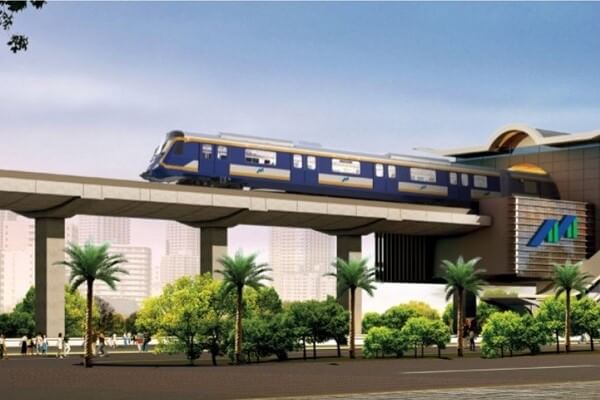
Mumbai, India (Metro Rail Today): The Mumbai Metropolitan Region Development Authority (MMRDA) has initiated preliminary work for the proposed Metro Line 5A extension connecting Kalyan and Ulhasnagar, nearly three years after the project was first proposed.
With the Detailed Project Report (DPR) completed, the proposal is expected to be submitted to the Maharashtra government for approval in April.
As part of the early-stage preparations ahead of construction tenders, MMRDA has invited bids for appointing a General Consultant (GC) to support planning, engineering oversight, and project execution for the corridor.
11.8 km Elevated Metro Corridor
The proposed Metro Line 5A corridor will span approximately 11.829 kilometres and will be developed as an elevated metro line.
The extension will originate from Kon Gaon station on Metro Line 5, which currently connects Thane, Bhiwandi, and Kalyan.
The corridor will include stations at Durgadi, Khadakpada, and Bhoirwadi, after which the alignment will split into two spurs:
-
Kalyan Spur: terminating at an interchange with the proposed Metro Line 12, which will connect Kalyan with Navi Mumbai
-
Ulhasnagar Spur: ending in Ulhasnagar, improving connectivity for residents in the fast-growing industrial township
The project will utilise the Kasheli Metro Car Shed, which is currently being developed for Metro Line 5 operations.
Project Cost and Ridership Projections
According to the DPR, the estimated project cost stands at ₹4,063.08 crore.
Passenger demand projections indicate strong ridership potential along the corridor.
The extended stretch from Kapurbawdi to Kalyan is expected to serve approximately:
-
9.55 lakh daily passengers currently
-
10.99 lakh passengers by 2031
-
13.36 lakh passengers by 2041
Meanwhile, the Ulhasnagar spur is projected to handle:
-
1.25 lakh daily passengers currently
-
1.22 lakh passengers by 2031
-
1.29 lakh passengers by 2041
The extension is expected to significantly reduce traffic congestion and relieve pressure on the overcrowded suburban railway network, particularly in the Kalyan region, which has witnessed rapid urban growth in recent years.
Land Acquisition and Approval Challenges
Despite the progress in planning, the project faces several early-stage challenges.
The proposed alignment will require the acquisition of approximately 16,268 square metres of government land and 1,738 square metres of private land.
In addition, the project will need to undergo environmental impact assessments and obtain statutory clearances, which could affect the project timeline.
Meanwhile, discussions are underway regarding further extensions of Metro Line 5.
During a recent meeting between MMRDA officials and Shiv Sena MP Shrikant Shinde, proposals were discussed for two additional corridors:
-
Metro Line 5B: from Chikholi in Ambernath to Badlapur
-
Metro Line 5C: connecting Durgadi in Kalyan to Titwala
Commenting on the proposed extension, Mrs. Mamta Shah, MD & CEO, Urban Infra Group, said expanding metro connectivity in the outer areas of the Mumbai Metropolitan Region is essential to support the region’s rapid urban growth.
“Metro connectivity in emerging urban clusters such as Kalyan and Ulhasnagar will play a vital role in reducing dependence on overcrowded suburban rail services and road transport. Expanding metro networks into these growth corridors can significantly improve mobility, support regional development, and enhance overall connectivity within the Mumbai Metropolitan Region,” she said.
According to Shinde’s office, the MMRDA Commissioner responded positively to these proposals, stating that the new corridors could significantly improve metro connectivity for areas beyond Kalyan while strengthening links to Thane, Navi Mumbai, and Mumbai.

MRT Online Desk
Metro Rail Today is an authentic and global news provider for the Rail & Metro industry from and around the world.