


Trending Now
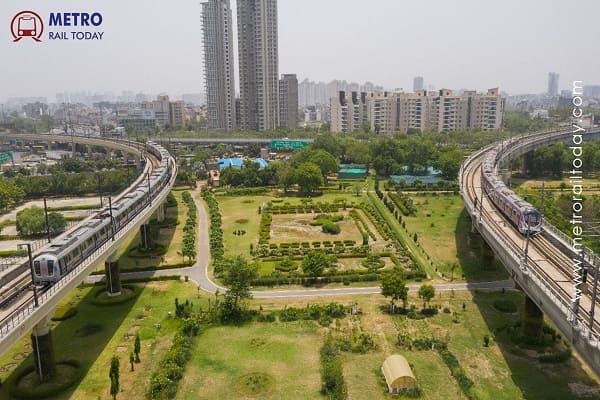 MoHUA proposes Housing above Delhi Metro Stations to promote Transit-Oriented Development
 Enhanced land compensation may increase Mumbai–Ahmedabad Bullet Train Project cost
 Assam Govt Cabinet approves four-phase Guwahati Metro Rail Project with ₹18,000 crore Investment
 RITES awarded DPR Contract for 55-km Nagpur Metro Phase 3 Expansion with Four New Corridors
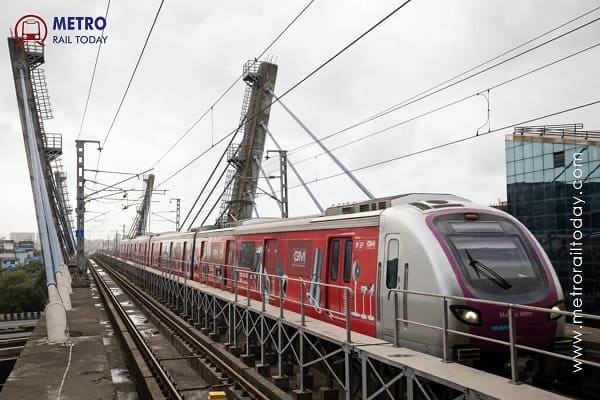 Mumbai Metro One secures ₹2,771 crore Debt Restructuring, Insolvency proceedings set to end
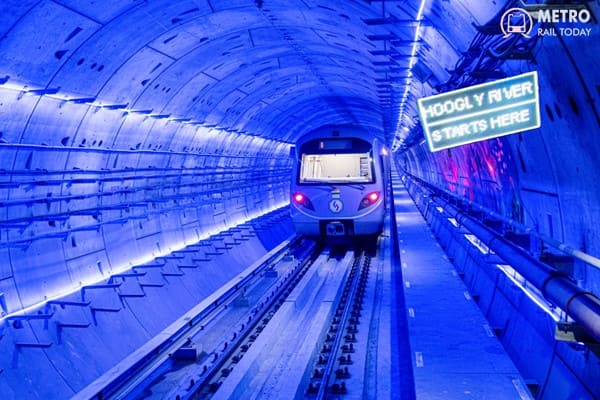 TBM Durga achieves major tunnel breakthrough at Victoria for Kolkata Metro Purple Line Expansion
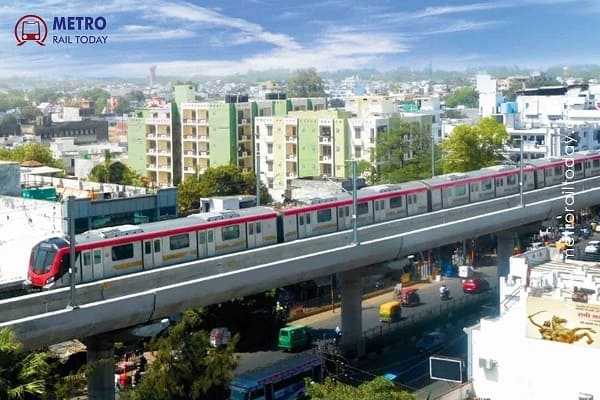 UPMRC floats ₹670 Crore Rolling Stock Tender for 45 Metro Cars for Lucknow Metro Phase 1B
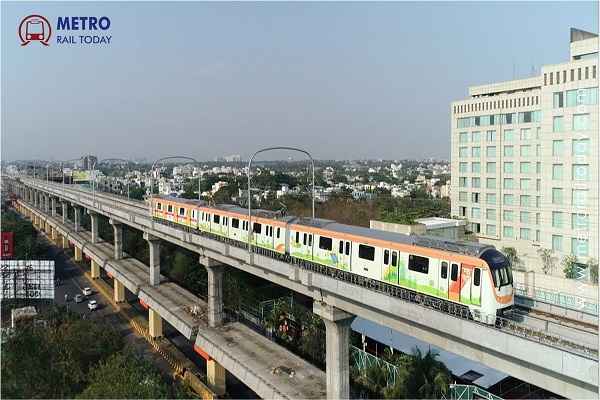 Maha Metro launches ₹994.78 crore Rolling Stock Tender for Nagpur and Pune Metro Phase 2
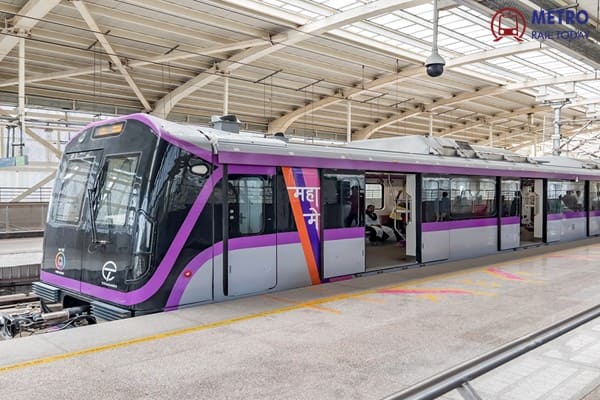 Afcons Infrastructure wins ₹1,045 crore Civil Contract for Ramwadi–Wagholi Metro Corridor in Pune
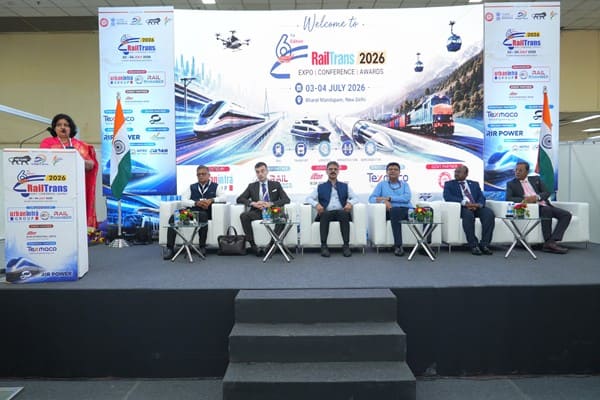 6th RailTrans Expo 2026 concludes on a Grand Note, Reinforcing India's Vision for Viksit Rail 2047
MoHUA proposes Housing above Delhi Metro Stations to promote Transit-Oriented Development
MRT Online Desk
Posted on: 2026-07-13 16:17:00
Viewer: 50
Comments: 0
Country: India
City: New Delhi
New Delhi, India (Metro Rail Today): Union Minister for Housing and Urban Affairs Manohar Lal Khattar has proposed the development of residential buildings above Delhi Metro stations and transport corridors, a move that could redefine urban planning in the National Capital by optimising land use, improving public transport accessibility and encouraging sustainable development.
The proposal was announced while addressing the 172nd Foundation Day celebrations of the Central Public Works Department (CPWD). The minister said that integrating residential development with metro infrastructure could help address the growing challenge of land scarcity in Delhi while promoting a transit-oriented urban development model.
Metro Stations Could Become Integrated Urban Hubs
Khattar revealed that discussions have already been held with the Delhi Development Authority (DDA) regarding the proposal to utilise the airspace above metro stations for residential construction.
"I have had a discussion with DDA in this regard. The plan is to develop residential construction on the space available over Metro stations. This will enable easy transit while simultaneously promoting greener development," the minister said.
The concept aligns with the principles of Transit-Oriented Development (TOD), under which high-density residential, commercial and mixed-use developments are planned around mass transit systems. Such models have been successfully implemented in several global cities, where integrating housing with metro infrastructure has helped reduce dependence on private vehicles, encourage public transport usage and create vibrant, walkable communities.
If implemented, the proposal could unlock significant development potential along Delhi Metro corridors while making daily commuting more convenient for thousands of residents.
"Developing residential and mixed-use infrastructure above metro stations is a globally proven approach to maximising urban land utilisation and strengthening public transport systems. Transit-oriented development creates more compact, connected and sustainable cities by bringing people closer to high-capacity transport networks. Such initiatives have the potential to transform urban mobility while improving quality of life and supporting balanced urban growth," said Mrs. Mamta Shah, MD & CEO of Urban Infra Group.
Focus on Modern Construction Technologies
During his address, the Union Minister also called upon the Central Public Works Department (CPWD) to accelerate the adoption of advanced construction technologies to meet the demands of India's rapidly urbanising cities.
He advocated greater use of 3D construction technologies, energy-efficient building designs and modern engineering practices that can reduce construction timelines, optimise project costs and improve sustainability. According to the minister, India's evolving infrastructure landscape—with multi-level roads, double-decker transport corridors and increasingly complex urban projects—requires continuous enhancement of engineering capabilities while maintaining high standards of structural safety and durability.
'SANKALP' Vision for Public Infrastructure
Khattar outlined a guiding framework for CPWD under the acronym "SANKALP", representing Speed, Accessibility, Nekneeyat (Integrity), Kartavyanishtha (Sense of Duty), Adoption of Technology, Lokhit (Public Welfare) and Pardarshita (Transparency). He said these principles should guide the organisation's approach to delivering high-quality public infrastructure across the country.
On the occasion, the minister also virtually laid the foundation stone for the proposed office complex of the National Council for Public Works in Ghaziabad.
Housing and Urban Affairs Secretary Srinivas Katikithala said the council would function as a national platform for promoting excellence, innovation, knowledge sharing, capacity building and standardisation in the public works sector.
Strengthening Sustainable Urban Development
The proposal to develop housing above metro stations reflects the government's broader focus on creating integrated, multimodal and sustainable urban infrastructure. With Delhi Metro serving millions of passengers every day, leveraging station airspace for residential and mixed-use developments could generate additional value from existing transport assets while supporting compact urban growth.
As Indian cities continue to face increasing pressure on land resources and transportation systems, transit-oriented development is emerging as a key strategy for achieving sustainable urbanisation. If the proposal moves forward, it could serve as a model for similar developments around metro networks in other metropolitan cities, reinforcing the role of mass transit as the backbone of future-ready urban infrastructure.

MRT Online Desk
Metro Rail Today is an authentic and global news provider for the Rail & Metro industry from and around the world.