


Trending Now
 Karnataka proposes 270-km RRTS Network linking Bengaluru with Tumakuru, Mysuru and KGF
 Alstom and Vingroup sign MoU to supply up to 200 Metro Trains for Hanoi Urban Rail Projects
 Afcons Infrastructure wins ₹1,383 crore Civil Contract for Lucknow Metro Phase 1B Corridor
 GMRL issues ₹1,662 crore Civil Tender for Sector 9–Cyber City Gurugram Metro Rail Corridor
 Madrid unveils €1.57 billion Metro Rail Expansion Programme with 27.8 km of New Corridors
 Global Tender launched for Project Management Consultancy for Abu Dhabi Tram Line 4
 NV Dynamics awarded Noise and Vibration Study contract for Jaipur Metro Phase 2 Project
 Two global consortia bid for India’s 350 kmph High-Speed Rail Design consultancy contract
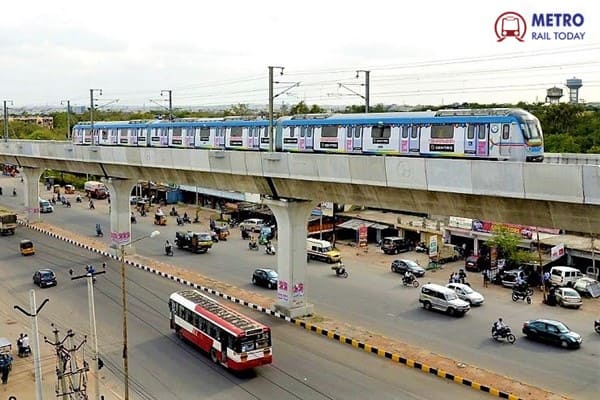 Larsen & Toubro (L&T) extends Hyderabad Metro stake sale timeline to 31 December 2026
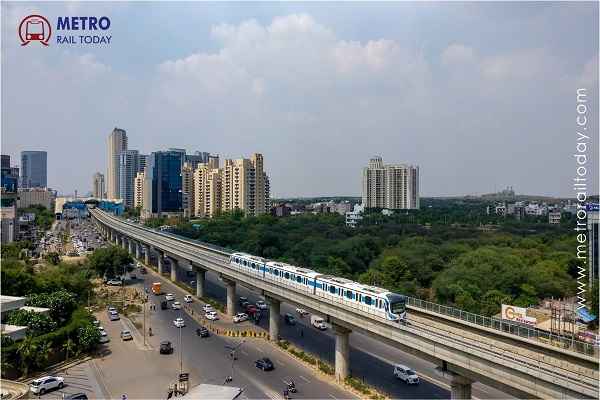 Haryana Govt approves ₹1,662 crore construction tender for Gurugram Metro Phase 2
Assam Govt Cabinet approves four-phase Guwahati Metro Rail Project with ₹18,000 crore Investment
MRT Online Desk
Posted on: 2026-07-10 16:15:00
Viewer: 2,281
Comments: 0
Country: India
City: Guwahati
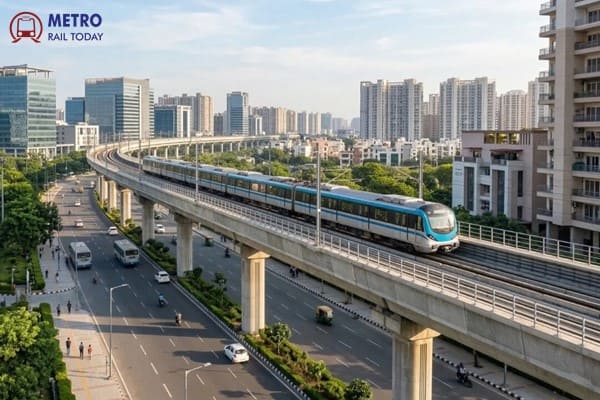
Guwahati, India (Metro Rail Today): The Assam Government has reaffirmed its commitment to developing a modern mass rapid transit system for the state capital, with the state cabinet approving the implementation of the Guwahati Metro Rail Project in four phases at an estimated cost of ₹18,000 crore. The ambitious initiative is aimed at addressing the growing traffic congestion in Guwahati while supporting the city's long-term urban expansion and economic growth.
The decision marks a significant step towards bringing metro rail connectivity to one of Northeast India's fastest-growing urban centres. The project is expected to create a sustainable and efficient public transport network capable of meeting the mobility demands of a rapidly increasing population.
Airport-to-Narangi Corridor to Be Taken Up First
According to Assam Transport Minister Chandramohan Patowary, the first phase of the metro project will focus on establishing a corridor connecting the Lokapriya Gopinath Bordoloi International Airport at Borjhar with Narangi. The route has been identified as a priority corridor due to its potential to serve key residential, commercial and institutional areas while providing direct connectivity to the airport.
The minister stated that the Detailed Project Report (DPR) prepared by the Guwahati Metropolitan Development Authority (GMDA) has already been submitted. To accelerate project implementation, a dedicated Metro Rail Project Office will be established at the GMDA headquarters.
Following the completion of the initial phase, the metro network is proposed to be extended to North Guwahati, which has emerged as a rapidly developing urban area across the Brahmaputra River. Subsequent phases will further expand the system to connect important locations such as Khanapara, Kamakhya, Sonapur and Chaygaon, creating a comprehensive urban transit network across the metropolitan region.
Transforming Mobility in Northeast India
Guwahati has witnessed significant urbanisation over the past decade, resulting in increased vehicular traffic, longer travel times and mounting pressure on existing road infrastructure. The proposed metro system is expected to offer a reliable, high-capacity alternative to road transport, reducing congestion and improving commuter convenience.
The project is also expected to support transit-oriented development, encourage sustainable urban growth and enhance connectivity between residential areas, business districts and major transportation hubs.
"The development of a metro rail system in Guwahati has the potential to transform urban mobility not only in Assam but across Northeast India. As cities continue to grow, investment in high-capacity public transport infrastructure becomes essential for reducing congestion, improving air quality and supporting sustainable economic development. A well-planned metro network can serve as a catalyst for urban transformation while enhancing the quality of life for millions of residents," said Mrs. Mamta Shah, MD & CEO of Urban Infra Group.
Long-Standing Vision for Metro Connectivity
The Guwahati Metro project has a long history. During the tenure of the previous Congress government, the project had received approval with an estimated cost of ₹18,020 crore. The earlier proposal envisaged a network comprising four metro lines spanning approximately 203 kilometres across the city. The then Chief Minister Tarun Gogoi had even laid the foundation stone for the project, and the cabinet had approved the formation of a special purpose vehicle, the Guwahati Metro Rail Corporation Limited (GMRCL), to implement the scheme.
However, the project did not progress to execution at the time. The latest cabinet decision signals renewed momentum and reflects the state's intention to revisit and modernise the metro rail vision in line with current urban development requirements.
A New Chapter for Urban Transport in Assam
With the DPR now under consideration and institutional arrangements being strengthened, the Guwahati Metro project is moving closer to implementation. The proposed four-phase network is expected to play a pivotal role in reshaping transportation across the city, improving connectivity between key destinations and supporting Assam's broader infrastructure development agenda.
Once operational, the metro system could become the first large-scale urban rail transit network in Northeast India, positioning Guwahati as a regional hub for modern, sustainable and integrated public transportation.

MRT Online Desk
Metro Rail Today is an authentic and global news provider for the Rail & Metro industry from and around the world.