

Trending Now
 Japanese Delegation visits KRIDE to explore Bengaluru Suburban Rail Project opportunities
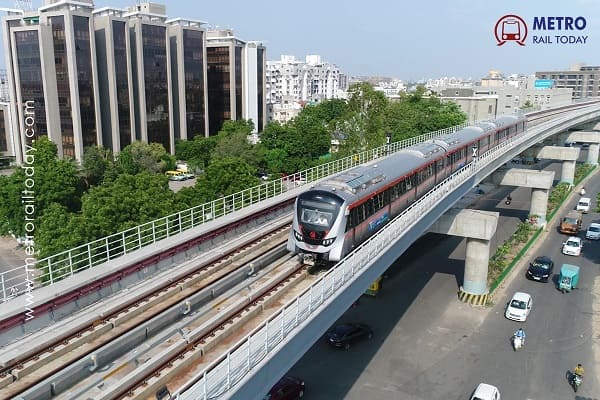 GMRC issues ₹879 crore Civil Tender for Airport Extension under Ahmedabad Metro Phase 2A
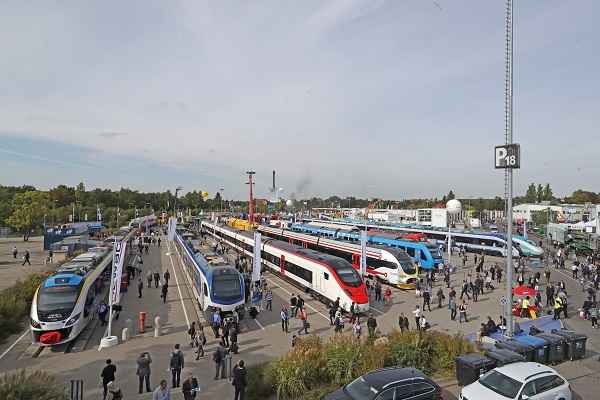 Global Mobility Leaders Alstom and Siemens become Corporate Member of Chamber of Railway Industries
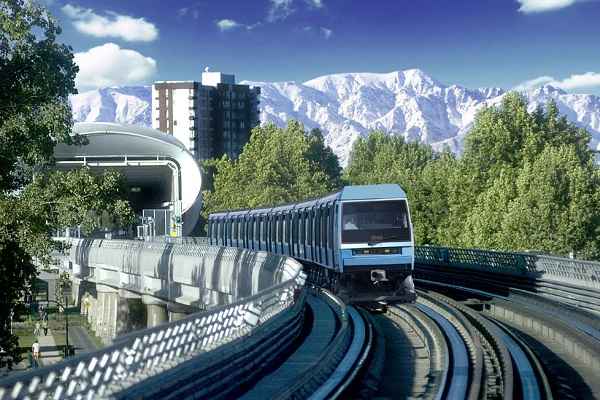 L&T-MHI JV wins contract for Automated People Mover at Dubai’s Al Maktoum International Airport
 Delhi Metro Rail Network to expand to 695 km by 2047, Six new RRTS Corridors planned
 HÜBNER at InnoTrans 2026: Global rail expertise and local capability for India’s Next-Gen Mobility
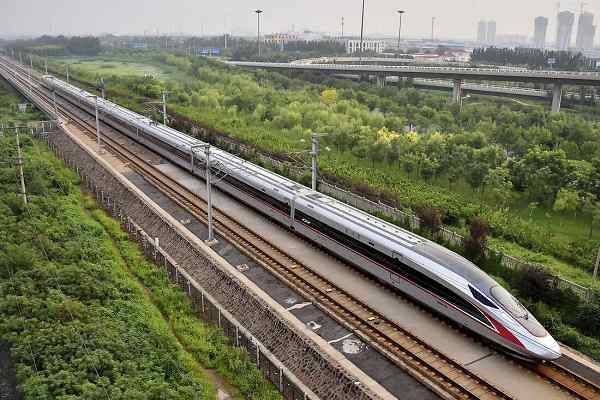 Australia shortlists three firms/consortia for Sydney–Newcastle High Speed Rail Project
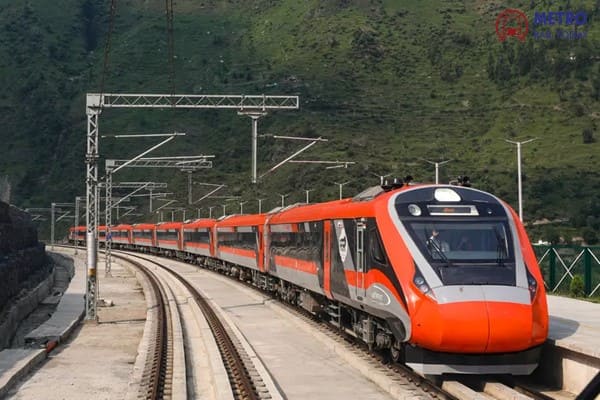
 MRVC set to procure 238 AC Vande Metro Trainsets worth ₹19,293 crore from Indian Railways
 Maharashtra approves ₹17,725 crore Mumbai Metro Line 13 linking Mira-Bhayandar with Vasai-Virar
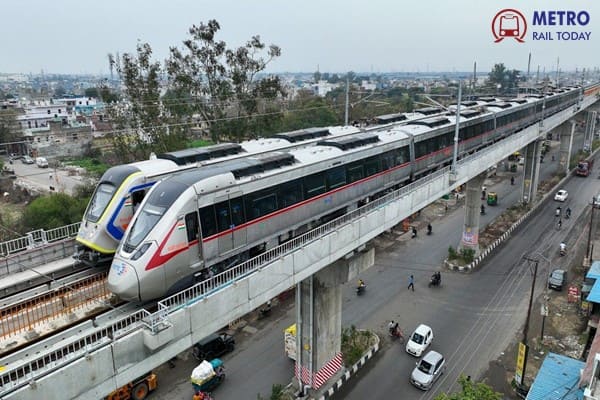 Gujarat issues three tenders for 48.38-km Metro-RRTS Hybrid corridors under Ahmedabad Metro Phase 3
NCRTC and Gati Shakti Vishwavidyalaya sign MoU to boost Railway Education and Innovation
MRT Online Desk
Posted on: 2025-09-29 16:50:00
Viewer: 1,910
Comments: 0
Country: India
City: New Delhi
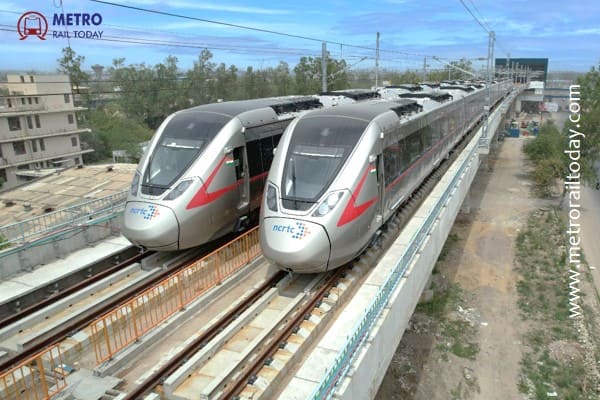
New Delhi, India (Metro Rail Today): In a strategic move to strengthen academia–industry collaboration in India’s transport sector, the National Capital Region Transport Corporation (NCRTC) and Gati Shakti Vishwavidyalaya (GSV) have signed a landmark Memorandum of Understanding (MoU) aimed at fostering education, research, executive training, and workforce development in the railway and logistics sectors.
The MoU was signed by Prof. Kaushik Das from GSV and Shri Vijay Kumar from NCRTC in the presence of GSV Vice Chancellor Shri Manoj Choudhary, PhD, and NCRTC Managing Director Shri Shalabh Goel. The collaboration is a key step toward advancing India’s vision for a skilled and innovation-driven transport ecosystem under the Viksit Bharat 2047 roadmap.
“This partnership signifies a shared commitment to preparing an industry-ready workforce and driving transport innovation in India,” said Mrs. Mamta Shah, MD & CEO of Urban Infra Group. “Through joint programs and applied research, NCRTC and GSV are laying the foundation for the next generation of railway professionals.”
Key Areas of Collaboration
Over the coming years, NCRTC and GSV will collaborate across multiple verticals, including:
-
Academic–Industry Integration: Joint academic programs and curriculum development tailored to the evolving needs of the railway and transportation industry.
-
Research & Innovation: Collaborative R&D initiatives addressing challenges in high-speed rail, transit systems, urban logistics, and digital mobility.
-
Executive Education: Specialized training modules and certification courses for professionals in the transport sector.
-
Skill Development: Applied training and internships to prepare students and working professionals for on-ground project implementation.
This partnership also includes collaborative engagement on live projects, particularly NCRTC’s flagship Namo Bharat regional rail network, which is revolutionizing commuter transport in the National Capital Region (NCR).
Focus on the Namo Bharat Project
A central pillar of this partnership is joint support for the Namo Bharat Project—India’s first high-speed regional commuter rail system developed by NCRTC. The project is designed to:
-
Offer high-frequency, point-to-point connectivity across the NCR
-
Reduce travel times with fewer stops than metro systems
-
Provide comfortable, safe, and sustainable mobility for long-distance commuters
The system integrates modern rail technology, multimodal hubs, and smart ticketing, offering a next-generation commuting experience while also catalyzing economic development in the extended NCR.
GSV: India’s First Transport & Logistics-Focused University
Established under the Ministry of Railways, Gati Shakti Vishwavidyalaya is the country’s first university exclusively focused on transportation and logistics education. It provides:
-
Experiential learning through industry-led programs
-
Research-driven curriculum aligned with national infrastructure goals
-
Strategic tie-ups with global institutions and Indian industry leaders
Through this MoU, GSV continues its mission to deliver applied education that bridges classroom learning with real-world challenges in transportation and infrastructure.
The collaboration between NCRTC and GSV is a transformative step toward future-proofing India’s railway and transport workforce. By aligning academic excellence with practical project experience, the partnership will fuel innovation in infrastructure, support the implementation of projects like Namo Bharat, and help realize India’s vision of becoming a global leader in sustainable, connected, and inclusive mobility by 2047.

MRT Online Desk
Metro Rail Today is an authentic and global news provider for the Rail & Metro industry from and around the world.