


Trending Now
 BEML plans manufacturing of Tunnel-Boring Machines for upcoming Rail & Infra projects in India
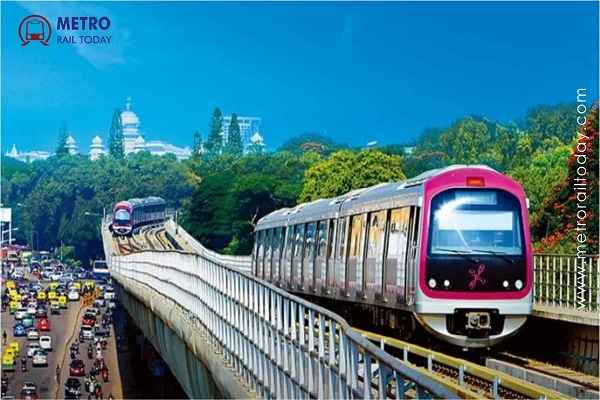 PM Narendra Modi inaugurates 7.5-km elevated stretch of Bangalore Metro Pink Line
 Dilip Buildcon wins ₹419.47 crore Civil Contract for Gurugram Metro Depot and Workshop Project
 Govt of India approves ₹2,390 crore Noida Metro Aqua Line Extension to Greater Noida West
 Hitendra Malhotra appointed as Member (Traction & Rolling Stock) in Railway Board
 UAE approves US$544.6 million Dubai Metro Extension to Al Maktoum International Airport
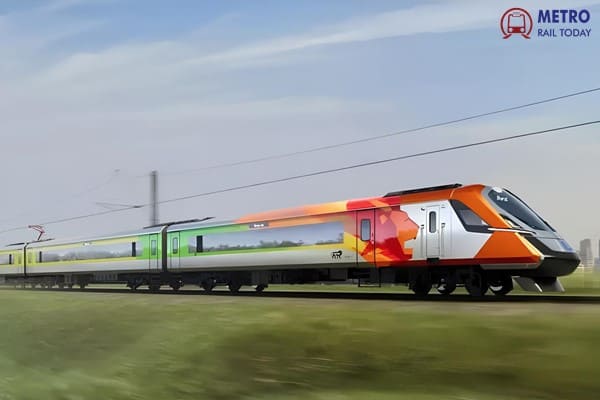 KINET Railway's 24-coach Vande Bharat Sleeper Train Prototype may miss March 2027 deadline
 Siemens Mobility bags two Signalling contracts for Taoyuan Metro Extensions in Taiwan
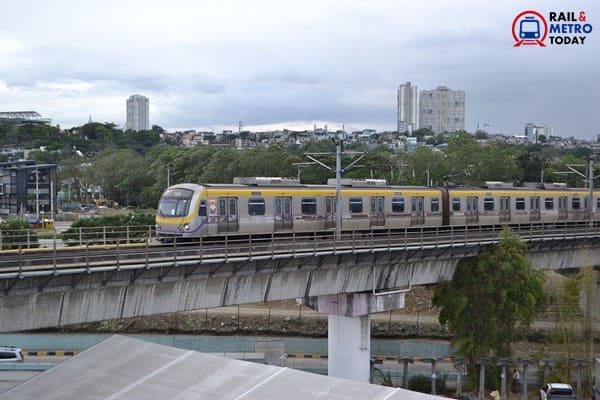 Bi-RIDE issues ₹1,017 crore Global Hybrid Signalling Tender for Bengaluru Suburban Rail Line 2 and 4
 India to host First Rail Chamber Day & Railway Leadership Summit 2026 in New Delhi on December 19
PM Narendra Modi inaugurates 7.5-km elevated stretch of Bangalore Metro Pink Line
MRT Online Desk
Posted on: 2026-11-12 07:51:00
Viewer: 180
Comments: 0
Country: India
City: Bengaluru
Bengaluru, India (Rail & Metro Today): Prime Minister Narendra Modi on 13th November 2026 (Friday) inaugurated the 7.5-km elevated section of Bengaluru Metro’s Pink Line, marking a major milestone in the city’s urban transport expansion. The newly opened stretch connects Kalena Agrahara with Tavarekere along the busy Bannerghatta Road corridor and is expected to improve connectivity and reduce travel time for commuters.
During the inauguration, the Prime Minister travelled by metro from Tavarekere to IIM Bangalore station, accompanied by Karnataka Chief Minister D.K. Shivakumar. He also interacted with passengers during the journey. The elevated section has been developed at an investment of approximately ₹3,470 crore, according to the Prime Minister’s Office.
Passenger Services to Begin on November 14
Commercial passenger services on the new section will commence at 6:00 am on Saturday, November 14, Karnataka’s Bengaluru Development Minister Krishna Byre Gowda said ahead of the inauguration, according to PTI.
Initially, trains will operate at eight-minute intervals. Bengaluru Metro authorities have allocated five trainsets to the corridor, with four deployed for regular operations and one maintained as a standby train.
The initial frequency will be reviewed based on passenger demand and signalling performance. Any increase in service frequency will depend on operational assessments, Gowda said.
Six Stations and Interchange with Yellow Line
The elevated section comprises six stations: Kalena Agrahara, Hulimavu, IIMB, JP Nagar 4th Phase, Jayadeva Hospital and Tavarekere.
A key feature is the interchange facility at Jayadeva Hospital, connecting the Pink Line with the Yellow Line. This will provide passengers travelling from the Bannerghatta Road area with access to the Yellow Line corridor towards Electronic City, improving connectivity between important residential, commercial and employment hubs.
The inauguration also takes Bengaluru’s operational metro network beyond the 100-km mark, according to the state minister.
Underground Section Targeted for 2027
Friday’s inauguration covers only the elevated portion of the Pink Line. Construction of the remaining underground section is progressing to extend the corridor towards Nagawara, creating a longer north-south metro connection across Bengaluru.
The underground section is targeted for completion in 2027. Once fully operational, the Pink Line is expected to connect additional neighbourhoods and strengthen integration with the city’s wider metro network.
Part of Karnataka’s ₹15,600-Crore Development Programme
The metro inauguration formed part of Prime Minister Modi’s wider Karnataka visit, which included the launch and inauguration of infrastructure projects worth more than ₹15,600 crore across sectors such as urban transport, power transmission, renewable energy, petroleum, waste management and railways.
The programme also included the flag-off of the Bengaluru–Mangaluru–Madgaon Vande Bharat Express and the inauguration of four redeveloped railway stations under the Amrit Bharat Station Scheme.
The opening of the elevated Pink Line section represents an important addition to Bengaluru’s public transport infrastructure, particularly for commuters along Bannerghatta Road. Its eventual integration with the underground section and other metro corridors is expected to further expand the city’s mass rapid transit network.


MRT Online Desk
Metro Rail Today is an authentic and global news provider for the Rail & Metro industry from and around the world.
