


Trending Now
 Ghaziabad plans New Metro Corridor linking Vaishali to Gokulpuri via Hindon Airport
 Telangana Government takes full control of Hyderabad Metro from L&T in ₹1,461 crore Deal
 R Mohanraja appointed as new Secretary of Railway Board, Ministry of Railways
 Adani Group's construction arm bags first ₹1,024 crore Civil Contract of Delhi Metro Phase 5
 Govt approves permanent absorption of NCRTC Managing Director Shalabh Goel from Indian Railways
 Hyundai Rotem signs $332 million Rolling Stock Contract with Vietnam for Ho Chi Minh City Metro
 Maharashtra approves ₹18,130 Crore Mumbai Metro Line 5 Expansion & New Line 5A
 Telangana Govt approves ₹13,615 crore IRFC loan to takeover Hyderabad Metro from L&T
 DMRC appoints Sanjay Jamuar as First CEO of Delhi Metro International Limited
 India launches first High Speed Bullet Train Manufacturing Complex in Bengaluru
T&T Infra–Univastu JV Bags ₹229.97 Crore Civil Contract of Pune Metro Rail Project
MRT Online Desk
Posted on: 2026-03-09 16:00:00
Viewer: 1,443
Comments: 0
Country: India
City: Pune
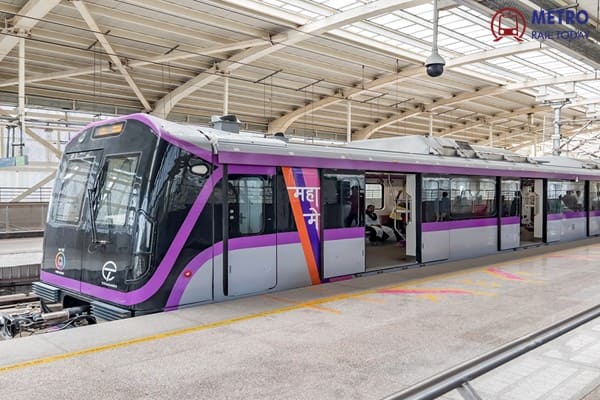
Pune, India (Metro Rail Today): A joint venture between T&T Infra Ltd and Univastu India Ltd has secured a ₹229.97 crore contract from Maharashtra Metro Rail Corporation Limited (Maha-Metro) for civil works under the Pune Metro Rail Project.
The contract covers the design and construction of a 1.123-kilometre elevated metro viaduct along the Vanaz–Chandani Chowk corridor (Line-2A), a key extension aimed at strengthening connectivity in Pune’s western suburbs.
The project is scheduled to be completed within 27 months.
Under the contract, the T&T Infra–Univastu joint venture will undertake several key infrastructure works associated with the corridor.
The scope includes the construction of two elevated metro stations at Kothrud Bus Depot and Chandani Chowk, which will serve as important transit points for commuters in the rapidly growing Kothrud area.
In addition to the metro infrastructure, the project also involves the construction of an integrated double-decker flyover, designed to optimise space in a congested urban environment by accommodating both road traffic and metro operations.
The contract further includes the development of a foot overbridge connecting the metro corridor to a nearby national highway, improving last-mile connectivity for commuters.
Another component of the project is the construction of stabling lines at the Bhakti Shakti end of the PCMC–Nigdi corridor, which will support train operations and maintenance requirements for the network.
The Vanaz–Chandani Chowk corridor forms part of Pune Metro’s efforts to expand its network and improve connectivity across key residential and commercial areas of the city.
Once completed, the new infrastructure is expected to enhance urban mobility, reduce road congestion, and provide faster public transport options for commuters in Pune’s rapidly growing metropolitan region.
The Pune Metro network is being developed in phases to support the city’s long-term transportation needs and to encourage a shift from private vehicles to sustainable mass transit systems.
Commenting on the development, Mrs. Mamta Shah, MD & CEO, Urban Infra Group, said that integrated metro infrastructure projects are essential for improving mobility in rapidly expanding cities.
“Projects that combine metro infrastructure with integrated road solutions such as double-decker flyovers represent an efficient approach to addressing urban congestion. As cities like Pune continue to grow, expanding high-capacity public transport systems will be crucial for improving connectivity and supporting sustainable urban development,” she said.
She added that continued investment in metro networks across India will play a key role in enhancing commuter mobility while reducing traffic pressure on urban road networks.


MRT Online Desk
Metro Rail Today is an authentic and global news provider for the Rail & Metro industry from and around the world.