


Trending Now
 Tender floated for construction of Viaduct, Twin Tunnels and Underground Stations for Indore Metro
 Vietnam needs over 70,000 Engineers and Skilled Workers for Ho Chi Minh City Metro Project
 India targets production of indigenous 350 kmph High Speed Bullet Trains by 2030
 West Bengal proposes four RRTS Corridors linking Kolkata with South Bengal Cities
 Pune Metro Line 3 targets September-end opening with 17 stations on Hinjawadi–Shivajinagar corridor
 Jupiter Wagons Limited forms New Subsidiary to expand Railway Mobility Business
 Five major firms bid for ₹1,878 crore Underground Section of Lucknow Metro Phase 1B Project
 DMRC focuses on Technology, Financial Sustainability and Global Expansion: Dr. Vikas Kumar
 DMRC seeks opportunity to take up operation and maintenance of the Kochi Metro Rail network
 New Zealand opens country's first Underground City Rail Link in Auckland
Uttarakhand Govt proposes extension of Delhi–Meerut RRTS Corridor to Haridwar and Rishikesh
MRT Online Desk
Posted on: 2026-04-10 13:02:00
Viewer: 4,816
Comments: 0
Country: India
City: New Delhi
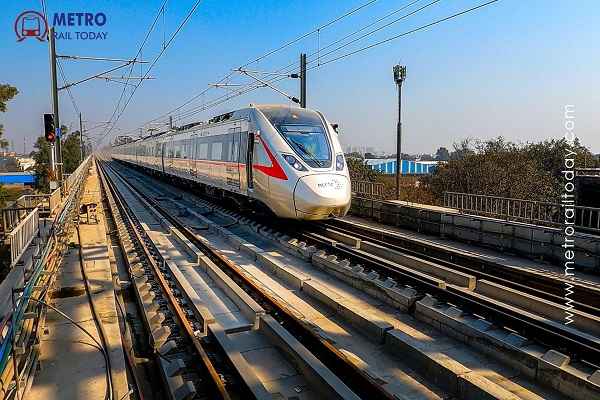
New Delhi, India (Metro Rail Today): In a significant push to regional connectivity, Uttarakhand Chief Minister Pushkar Singh Dhami has urged the Central Government to extend the Namo Bharat Regional Rapid Transit System (RRTS) corridor from Modipuram in Meerut to Haridwar. The proposal was discussed during a meeting with Union Minister for Power, Housing and Urban Affairs, Manohar Lal Khattar. Alongside this, the state has also proposed a dedicated metro corridor connecting Dehradun, Haridwar and Rishikesh.
If approved, the twin proposals could create a continuous high-speed rail connectivity from Delhi to the foothills of the Himalayas, transforming mobility, tourism and regional development across Uttar Pradesh and Uttarakhand.
Extending Namo Bharat Beyond Meerut
At present, the Namo Bharat RRTS operates between Sarai Kale Khan in Delhi and Modipuram in Meerut. The proposed extension would push the corridor further north, largely following the alignment of National Highway 58, and connecting key economic and cultural centres.
The planned route is expected to pass through Modipuram, Daurala-Sakauti, Khatauli, Purkazi, Roorkee, Jwalapur in Haridwar, and finally terminate at Rishikesh. These locations include industrial hubs, educational institutions such as IIT Roorkee, and major tourism destinations, making the corridor strategically significant.
Commenting on the development, Mrs. Mamta Shah, MD & CEO, Urban Infra Group, said, “The proposed extension of the Namo Bharat corridor to Haridwar and Rishikesh reflects a visionary approach to integrating regional mobility with economic development. Such corridors go beyond transportation—they act as catalysts for tourism, real estate growth and industrial expansion. If executed effectively, this project could redefine connectivity between Delhi-NCR and Uttarakhand.”
Economic Corridor in the Making
Beyond mobility, the project is being viewed as a potential economic corridor that could reshape development patterns across the Delhi–Meerut–Haridwar belt. Modipuram is expected to emerge as a key interchange hub, while cities like Muzaffarnagar could see increased interest in industrial and logistics investments.
Roorkee, with its academic prominence, may witness rising demand for student housing, while Haridwar and Rishikesh could experience a surge in tourism-driven real estate, including holiday homes and serviced apartments. Travel time between Delhi and Rishikesh is projected to reduce to approximately 2.5 to 3 hours, making weekend travel significantly more accessible.
Challenges in Execution Remain
Despite its transformative potential, the project faces several challenges. The alignment between Roorkee and Rishikesh passes through ecologically sensitive zones, including the Rajaji National Park, necessitating stringent environmental clearances. Land acquisition along the NH-58 corridor, where property prices are already high, could further escalate project costs.
Additionally, the terrain near Rishikesh may require elevated structures or tunnelling, adding to technical complexity and financial requirements. These factors will play a crucial role in determining the feasibility and timeline of the project.
Next Steps for Approval
The proposal is currently at a preliminary stage and will require consensus among multiple stakeholders, including the Central Government, the Uttar Pradesh Government and the National Capital Region Transport Corporation (NCRTC). Detailed feasibility studies and approvals will determine the path forward.
If realised, the corridor could mark a paradigm shift in regional mobility, offering fast, reliable and sustainable connectivity from Delhi to some of North India’s most important spiritual and tourism destinations.

MRT Online Desk
Metro Rail Today is an authentic and global news provider for the Rail & Metro industry from and around the world.