

Trending Now
 Assam Govt Cabinet approves four-phase Guwahati Metro Rail Project with ₹18,000 crore Investment
 RITES awarded DPR Contract for 55-km Nagpur Metro Phase 3 Expansion with Four New Corridors
 Mumbai Metro One secures ₹2,771 crore Debt Restructuring, Insolvency proceedings set to end
 TBM Durga achieves major tunnel breakthrough at Victoria for Kolkata Metro Purple Line Expansion
 UPMRC floats ₹670 Crore Rolling Stock Tender for 45 Metro Cars for Lucknow Metro Phase 1B
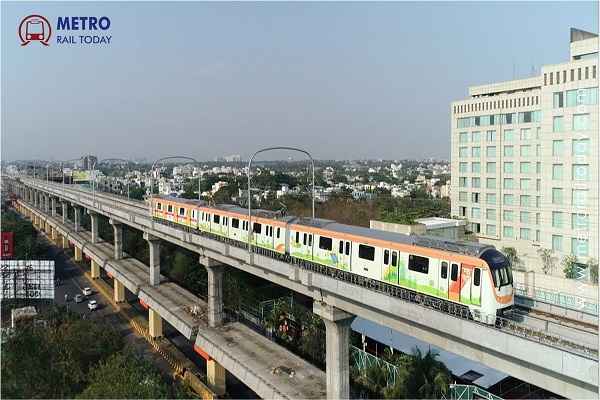 Maha Metro launches ₹994.78 crore Rolling Stock Tender for Nagpur and Pune Metro Phase 2
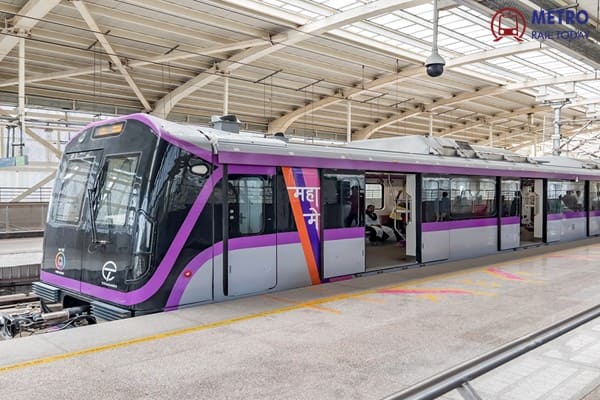 Afcons Infrastructure wins ₹1,045 crore Civil Contract for Ramwadi–Wagholi Metro Corridor in Pune
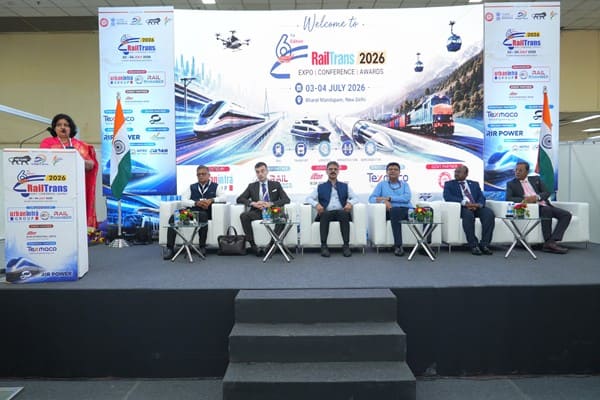 6th RailTrans Expo 2026 concludes on a Grand Note, Reinforcing India's Vision for Viksit Rail 2047
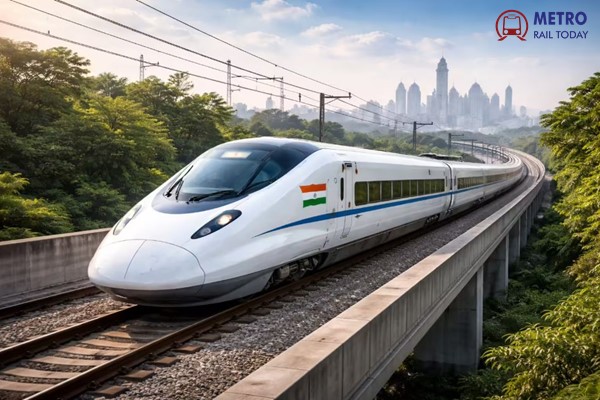 Keralam High-Speed Rail proposal is technically feasible but project cost may double: Expert Panel
 DMRC begins Construction work on Inderlok–Indraprastha Corridor under Delhi Metro Phase 4 Expansion
World’s first Solar-powered Train in Byron Bay signals greener future for Railways
MRT Online Desk
Posted on: 2025-07-21 11:15:00
Viewer: 7,238
Comments: 0
Country: Australia
City:

New South Wales, Australia (Metro Rail Today): In a world increasingly focused on reducing carbon emissions and transitioning toward clean energy, rail transportation is experiencing its own solar-powered revolution. At the heart of this movement is the Byron Bay Solar Train in Australia — a pioneering project that has become a global benchmark for sustainable rail mobility. Launched in January 2018 by the not-for-profit Byron Bay Railroad Company, this refurbished heritage train operates exclusively on solar power, setting a new standard for environmentally conscious commuting.
Running along a scenic 3-kilometer coastal stretch in New South Wales, the train connects the Byron Town Centre with North Beach and the Byron Arts Estate, offering a smooth, quiet, and emissions-free 10-minute journey. The innovation lies in the train’s sleek design, which incorporates solar panels on its rooftop and at both terminal stations. These panels capture and store solar energy to power the train through four to five trips a day during sunny conditions. When sunlight is insufficient, the system draws from renewable energy fed into the local electricity grid, ensuring a seamless and consistent operation.
While the Byron Bay train is currently limited in scope and speed, it stands as a powerful symbol of what's possible when engineering, sustainability, and community vision align. It demonstrates that solar-powered public transportation isn’t a futuristic fantasy — it’s happening now.
Beyond Byron Bay, other initiatives in Australia are pushing the frontier further. Projects like “Riding Sunbeams” are working to directly connect solar farms to railway traction systems, reducing dependence on centralized power grids and slashing operational costs. These developments represent a paradigm shift — one that leverages clean energy not only to power rail engines but also to energize stations, signaling systems, and auxiliary infrastructure.
However, the broader adoption of solar-powered trains on high-speed and long-distance routes remains technologically challenging. Current limitations in solar panel output, battery energy density, and system integration mean that mainstream deployment will take time. Yet, breakthroughs in solar efficiency, battery storage, and power electronics continue to push the boundaries, offering hope for future scalability.
Speaking on the global implications of this innovation, Mrs. Mamta Shah, MD & CEO of Urban Infra Group, said, “The Byron Bay Solar Train is not just an engineering feat—it’s a beacon of what the future of transportation can look like. As countries look to decarbonize their transit networks, such solar-powered solutions provide a model that blends innovation, ecology, and community engagement. India and other nations must take inspiration and invest in pilot projects to test and adapt similar models suited to our unique environmental and energy landscapes.”
As the world races toward climate goals and green infrastructure, the Byron Bay Solar Train serves as a microcosm of larger change. It proves that the journey toward sustainable transport is not only possible but already in motion — powered one sunbeam at a time.

MRT Online Desk
Metro Rail Today is an authentic and global news provider for the Rail & Metro industry from and around the world.