


Trending Now
 RATP Dev–ComfortDelGro JV signs Operations & Maintenance Contract for Copenhagen Metro
 Rail Chamber explores India–Czech Railway Industry Partnerships at New Delhi Business Forum
 India must prove Safety before running different Bullet Train Systems on One Corridor: JTTRI Chief
 Tender issued for Feasibility Study to Transition Hubballi-Dharwad BRTS to Modern Tram System
 Tamil Nadu Chief Minister seeks Centre’s approval for Bengaluru–Hosur Metro Link
 K-RIDE to appoint Detailed Design Consultant for Bengaluru Suburban Rail Project
 Prime Minister Narendra Modi inaugurates first 15-km stretch of Chennai Metro Phase 2
 Karnataka proposes 270-km RRTS Network linking Bengaluru with Tumakuru, Mysuru and KGF
 Alstom and Vingroup sign MoU to supply up to 200 Metro Trains for Hanoi Urban Rail Projects
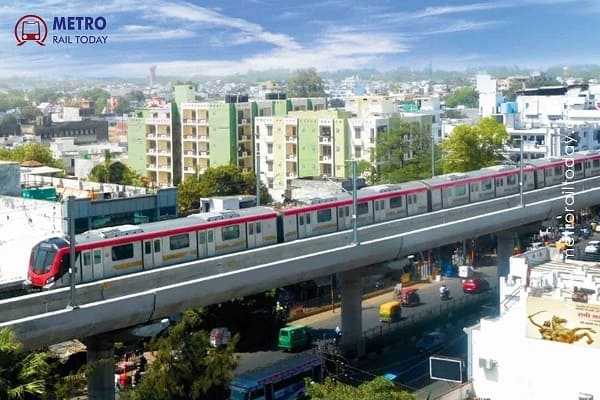 Afcons Infrastructure wins ₹1,383 crore Civil Contract for Lucknow Metro Phase 1B Corridor
Delhi Metro International Limited sets sights on Global Metro Market with First Overseas Bids
MRT Online Desk
Posted on: 2026-08-10 06:15:00
Viewer: 15,915
Comments: 0
Country: India
City: New Delhi
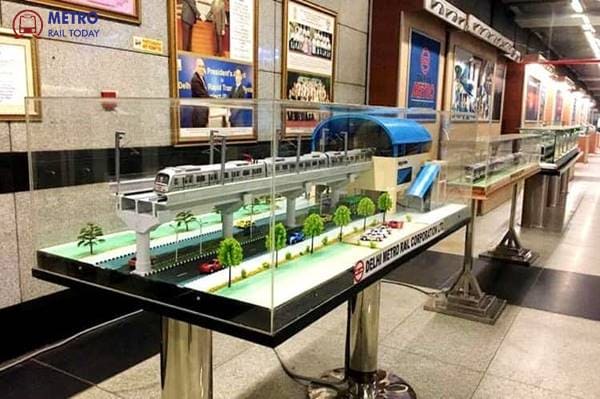
After more than three decades of building, operating and maintaining one of the world’s largest metro networks, the Delhi Metro Rail Corporation (DMRC) is taking its expertise to international markets. Its newly established subsidiary, Delhi Metro International Limited (DMIL), has begun pursuing overseas operations, maintenance and advisory contracts, marking a new phase in DMRC’s efforts to build a global presence.
DMIL, led by its first Chief Executive Officer Sanjay Jamuar, has already participated in five international bids within three months, while several more opportunities are in the pipeline. The company is also pursuing domestic consultancy and advisory assignments with state governments.
In an exclusive interaction with Metro Rail Today, Jamuar outlined DMIL’s mandate, its focus on asset-light service businesses, international expansion strategy, competitive positioning and the company’s approach towards building a commercially sustainable global mobility consultancy.
From DMRC’s experience to a dedicated global business
According to Jamuar, DMRC’s decision to establish DMIL is rooted in more than 30 years of accumulated expertise in planning, construction, operations and maintenance of metro systems.
“DMRC has 31 years of experience in planning, building, operating and maintaining Metro networks. With this accumulated experience, there is sufficient confidence that we can now go out and advise other government entities, including those abroad, on how they should go about it,” he said.
DMRC has already been providing technical and operational assistance to metro projects across India for more than two decades. Several metro systems have benefited directly or indirectly from the organisation’s expertise.
The creation of DMIL is intended to consolidate these activities within a dedicated platform and enable them to be scaled up, particularly in international markets.
Jamuar believes the initiative could also benefit DMRC itself by creating an avenue for the organisation to learn from international markets.
“If we bid for work in a developed country, we are also looking at what they are doing better than us,” he said, highlighting the potential for knowledge exchange and adoption of global best practices.
Operations and maintenance to be DMIL’s first major focus
Rather than attempting to cover the entire metro project lifecycle, DMIL has adopted a focused approach centred on areas where DMRC has established operational expertise.
Operations and maintenance is expected to be the company’s first major service offering. DMRC currently operates more than 400 km of metro network in the National Capital Region and has operational responsibilities or associations with metro systems in several other Indian cities.
According to Jamuar, DMRC’s experience now extends beyond Delhi to Mumbai, Chennai, Noida, Gurugram and Patna, providing a broad operational base from which DMIL can build its international proposition.
The company is also targeting advisory services, including assisting governments in planning urban mobility systems and advising financial institutions and lenders evaluating transport infrastructure projects.
Importantly, DMIL’s mandate will extend beyond metro rail. The company intends to position itself as a broader urban mobility services provider, with opportunities potentially covering other public transport modes such as bus systems.
Asset-light strategy at the core
While DMIL will leverage DMRC’s extensive experience in metro infrastructure, it does not intend to become a construction or asset-creation company.
Jamuar said the subsidiary is deliberately positioning itself as an asset-light, pure service business.
“We are not going to get involved in construction or in creation of assets because we are focusing on becoming an asset-light, pure service business,” he said.
The strategy is aimed at securing multi-year service contracts that provide predictable revenues over an extended period. DMIL’s target areas include operations and maintenance, general consultancy, advisory services and programme management consultancy.
This approach will allow the company to monetise its technical and operational expertise without taking on the capital requirements and risks associated with construction or asset ownership.
Five international bids in three months
DMIL has moved quickly since beginning its international expansion. Jamuar revealed that the company has already submitted five international bids in just three months.
The opportunities span Europe, West Asia and an Indian Ocean country. Due to the confidential nature of invitation-based procurement processes, DMIL has not disclosed details of the individual projects.
Several additional opportunities are already in the pipeline, while the company has also submitted six domestic proposals to various state governments.
The early bidding activity indicates DMIL’s intention to establish itself as a serious player in the increasingly competitive global metro operations and consultancy market.
Existing DMRC contracts to be consolidated under DMIL
A key part of the strategy will be transferring and consolidating DMRC’s existing contracts outside Delhi under the new subsidiary.
Jamuar said the process has already begun and is targeted for completion by March 2027, the end of the current financial year.
The move is expected to provide international clients with a clearer commercial structure through which they can engage DMRC’s expertise.
By bringing these activities under one dedicated entity, DMIL can also develop a distinct international identity while continuing to draw upon DMRC’s technical capabilities and institutional experience.
Profitability remains a key objective
Although DMIL is backed by a public-sector organisation, profitability remains central to its business model.
Jamuar identified three fundamental principles guiding the subsidiary: commercial profitability, an asset-light operating model and a predominantly international mandate outside Delhi.
“This is going to work on commercial principles, and creating a subsidiary helps DMRC focus attention on it,” he said.
However, DMIL does not expect its business model to generate exceptionally high margins. According to Jamuar, service businesses typically provide moderate but relatively stable profitability, particularly when supported by long-term contracts.
The company therefore sees operations and maintenance, consultancy, advisory and programme management as businesses that can deliver sustainable revenues over multiple years.
India’s metro expertise enters a competitive global market
The establishment of DMIL marks a significant shift in how India’s metro expertise is being positioned internationally. India has rapidly expanded its metro network over the past three decades, developing capabilities in project planning, operations, maintenance, digital systems, multimodal integration and large-scale urban transport management.
DMIL’s strategy is to convert that accumulated institutional knowledge into a global service offering.
The challenge, however, will be competing with established international engineering, consultancy and metro operators that already have a presence across multiple markets. Jamuar acknowledged the competitive landscape but believes the global market is sufficiently large to accommodate new players.
With five overseas bids already submitted, several more opportunities under consideration and a growing domestic consultancy pipeline, DMIL is seeking to establish itself not as an infrastructure developer, but as a global provider of metro operations, mobility advisory and programme management expertise.
If successful, the initiative could provide a new avenue for India to export not only metro technology and equipment, but also the operational knowledge and institutional expertise accumulated through the development of its rapidly expanding urban rail network.


MRT Online Desk
Metro Rail Today is an authentic and global news provider for the Rail & Metro industry from and around the world.