

Trending Now
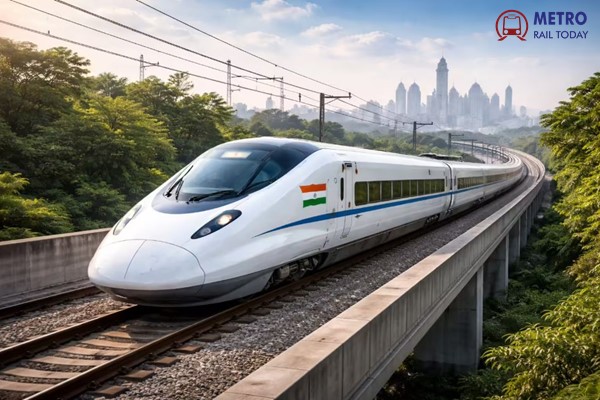
 How Indigenous Engineering and Japanese Technology are transforming India's first Bullet Train?
 India's Metro Rail Network set to cross 2000-km mark soon, become second largest in World
 Alstom to deploy DTG Signalling System for Jaipur Metro’s 5.2-km Phase-1 Extension
 RVNL floats ₹297.45-crore Power Systems Tender for Kolkata Metro Purple Line
 Siemens Mobility awarded $772 million Trainset Contract for California High-Speed Rail Project
 RITES submits fresh DPR to UPMRC for ₹12,000 crore Prayagraj Metro Rail Project
 Paras Railtech wins ₹84.72 crore Ballastless Track Contract for Jaipur Metro Rail Project
 Indian Railways announces 3,548 Graduate-Level Vacancies under NTPC Recruitment 2026
 European Union sanctions €10 million to support extension of Hanoi Metro Line 3
 GMRC issues ₹683 crore Tender for construction of 8.68 km stretch for Ahmedabad Metro
How Indigenous Engineering and Japanese Technology are transforming India's first Bullet Train?
MRT Online Desk
Posted on: 2026-10-26 07:00:00
Viewer: 166
Comments: 0
Country: India
City: New Delhi
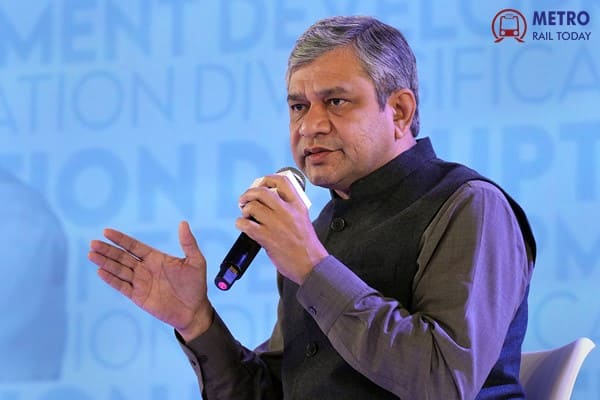
India is combining Japanese high-speed rail technology with domestically manufactured construction equipment, massive prefabricated concrete girders and advanced tunnelling systems to build its first bullet train corridor between Mumbai and Ahmedabad. In a detailed blog titled How India is Building Its First Bullet Train, Railway Minister Ashwini Vaishnaw outlined the engineering innovations, technology transfers and industrial capabilities being developed through the 508-km project.
Designed for a maximum speed of 350 kmph, with trains expected to operate at 320 kmph, the Mumbai–Ahmedabad High-Speed Rail (MAHSR) corridor is intended to do more than introduce faster passenger travel. According to Vaishnaw, the project is helping India develop the domestic manufacturing capabilities, engineering standards and skilled workforce needed to build future high-speed rail networks.
“The first project is not just a line on the map. It is the absorption of an entire technology by an entire industry,” he wrote.
Full-Span Launching Method Speeds Up Viaduct Construction
One of the most significant innovations is the Full Span Launching Method, which allows elevated railway sections to be constructed much faster than conventional segmented-girder techniques.
Under this method, an entire 40-metre concrete girder weighing approximately 970 tonnes is manufactured in a casting yard, transported to the construction site and lifted onto supporting piers in a single operation. Vaishnaw said the method was ten times faster than conventional segmented construction.
The technology has also become increasingly indigenous. While the first launching machines were imported, Indian engineers subsequently worked on their designs. Today, giant cranes capable of lifting more than 1,000 tonnes in a single movement are designed and manufactured in India.
Vaishnaw said Japanese experts visiting the corridor had expressed interest in construction technologies developed by Indian engineers. He also quoted Masafumi Shukuri, Chairman of the International High-Speed Rail Association, as saying, “Japan could not have done it at this speed.”
Why 465 km of the Corridor Will Be Elevated
Of the corridor’s total 508-km length, approximately 465 km will run on elevated viaducts. This design allows the high-speed railway to maintain the straight alignments required for fast, reliable operations while eliminating level crossings and reducing the risk of interference from road traffic, animals and pedestrians.
The elevated structure also allows roads and agricultural activities to continue beneath the railway, reducing disruption at ground level.
At speeds of up to 350 kmph, even small variations in track alignment, vibration and aerodynamic forces become important engineering considerations. As Vaishnaw explained, “Kinetic energy grows with the square of speed. Double the speed, and the energy becomes four times.”
These requirements make precision in track construction, structural design and railway systems essential to safe high-speed operations.
Giant Tunnel Boring Machines Tackle Maharashtra’s Underground Section
The project includes a 21-km tunnel in Maharashtra, featuring a 7-km stretch beneath Thane Creek. Two tunnel boring machines were launched in July 2026 from Vikhroli and Sawli to undertake the challenging excavation work.
Each machine weighs more than 3,000 tonnes, measures 96 metres in length and has a cutterhead 13.6 metres in diameter. The equipment is designed to excavate through complex geological conditions while creating a tunnel suitable for high-speed rail operations.
According to the minister, approximately 5 km of the Maharashtra tunnel had been excavated using the mountain tunnelling method as of September 2026.
The underground works are among the most technically demanding components of the project, requiring careful management of ground conditions, construction safety and the surrounding urban environment.
Mumbai’s Underground Bullet Train Station Takes Shape
At Bandra Kurla Complex (BKC), one of Mumbai’s busiest commercial districts, engineers are constructing the corridor’s only underground station at a depth of approximately 32 metres.
The station is being developed amid existing buildings, roads and metro infrastructure, making space management and construction planning particularly complex. Its three levels will accommodate platforms, passenger concourses and other station services.
Six platforms, each more than 400 metres long, are planned to handle full-length bullet train services. The corridor’s remaining 11 stations will be elevated.
The BKC station will serve as a key access point for high-speed rail passengers travelling to and from Mumbai’s major commercial district.
Advanced Electrification for Speeds of 350 kmph
The Mumbai–Ahmedabad corridor will use a 2×25 kV compound catenary electrification system, which Vaishnaw described as being deployed in India for the first time.
Unlike conventional railway electrification, high-speed operations require the overhead contact wires to maintain precise mechanical tension to ensure uninterrupted contact with the train’s pantograph. Even minor inconsistencies can affect performance at very high speeds.
Nearly 22,000 steel masts will support the electrification system. More than 9,300 had been installed by September 2026.
The project is also building domestic supply capabilities for critical electrical components. According to the minister, major transformers, cross arms, ground wires, protection wires and feeder wires are being manufactured in India.
Japanese Track Technology and Indigenous Bullet Train Development
The project reflects a broader strategy of adapting proven Japanese technology while developing domestic manufacturing capabilities.
The corridor will use Japanese J-slab ballastless track technology, with the concrete slabs being manufactured in Indian casting yards by Indian engineers. This approach combines established high-speed rail technology with local production and technical expertise.
India is also developing its own high-speed trainsets. The Integral Coach Factory (ICF) and BEML are working on the indigenous B28 trainset, designed for speeds of up to 280 kmph.
Vaishnaw said the first body frame had been completed and was undergoing structural testing, with track trials expected by mid-2027. A faster B35 trainset, designed for 350 kmph, is planned as the next step.
“This is what technology absorption means. We are learning to build every part of the system, and manufacture it at home,” the minister wrote.
The development of indigenous rolling stock alongside high-speed infrastructure could strengthen domestic capabilities in train manufacturing, component supply, testing and maintenance.
Seven More High-Speed Rail Corridors Planned
The Mumbai–Ahmedabad project is also intended to establish common engineering standards that can be replicated across future high-speed rail corridors.
The approach involves adapting foundations to local soil conditions while standardising structures, tracks, stations, electrification and signalling systems wherever possible. Factory-based manufacturing and standardised components could help reduce construction time and costs while simplifying maintenance, spare-parts procurement and workforce training.
The Union Budget 2026–27 announced seven additional high-speed rail corridors covering nearly 4,000 km, with an estimated investment of approximately ₹16 lakh crore.
“Every one of them will be built on the standards, the suppliers and the skills created by the first corridor. That is why the first one matters so much,” Vaishnaw said.
The first corridor could therefore play an important role in developing a domestic high-speed rail supply chain, including manufacturers of construction equipment, electrical systems, track components and rolling stock.
When Will India’s First Bullet Train Begin Operations?
According to Vaishnaw, 371 km of viaduct construction and 456 km of pier work had been completed by September 2026. Civil work had also been completed at eight stations.
The first high-speed rail service is scheduled to begin in the final quarter of 2027, initially connecting Surat and Vapi. The remaining sections of the Mumbai–Ahmedabad corridor are expected to become operational in phases.
Once completed, the project is expected to reduce the journey between Ahmedabad and Mumbai to approximately 1 hour and 58 minutes.
Beyond faster travel, the corridor represents a major step in India’s effort to develop high-speed rail expertise at home. Its long-term significance will depend not only on the successful introduction of bullet train services but also on how effectively the engineering knowledge, manufacturing capacity and construction methods developed through the project can be applied to the country’s next generation of high-speed rail corridors.


MRT Online Desk
Metro Rail Today is an authentic and global news provider for the Rail & Metro industry from and around the world.