


Trending Now
 Pune Metro Line 3 set to launch First 12-km Section on 15 July 2026
 DMRC gets approval to Fell or Transplant 364 Trees for Central Vista Metro Corridor under Phase IV
 ₹4.5 Lakh crore Metro Rail Investment reaches less than 5% of Urban Population in India
 West Bengal plans to launch Water Metro Systems in Kolkata
 Titagarh Rail Systems targets full Indigenous Aluminium Coach Manufacturing by FY2027
 MMRDA issues Track Works Tender for Kasheli Depot of Mumbai Metro Line 5
 Indian Railways to procure 60 new Rolling Stock Trains for Kolkata Metro in five years
 Kerala forms Expert Committee to evaluate Thiruvananthapuram–Kannur High-Speed Rail Corridor
 Mumbai–Ahmedabad Bullet Train Project achieves third Mountain Tunnel Breakthrough in Maharashtra
 MMRDA invites bids for ₹4,882 Crore Rolling Stock & Systems Contract for Mumbai Metro Line 12
Andhra Pradesh to develop ₹14,300cr Visakhapatnam Metro project on PPP mode
MRT Online Desk
Posted on: 2022-04-28 08:05:00
Viewer: 12,441
Comments: 0
Country: India
City: Visakhapatnam
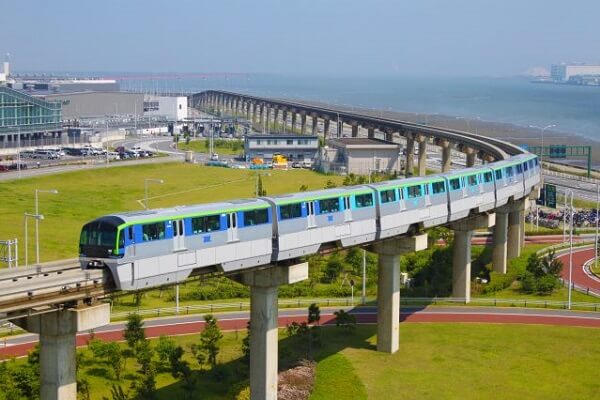
Visakhapatnam, India (Metro Rail Today): Andhra Pradesh Metro Rail Corporation Limited (APMRCL), an SPV formed for the implementation of metro rail projects in Andhra Pradesh state, is planning to develop a metro rail system in Visakhapatnam city on the public-private partnership modal. If things go as per the plan, then Visakhapatnam city will have a metro rail network in the next 8 to 10 years.
APMRC will submit the revised Detailed Project Report (DPR) of Visakhapatnam, which is pegged at ₹14,300 crores, to the state government for approval. As per the new DPR, the metro rail will span about 76 km, passing through the city, in four corridors. The groundwork and survey have been on since 2015, but due to some delays in both the governments, the project has slowed down. This project is part of the commitment made in the Andhra Pradesh Reorganisation Act of 2014, and it is a collaborative project of both the Centre and the State Governments.
"One corridor will be from Visakhapatnam Steel Plant to Kommadi Junction, spanning about 34 km, and the others are Gurudwara in Seethammdhara to Old Post Office with a length of about 5 km, Thatichetlapalem to Chinna Waltair of 6.75 km and Kommadi Junction to Bhogapuram airport, which would span over 30 km," said UKM Rao, Managing Director, APMRC. He said that Chief Minister Y.S. Jagan Mohan Reddy is very keen on this project and monitoring it closely.
"The metro rail project is the need of the hour, as the city is growing exponentially. It is an affordable, swanky, safe, fast mode of transport, hassle-free, pollution-free, reliable, comfortable and energy saver. In India, there are close to about 29 cities, where there is metro rail. In about 15 cities they are already operational in phases and in others they are either in the construction phase or planning stage," said Rao.
Talking about the efficiency and effectiveness of metro rail projects, he said that metro can ferry about 60,000 people in one direction in one hour. In Visakhapatnam, our estimate, once all the four corridors are operational, it would cater to about at least 5 lakh commuters on a daily basis. The Visakhapatnam metro will have two cars of 200 capacity each, which means it can ferry 400 passengers at a time. While in cities such as Delhi it is 400 per car. All the cars are driverless and will run on the remote control and each can run independently. So if one breaks down, the other can continue its journey.
The cars will run on electricity and operate on third rail technology, with traction at the bottom and not on the overhead. The duration of frequency for each train has been projected for 8 minutes, which can be adjusted to 5 minutes during peak hours and the proposed operational time has been fixed from 5 a.m. to 11 p.m.
According to DPR, the minimum average distance between each station in the first three corridors is around 1 km and even less at times and in the fourth corridor (Kommadi to Bhogapuram) the average is around 1.5 km.
"It has been seen that with the operation of the metro rail, there has been a spurt in the GDP at least by 8 to 10% in the cities, where they are operational. This is called transit-oriented development, as development is directly linked to logistics and transport. Most importantly, metro travel is said to be the safest and most reliable mode of transport," rao added.
There is a provision for the construction of station buildings, with a minimum of six floors. While two floors will be used for the station's purposes and its utilities, the others can be let out for commercial space. This will also generate revenue, as in total about 54 stations in all the corridors are being planned. Moreover, the use of metro rails will bring down vehicular pollution and the load of vehicles on road.
“Once the DPR is approved, we will go for global tenders and the project will be built on public-private partnership (PPP) model. There will be some share from the Union and the State Governments, but the share component will depend on the offer and terms and conditions of the bidding company. The project will be leased out for 33 years and, as per a conservative estimate the break-even period is 15 years," said Rao.
According to him, the estimated project time is at least five years for the first three corridors and another three years for the fourth one. But the fourth one depends on the construction and operation of the Bhogapuram international airport.


MRT Online Desk
Metro Rail Today is an authentic and global news provider for the Rail & Metro industry from and around the world.