

Trending Now
 Adani Group's construction arm bags first ₹1,024 crore Civil Contract of Delhi Metro Phase 5
 Govt approves permanent absorption of NCRTC Managing Director Shalabh Goel from Indian Railways
 Hyundai Rotem signs $332 million Rolling Stock Contract with Vietnam for Ho Chi Minh City Metro
 Maharashtra approves ₹18,130 Crore Mumbai Metro Line 5 Expansion & New Line 5A
 Telangana Govt approves ₹13,615 crore IRFC loan to takeover Hyderabad Metro from L&T
 DMRC appoints Sanjay Jamuar as First CEO of Delhi Metro International Limited
 India launches first High Speed Bullet Train Manufacturing Complex in Bengaluru
 Spain investigates CAF’s role in Jerusalem Light Rail Project amid Human Rights allegations
 Dr. Amit Kumar Jain conferred Delhi CM’s Award 2026 for driving Digital Innovation in Urban Mobility
 UAE Approves AED 34 Billion First Fully Underground Dubai Metro Gold Line Project
Etihad Rail awards over $8 billion contracts for Abu Dhabi–Dubai High-Speed Rail Project
MRT Online Desk
Posted on: 2026-02-03 17:00:00
Viewer: 2,538
Comments: 0
Country: United Arab Emirates
City: Dubai
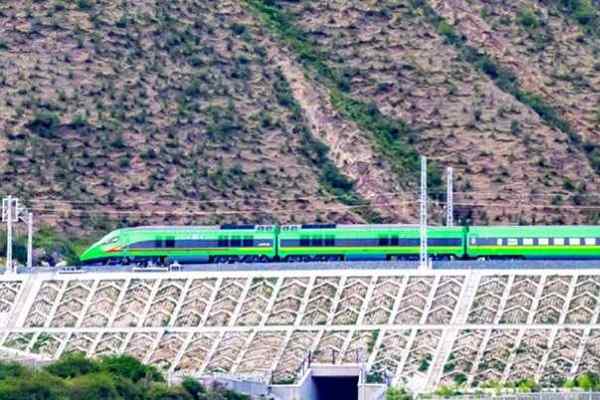
Dubai, UAE (Metro Rail Today): The UAE’s ambitious high-speed rail programme has reached a major milestone, with Etihad Rail awarding multibillion-dollar design-and-build contracts for the civil works and station packages of the Abu Dhabi–Dubai High-Speed Railway (HSR). The project, valued at over $8 billion, marks a transformative step in the country’s push for next-generation, inter-emirate connectivity.
The Abu Dhabi civil works package has been awarded to a consortium led by National Projects Construction (NPC), alongside Trojan Tunnelling, Turkey’s Kalyon, and China State Construction Engineering Corporation (CSCEC). US-based Jacobs has been appointed as the lead designer for this package.
The Dubai-side package has been secured by a consortium comprising India’s Larsen & Toubro (L&T), China Harbour Engineering Company (CHEC), and UAE-based Wade Adams. Design responsibilities for this section will be handled by France’s Egis and Singapore’s Surbana Jurong.
Additionally, Spanish engineering firms Sener and Ineco have been appointed as the project’s overall engineering consultants.
High-Speed Rail with Global Benchmarks
Designed for a maximum speed of 350 km/h and an operating speed of 320 km/h, the UAE’s HSR network will significantly cut travel times between the nation’s two largest economic hubs. Once operational, the journey between Yas Island (YAS) in Abu Dhabi and Al-Jaddaf (DJD) in Dubai is expected to take just 30 minutes.
The high-speed rail programme will be developed in four phases, with the first phase—connecting Abu Dhabi and Dubai—targeted for completion by 2030.
Phase-wise Development Plan
-
Phase 1: Abu Dhabi–Dubai HSR line (150 km)
-
Phase 2: Inner-city rail network within Abu Dhabi with 10 stations
-
Phase 3: Rail connection between Abu Dhabi and Al-Ain
-
Phase 4: Inter-emirate connection between Dubai and Sharjah
Civil Works Packages and Alignment
The first phase has been divided into four civil sections:
-
Phase 1A: Al-Zahiyah to Yas Island – 23.5 km
-
Phase 1B: Yas Island to Abu Dhabi–Dubai border – 64.2 km
-
Phase 1C: Border to Al-Jaddaf – 52.1 km
-
Phase 1D: Abu Dhabi Airport delta junction and airport station connection – 9.2 km
The alignment will feature five stations:
-
Al-Zahiyah (ADT)
-
Saadiyat Island (ADS)
-
Yas Island (YAS)
-
Abu Dhabi International Airport (AUH)
-
Al-Jaddaf (DJD)
ADT, AUH and DJD stations will be underground, ADS will be elevated, and YAS will be at-grade.
Systems, Rolling Stock and Depots
Beyond civil works, the overall construction scope also includes rolling stock procurement, railway systems, and two maintenance depots, positioning the project as a fully integrated high-speed rail ecosystem.
Commenting on the development, Mrs. Mamta Shah, Managing Director & CEO, Urban Infra Group, said the project reflects the UAE’s long-term vision for sustainable, high-capacity mobility.
“The Abu Dhabi–Dubai high-speed rail project is a landmark initiative that sets new benchmarks for rail infrastructure in the Middle East. By integrating global engineering expertise with advanced construction and systems technology, the UAE is creating a future-ready mobility corridor that will boost economic integration, reduce road congestion, and redefine inter-city travel,” she said.
Transforming Inter-Emirate Mobility
Once operational, the Etihad Rail HSR will not only revolutionise passenger travel between Abu Dhabi and Dubai but also strengthen economic ties, enhance airport connectivity, and reinforce the UAE’s position as a global leader in next-generation rail infrastructure.

MRT Online Desk
Metro Rail Today is an authentic and global news provider for the Rail & Metro industry from and around the world.