

Trending Now
 DMRC floats Tender for Central Vista Depot Design in Delhi Metro Phase V Expansion
 MMRDA seeks ₹14,100 Crore Loan for two upcoming Mumbai Metro Corridors
 Jupiter Wagons Eyes ₹20,000-Crore Mumbai Suburban Mega Rolling Stock Tender
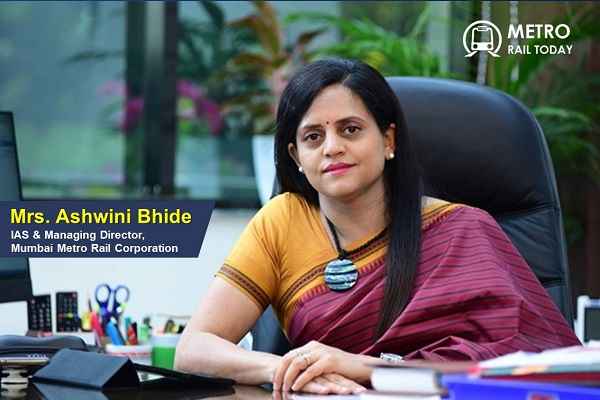 Mumbai Metro Chief Ashwini Bhide appointed as First Woman BMC Commissioner
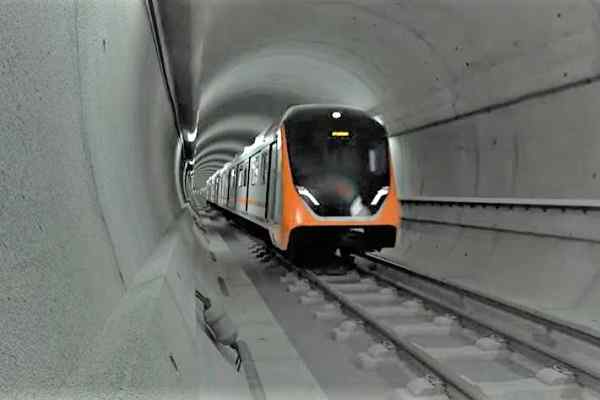 TBM ‘Parvati’ completes Underground Tunnelling on Kanpur Metro Phase 1 Project
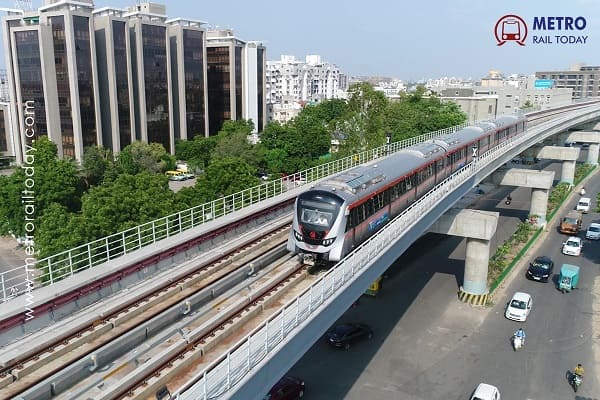 Surat Metro begins First Trial Run on 8.5 km Diamond Corridor between Dream City and Althan Tenement
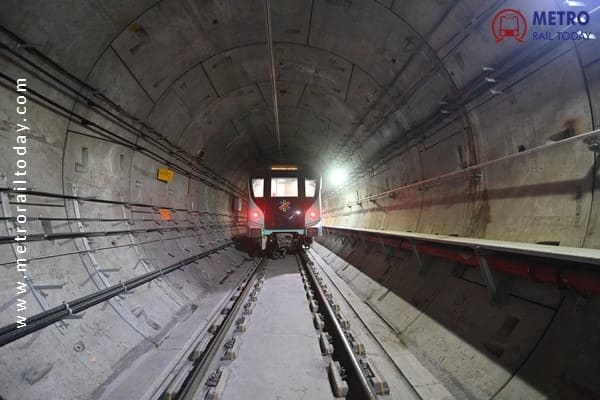 Cemindia wins ₹1,024 crore Civil Contract for Central Vista Tunnel Package of Delhi Metro Phase V
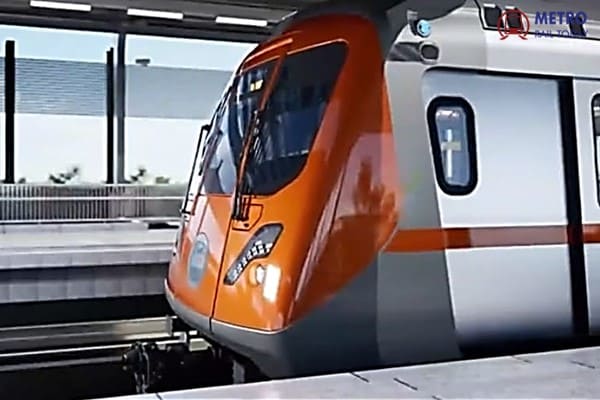 TBM ‘Durgavati’ begins tunneling works on Bhopal Metro Underground Stretch
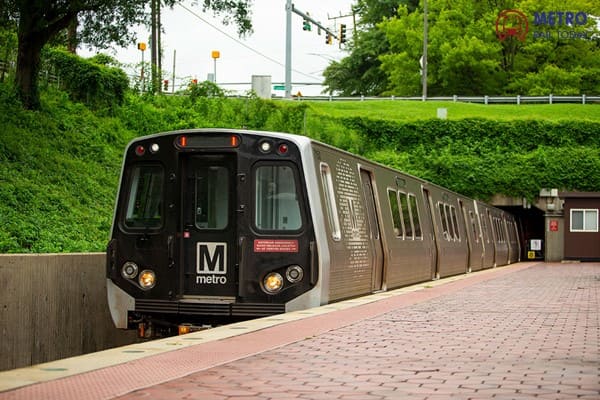 Washington Metro celebrates its Golden Jubilee—50 years of passenger service
 Two TBMs arrive in Mumbai for undersea tunneling on Mumbai-Ahmedabad Bullet Train Project
HMRTC proposes shared RRTS and Metro operations on Gurugram–Faridabad Metro corridor
MRT Online Desk
Posted on: 2025-12-29 06:25:00
Viewer: 2,364
Comments: 0
Country: India
City: Gurgaon
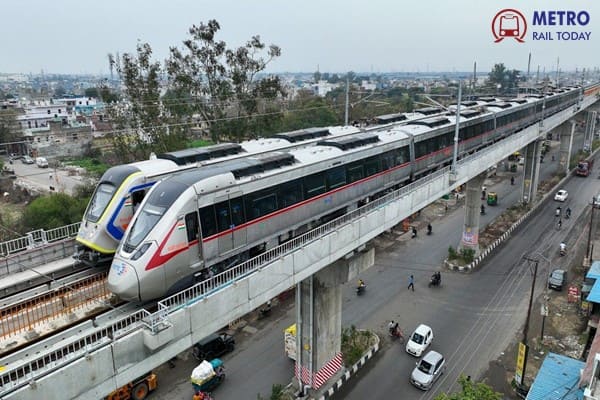
Gurugram, India (Metro Rail Today): In a significant move toward multimodal integration in the National Capital Region, the Haryana Mass Rapid Transport Corporation (HMRTC) has proposed that the upcoming Namo Bharat Regional Rapid Transit System (RRTS) corridor between Gurugram and Faridabad be designed to allow metro operations on the same infrastructure within Gurugram limits. The proposal has been formally submitted to the National Capital Region Transport Corporation (NCRTC), which is implementing the RRTS network.
Shared corridor planned between IFFCO Chowk and Sector 53
The key idea is to enable shared use of the first 8 to 9 kilometres of the corridor from IFFCO Chowk to Sector 53, where the proposed RRTS alignment coincides with the metro corridor planned by HMRTC. By allowing both systems to operate on common infrastructure in this stretch, authorities aim to optimise capital investment, prevent duplication of civil structures, and ensure better urban integration of regional services. This approach would also support seamless passenger movement and improve last-mile connectivity.
HMRTC Managing Director Dr. Chandar Shekhar Khare has urged NCRTC to consider an operational model similar to Meerut, where Namo Bharat trains and metro services already share the same track and stations on select stretches of the Delhi–Meerut RRTS corridor. The Meerut experience is being cited as a proof-of-concept showing that shared infrastructure can be implemented with appropriate planning and system design.
Stronger network integration planned for Gurugram
From a system planning perspective, NCRTC is focusing on improving interchange opportunities along the Gurugram–Faridabad alignment. The proposed corridor is expected to provide an interchange with the existing Rapid Metro along Golf Course Road and also connect to the planned metro line between Golf Course Extension Road and Sector 5. These interconnections are expected to improve access for office districts, residential sectors and commercial hubs, significantly strengthening Gurugram’s public transport network.
Commenting on the development, Mrs. Mamta Shah, MD & CEO of Urban Infra Group, said, “The proposal to allow shared use of RRTS infrastructure for metro operations in Gurugram is a smart, future-ready approach. Shared corridors optimise public investment, reduce construction disruption and give passengers seamless multimodal travel. If implemented with strong safety and signalling systems, such models can become a benchmark for integrated urban and regional mobility across India.”
Awaiting central approval after feasibility review
The proposal will now depend on detailed technical assessment and approval from the Union government. Key factors under study will include safety requirements, service frequency, rolling stock compatibility, platform design, signalling integration and overall capacity. Experts note that while shared systems offer efficiency gains, they require careful planning to ensure that neither RRTS nor metro service reliability is compromised.
The Gurugram–Faridabad Namo Bharat corridor is an important link in the expanding RRTS network aimed at reducing road congestion and regional travel time in the NCR. If cleared, the shared-infrastructure model in Gurugram would replicate the success of the Delhi–Meerut RRTS corridor, where Meerut Metro and Namo Bharat services already operate on common infrastructure, marking another step toward integrated, high-capacity public transport for the region.

MRT Online Desk
Metro Rail Today is an authentic and global news provider for the Rail & Metro industry from and around the world.