

Trending Now
 Bangalore Metro raises ₹1,500 Crore via Private Investment Model to Fast-Track Expansion
 From Steam to Speed: Indian Railways Marks 173 Years of Transformational Journey
 Maha-Metro to appoint Design Consultants for ₹12,200 crore Thane Integral Ring Metro Project
 Maha-Metro floats ₹154 crore AFC System Tender for Nagpur Metro Phase 2 Project
 Rail Chamber, Indo British Business Forum sign strategic MoU to boost UK–India Rail collaboration
 Revised DPR submitted for ₹12,937.23 crore Bhakti Shakti–Chakan Corridor on Pune Metro Rail Project
 Tender issued for construction of Sanoth Depot on Rithala–Kundli Corridor under Delhi Metro Phase IV
 GMRC to appoint General Engineering Consultants for Ahmedabad Metro Phase 2A, 2B & 3A
 Railway Ministry approves 220 kmph Next-Gen AI-enabled High Speed Trainsets for India
 GMRC issues first tender for Hybrid Metro–RRTS Corridors under Ahmedabad Metro Phase 3
Washington Metro celebrates its Golden Jubilee—50 years of passenger service
MRT Online Desk
Posted on: 2026-03-27 15:10:00
Viewer: 997
Comments: 0
Country: United States
City: Arlington
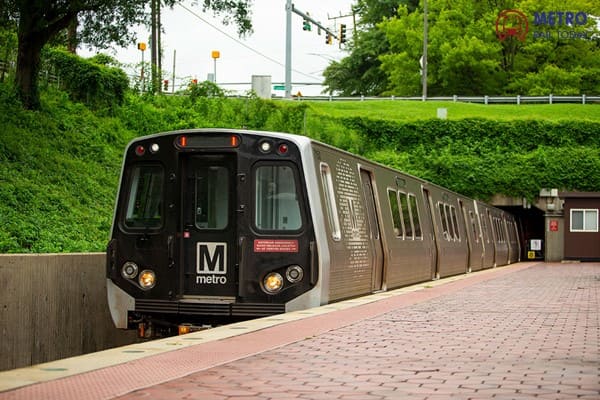
Wasgngton, United States (Metro Rail Today): The District of Columbia and the surrounding "DMV" region paused to celebrate a monumental milestone. On March 27, 2026, the Washington Metropolitan Area Transit Authority (WMATA) officially marked its Golden Jubilee—50 years of passenger service.
From its humble beginnings as a 7.4-kilometer (4.6-mile) line, the Metro has evolved into a massive 209-kilometer (130-mile) artery that sustains the heart of American democracy.
The Birth of the "Great Society Subway"
When the first Red Line train departed on March 27, 1976, it traveled between just five stations: from Rhode Island Avenue to Farragut North. At the time, critics dubbed it a "toy subway." However, architect Harry Weese had a grander vision. He rejected the cramped, dark designs of older systems in New York or London, opting instead for the iconic "Brutalist" vaulted concrete ceilings that give the stations their cathedral-like atmosphere.
By 2001, the system reached its original 166-kilometer (103-mile) goal. Today, in 2026, it stands as a 209-kilometer network with 98 stations, having served over seven billion rail trips since its inception.
The 2026 Golden Jubilee Celebrations
The festivities yesterday were a blend of nostalgia and high-tech flair:
-
The Golden Fleet: Commuters were greeted by "wrapped" trains and buses featuring a bronze-and-gold motif, a tribute to the original 1970s aesthetic.
-
Limited-Edition SmarTrip Cards: Five unique designs were released, each representing a decade of Metro history—from the "waffle" ceilings of the 70s to the 7000-series trains of the 2010s.
-
The Pop-Up Shop: A special "Metro Blooms" shop opened at L’Enfant Plaza (running through April 12), selling vintage-style pennants and posters of every train series ever used.
-
Customer Appreciation: At Metro Center, staff handed out commemorative giveaways and opened a historical photo gallery for the thousands of riders who consider the Metro their "second home."
Beneath the Vaults: Unknown Facts & Secrets
While millions use the system daily, the DC Metro hides several fascinating secrets within its deep-bore tunnels:
1. The "Ghost" Test Station
In May 1968, eight years before the Metro opened, a full-scale experimental station was built above ground for $69,000. It was a 19.5-meter-long "mock-up" used to test the lighting, acoustics, and the iconic "waffle" concrete design before the real tunnels were even dug.
2. The Missing "J" Street
Visitors often wonder why there is no "J Street" in DC’s alphabetical grid. While this is a city-wide quirk, it directly impacts the Metro's naming. The reason? In the 18th and 19th centuries, the letters "I" and "J" looked nearly identical in written script. To avoid confusion, urban planners skipped "J" entirely, which is why your Red Line trip will take you from I (Judiciary Square) straight past where J should be.
3. Record-Breaking Engineering
-
The Wheaton Escalator: The Wheaton station features the longest single-span escalator in the Western Hemisphere. It stretches 70 meters (230 feet) and takes nearly three minutes to ride from top to bottom.
-
The Deepest Descent: Forest Glen is the deepest station in the system, sitting 60 meters (196 feet) underground. It is so deep that it has no escalators; it is the only station accessible solely by high-speed elevators.
4. The Rejected "Views"
Original plans for the Red Line included a segment that would have run across the Rock Creek Valley on a bridge. Architect Harry Weese wanted the tracks to cut through the concrete supports of the Taft Bridge, giving riders a spectacular view of the park. Engineers ultimately vetoed the idea for structural reasons, opting for the deep tunnel used today.
5. Symbolism That Never Was
The Metro map was almost a series of icons. Original designer Lance Wyman wanted every station to have a distinctive symbol (similar to the Mexico City Metro). For example, Judiciary Square would have been the scales of justice, and Eastern Market a pile of apples. The idea was scrapped for being too "cluttered."
Looking Toward the Next 50 Years
As the Golden Jubilee celebrations continue through the spring, the focus is already shifting to the next century of service. The Purple Line—the ambitious light rail project connecting Maryland’s suburbs—is slated for its grand opening next year, representing the next phase of regional connectivity.
Furthermore, the introduction of the 8000-series railcars and the full automation of the system signal a move toward a "driverless" future that the planners of 1976 could only imagine.
While the "brown carpet" of the original cars is long gone (much to the relief of some and the nostalgia of others), the essence of Metro remains. It is the only physical entity that truly binds the "DMV" (DC, Maryland, and Virginia) together—a concrete-and-steel testament to what regional cooperation can achieve.

MRT Online Desk
Metro Rail Today is an authentic and global news provider for the Rail & Metro industry from and around the world.