

Trending Now
 India unveils draft National Water Metro Policy 2026 to expand Urban Water Transport
 Rewriting Regional Mobility with India’s first Namo Bharat Corridor
 Hyderabad plans Pod Taxi System to enhance Last-Mile Connectivity for Metro commuters
 Maharashtra to expand 200 kilometers metro rail network across Pune and Pimpri-Chinchwad
- Govt of India explores Namo Bharat Rapid Rail to replace proposed Cuttack–Bhubaneswar Metro Project
 Global tender floated for Automatic Fare Collection System for Mumbai Metro Line 6
 Delhi Metro secures 6th rank among largest metro rail systems in the world by network length
 Indian Railways grants NOC to resume tunnelling works on Patna Metro Corridor 2
 Efkon India Bags ₹103 Crore Telecom Systems Contract for Mumbai Metro Lines 7A and 9
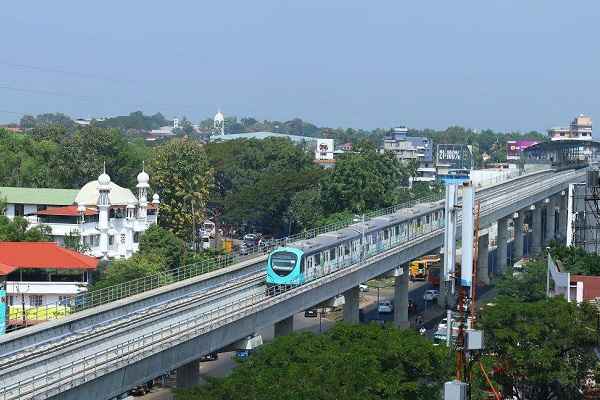 Bids invited for Telecommunication Systems Contract for Kochi Metro Phase 2 Pink Line
India unveils draft National Water Metro Policy 2026 to expand Urban Water Transport
MRT Online Desk
Posted on: 2026-03-17 11:45:00
Viewer: 89
Comments: 0
Country: India
City: New Delhi
New Delhi, India (Metro Rail Today): The Ministry of Ports, Shipping and Waterways has released the Draft National Water Metro Policy 2026, a major initiative aimed at integrating water-based transport systems into India’s urban mobility network.
The policy proposes the development of Water Metro systems across cities, using rivers, canals, lakes, and coastal waterways to provide clean, efficient, and reliable public transport while reducing pressure on road infrastructure.
The draft has been opened for public consultation, inviting feedback from stakeholders before the policy is finalised.
Vision for Water-Based Urban Mobility
The proposed policy envisions high-frequency passenger ferry services operating within urban areas, similar to metro rail systems in terms of reliability, safety, and scheduling.
These Water Metro systems will be designed to function as a core component of the urban mobility ecosystem, ensuring seamless integration with metro rail, bus services, and other public transport modes.
The goal is to create multi-modal transport networks where commuters can easily switch between road, rail, and water-based transit.
Addressing Urban Transport Challenges
India’s rapidly growing cities face rising traffic congestion, pollution, and land constraints, making expansion of road and rail infrastructure increasingly difficult.
The policy highlights urban waterways as an underutilised transport resource that can help address these challenges.
By using existing rivers and canals, cities can expand public transport capacity without large-scale land acquisition or extensive construction on land.
Key Features of the Draft Policy
The Draft National Water Metro Policy proposes several measures to standardise and promote water-based transit systems across the country.
Standardised National Framework
The policy introduces a common framework for planning, designing, and operating Water Metro systems, including:
-
Safety standards
-
Operational guidelines
-
Infrastructure design protocols
This standardisation is expected to ensure consistency, safety, and efficient implementation across cities.
Green and Sustainable Transport
Environmental sustainability is a key pillar of the policy.
It encourages the adoption of electric and hybrid ferry vessels, which can significantly reduce carbon emissions and fuel consumption in urban transport.
Multi-Modal Integration
The policy emphasises the importance of integrating water transport with existing mobility networks.
This includes connectivity with:
-
Metro rail systems
-
Bus networks
-
Railway stations
Such integration will help ensure smooth first- and last-mile connectivity for commuters.
Use of Existing Waterways
One of the policy’s most significant advantages is its reliance on existing natural waterways, including:
-
Rivers
-
Canals
-
Backwaters
-
Estuaries
-
Coastal routes
Using these natural assets can make water metro systems cost-effective and scalable.
Investment and Implementation Strategy
The government is planning a major investment push to develop water metro systems nationwide.
Reports suggest a proposed investment of approximately ₹9,280 crore, to be implemented through collaboration between the central government, state governments, and private sector partners.
The policy also promotes Public–Private Partnerships (PPP) to attract investment and improve operational efficiency.
Institutional coordination is expected among agencies such as:
-
Ministry of Ports, Shipping and Waterways
-
Inland Waterways Authority of India (IWAI)
-
State governments and local authorities
Boost for Domestic Shipbuilding Industry
The policy also aims to strengthen India’s maritime manufacturing ecosystem.
By standardising vessel designs and encouraging bulk procurement, the government hopes to:
-
Reduce production costs
-
Create economies of scale
-
Promote domestic shipbuilding
This initiative could generate new employment opportunities and technological innovation in India’s maritime sector.
Environmental and Economic Benefits
Water metro systems are expected to deliver multiple benefits, including:
-
Reduced urban traffic congestion
-
Lower greenhouse gas emissions
-
Improved accessibility to waterfront areas
-
Better connectivity to islands and tourism destinations
They can also stimulate local economic development by improving connectivity in areas that are difficult to access via traditional road infrastructure.
Learning from Kochi Water Metro
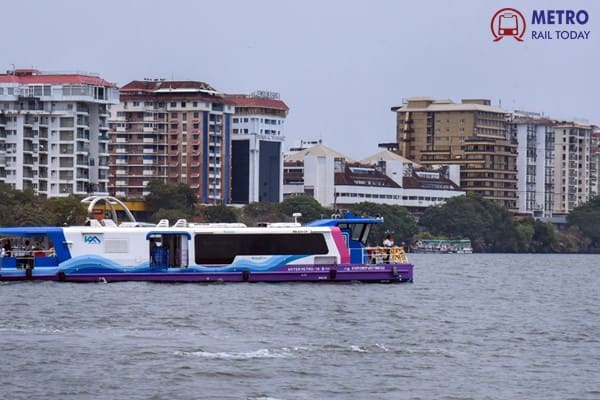
The policy draws inspiration from the Kochi Water Metro project, which has emerged as India’s first integrated urban water transit system.
The Kochi model connects ferry services with metro rail and bus networks, demonstrating the feasibility of water-based urban transport in India.
The government now aims to replicate and scale similar systems across multiple cities, adapting them to local geographical and transport conditions.
Commenting on the policy, Mrs. Mamta Shah, MD & CEO, Urban Infra Group, said that water-based transit could become an important component of future urban mobility systems.
“Water metro systems offer a sustainable and cost-effective mobility solution for cities that have access to rivers, canals, and coastal waterways. Integrating water transport with existing metro and bus networks can significantly enhance urban connectivity while reducing congestion and environmental impact,” she said.
Next Steps
The Draft National Water Metro Policy 2026 is currently open for public feedback and stakeholder consultation.
Once finalised, the policy is expected to guide the planning, development, and implementation of water metro projects across multiple Indian cities, potentially transforming how urban residents commute.
If implemented effectively, the initiative could reshape urban mobility by leveraging India’s extensive waterways to create a cleaner, more efficient and integrated public transport system.

MRT Online Desk
Metro Rail Today is an authentic and global news provider for the Rail & Metro industry from and around the world.