

Trending Now
 Kochi’s integrated Mobility Model sets New Benchmark for sustainable Urban Transport
 MoHUA creates separate departments for Delhi Capital Development and Urban Development
 CMRS issues safety clearance for commercial opening of first stretch of Pune Metro Line 3
 India plans indigenous Bharat Train Control System (BTCS) for future Bullet Train Corridors
 Aurionpro secures ₹50 crore order from MMRDA to deploy AFC Systems on Mumbai Metro Line 5
 First T-Girder launched on Kanaka Line (Corridor 4A) of Bengaluru Suburban Rail Project
 J Kumar Infraprojects completes First Silver Line Tunnel Drive on Delhi Metro Phase IV
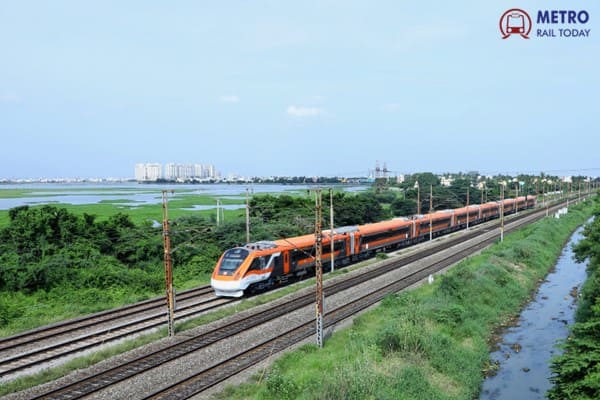 Indian Railways floats ₹18,902 crore EPC Tender for Sarkhej–Dholera Semi High-Speed Rail Project
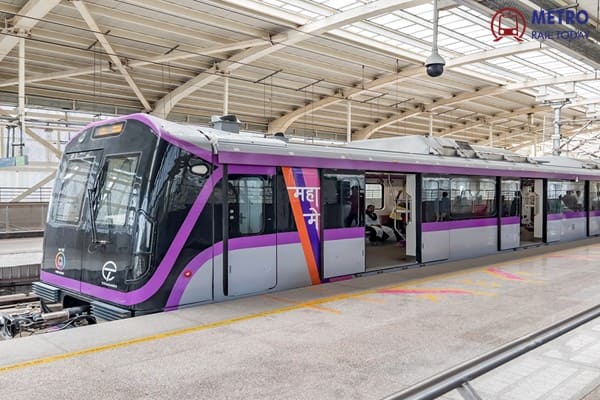 Maha Metro submits ₹12,937 Crore DPR for Pune Metro's Bhakti Shakti–Chakan Corridor
- No DPR received for Metro, Metrolite or Urban Rail Extension to Rishikesh in Uttarakhand
Kochi’s integrated Mobility Model sets New Benchmark for sustainable Urban Transport
MRT Online Desk
Posted on: 2026-08-01 08:15:00
Viewer: 86
Comments: 0
Country: India
City: Kochi
Kochi, India (Rail & Metro Today): As Indian cities confront growing congestion, pollution and increasing demand for efficient public transportation, Kochi is emerging as one of the country’s most closely watched examples of integrated urban mobility. By bringing together Metro Rail, Water Metro, electric feeder buses, pedestrian infrastructure and cycling facilities, Kochi Metro Rail Limited (KMRL) is developing a transport ecosystem in which different modes complement each other rather than operate as isolated systems.
The Kochi Water Metro has added a new dimension to this model by transforming the city’s navigable waterways into an integral part of its public transport network. The initiative has attracted interest from several states and is being examined as a potential model for cities with suitable inland waterways. Alongside network expansion, KMRL is also focusing on financial sustainability, digital ticketing, artificial intelligence, predictive maintenance and environmentally responsible mobility.
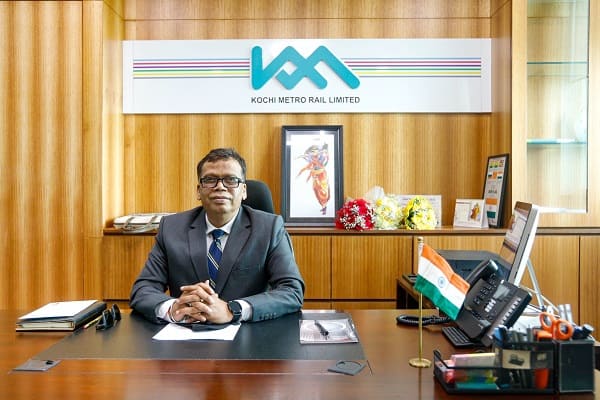
In an exclusive interaction with Rail & Metro Today, Lokanath Behera, Managing Director of Kochi Metro Rail Limited (KMRL) and Kochi Water Metro, spoke about the evolution of Kochi’s integrated transport network, the lessons it offers other Indian cities and the organisation’s expanding role as a knowledge partner for Water Metro projects across the country.
From standalone modes to an integrated mobility ecosystem
According to Behera, the most important lesson from Kochi is that inland waterways can become a meaningful component of an urban public transport network when they are systematically planned and integrated with existing modes.
“The Water Metro is not just about running boats; it is about creating an integrated mobility ecosystem,” Behera said, stressing that sustainability must be considered across the entire transport system rather than being limited to the use of electric vessels.
He pointed out that Kochi Metro and Water Metro have been developed as complementary components of a single mobility network. Common ticketing and mobility cards allow passengers to move between modes, while electric feeder buses bridge the gaps between stations and terminals and surrounding neighbourhoods.
This integration is supported by pedestrian pathways, cycle-sharing facilities and digital ticketing options. The objective, Behera said, is to give passengers a seamless and value-for-money travel experience.
The impact of this approach is already visible in ridership. When Behera assumed charge in 2021, Kochi Metro was carrying around 15,000 passengers a day. Daily ridership has since increased to around 1.25 lakh, while the Water Metro is carrying approximately 8,000–10,000 passengers every day.
Financial sustainability remains a key priority
While public transport projects deliver substantial social and economic benefits, their financial sustainability remains a major challenge. Kochi Metro’s first phase involved an investment of more than ₹8,000 crore, funded through a combination of equity from the Central and Kerala governments and loans from multilateral agencies and financial institutions.
With around ₹400 crore being repaid annually towards loans, Behera said complete financial self-sufficiency cannot be viewed simply in terms of fare revenue. KMRL has therefore focused strongly on improving operational efficiency.
Between 2017 and 2022, Kochi Metro recorded operational losses. However, the organisation has since turned around its operating performance and recorded an operational profit of around ₹52 crore this year.
The Water Metro is adopting a similar strategy. With fares ranging between ₹20 and ₹40, farebox revenue alone cannot support the entire operation. KMRL is consequently developing non-fare revenue streams through advertising, station branding, commercial partnerships, film shootings and other activities.
Behera expects the Water Metro to achieve operational profitability within the next two to three years.
Electric boats designed around environmental sustainability
Environmental sustainability has been embedded into the Water Metro project from its inception. The fleet uses fully electric boats, eliminating direct carbon emissions during operations. The vessels also use aluminium hulls instead of fibreglass, improving recyclability and reducing environmental impact.
The boats have been designed with the aquatic ecosystem in mind. Their operating speed has been deliberately limited to around 20 kmph to minimise wakes that could disturb fish, dolphins and other aquatic biodiversity.
KMRL is also exploring carbon credits and plans to develop dedicated solar parks in the future. The objective is to increasingly power the Water Metro through renewable energy generated specifically for the system rather than relying entirely on electricity from the state grid.
Digital ticketing and reusable smart cards are also being encouraged to reduce paper consumption.
For Behera, sustainability therefore goes beyond electric propulsion. It encompasses the design, energy consumption, infrastructure, operations and passenger interface of the entire system.
AI to improve passenger experience and maintenance
Technology is emerging as another important pillar of Kochi’s mobility strategy. KMRL has signed Memorandums of Understanding with the Indian Institute of Science, Bengaluru, and IIT Madras to explore artificial intelligence applications in public transport.
Among the initiatives being examined is an AI-enabled Passenger Management System capable of providing real-time information on vessel locations, expected arrival times, maintenance disruptions and alternative travel options.
AI is also being explored for predictive maintenance, enabling operators to identify potential equipment problems before they develop into failures.
While Behera acknowledged that AI is already finding applications in maintenance, he believes its greater potential lies in passenger services, intelligent automation and predictive decision-making.
Call for an updated Metro Rail Policy
Behera also believes India’s Metro Rail Policy, 2017 needs to be revisited after nearly a decade of rapid changes in urban mobility.
According to him, developments in technology, changing urban demographics and evolving financing requirements mean that parameters such as population thresholds, financing models, land acquisition mechanisms and project evaluation frameworks need to be reassessed.
The Water Metro sector presents an additional policy requirement. Since Kochi remains the country’s primary operational example, there is currently no dedicated national Water Metro policy.
Behera believes a future Water Metro policy could broadly draw from the existing Metro Rail framework while incorporating provisions specifically related to waterways, biodiversity, environmental management and vessel operations.
KMRL expands its role as a national knowledge partner
KMRL’s role is increasingly extending beyond Kochi. Following the government’s push to develop Water Metro systems on navigable waterways, the organisation has been involved in feasibility studies and planning exercises for several locations.
Studies have been completed for cities and regions including Srinagar, Surat, Kolkata, Guwahati, Varanasi, Ayodhya, Lakshadweep and the Andaman & Nicobar Islands.
KMRL has also prepared the Detailed Project Report for the proposed Mumbai Water Metro, which is expected to be substantially larger than the Kochi network.
These assignments demonstrate that the Kochi model is not being viewed as a one-size-fits-all solution. Instead, its core principles of multimodal integration, sustainability and operational efficiency can be adapted to different geographical and demographic conditions.
75-km Water Metro network targeted by 2030
Looking ahead, KMRL’s immediate priority is to complete the planned Kochi Water Metro network by 2030, covering approximately 75 km with 36 terminals.
Behera identified vessel manufacturing as one of the major challenges to scaling up Water Metro systems in India. The development of high-quality electric boats requires specialised materials, advanced batteries and sophisticated engineering capabilities.
He believes India must therefore develop a stronger domestic manufacturing ecosystem involving both public and private shipyards.
Behera is optimistic that the Water Metro concept will expand significantly across the country. He expects that at least nine or ten Indian cities could have Water Metro systems inspired by the Kochi model within the next five years. Interest is also emerging from other countries seeking sustainable solutions for urban mobility.
Kochi model points towards the future of integrated mobility
Kochi’s experience illustrates a broader transformation underway in India’s urban transport sector. The future of public mobility is increasingly shifting away from individual transport projects towards integrated networks where metro rail, waterways, buses, walking and cycling infrastructure work together.
The Kochi model demonstrates that waterways can become more than an environmental or geographical asset—they can form an integral part of a city’s daily public transport system when supported by appropriate infrastructure, technology, ticketing and last-mile connectivity.
With KMRL increasingly sharing its experience with other cities, the Kochi Water Metro could evolve from a pioneering domestic project into a wider blueprint for sustainable water-based urban mobility in India and potentially overseas.

MRT Online Desk
Metro Rail Today is an authentic and global news provider for the Rail & Metro industry from and around the world.