

Trending Now
 VinSpeed and Siemens sign €1 billion Turnkey Contract for Two High-Speed Rail Lines in Vietnam
 Tender floated for construction of Viaduct, Twin Tunnels and Underground Stations for Indore Metro
 Vietnam needs over 70,000 Engineers and Skilled Workers for Ho Chi Minh City Metro Project
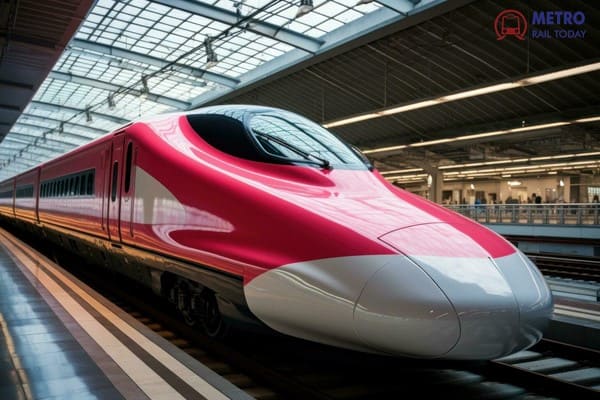 India targets production of indigenous 350 kmph High Speed Bullet Trains by 2030
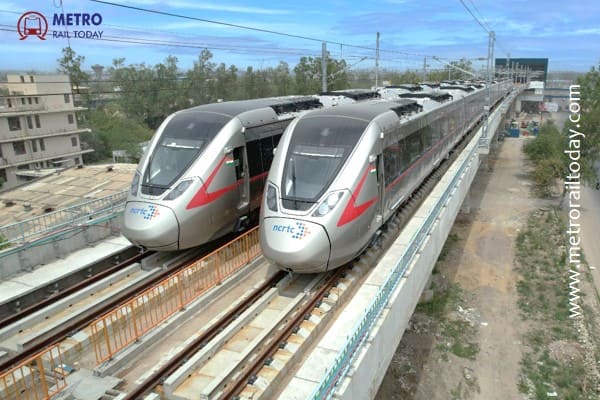 West Bengal proposes four RRTS Corridors linking Kolkata with South Bengal Cities
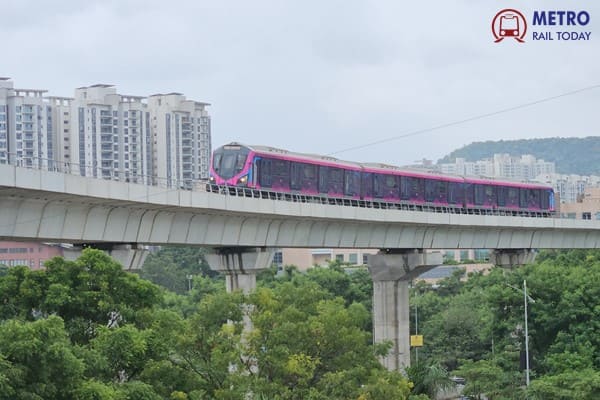 Pune Metro Line 3 targets September-end opening with 17 stations on Hinjawadi–Shivajinagar corridor
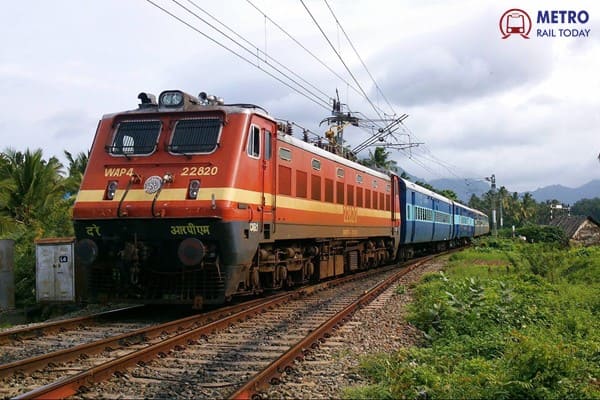 Jupiter Wagons Limited forms New Subsidiary to expand Railway Mobility Business
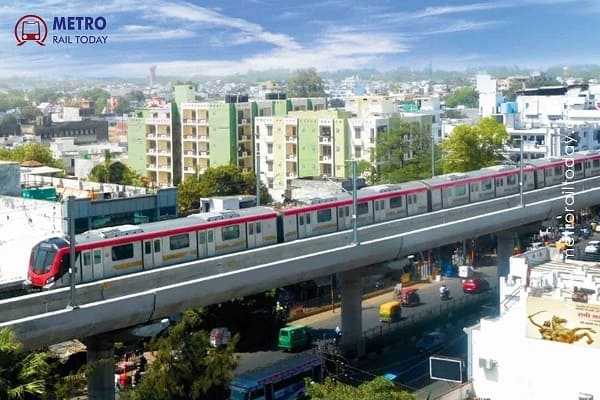 Five major firms bid for ₹1,878 crore Underground Section of Lucknow Metro Phase 1B Project
 DMRC focuses on Technology, Financial Sustainability and Global Expansion: Dr. Vikas Kumar
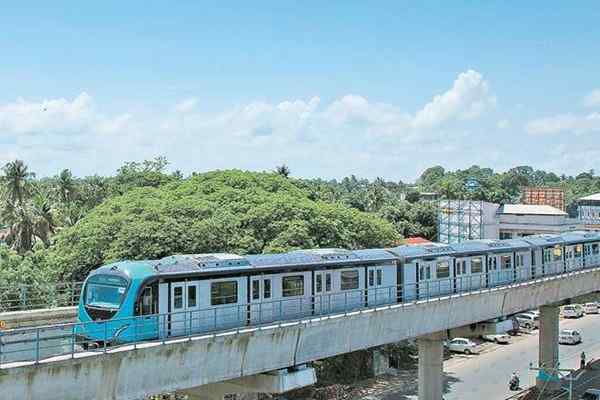 DMRC seeks opportunity to take up operation and maintenance of the Kochi Metro Rail network
India plans indigenous Bharat Train Control System (BTCS) for future Bullet Train Corridors
MRT Online Desk
Posted on: 2026-07-31 15:09:00
Viewer: 1,140
Comments: 0
Country: India
City: New Delhi
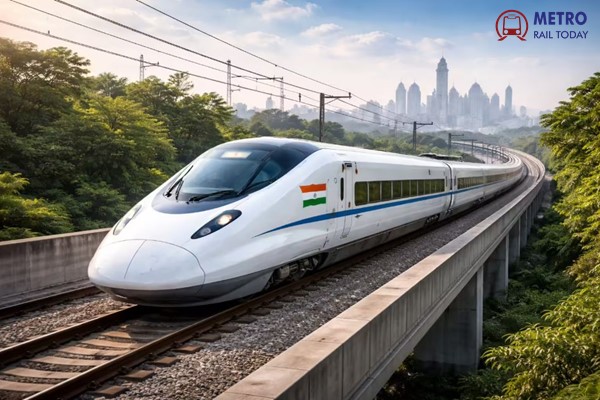
New Delhi, India (Rail & Metro Today): India is moving towards greater technological self-reliance in high-speed rail with plans to develop an indigenous signalling protocol for upcoming bullet train corridors. The proposed Bharat Train Control System (BTCS) is being designed specifically for Indian operating conditions and could reduce the country's dependence on foreign signalling technologies across nearly 7,000 km of planned high-speed rail corridors.
The move follows India's decision to develop an indigenous high-speed trainset for the Mumbai–Ahmedabad High Speed Rail (MAHSR) corridor, marking a broader push to build domestic capabilities across rolling stock, signalling, engineering and railway systems.
Bharat Train Control System to Support Future High-Speed Rail
According to officials, the Bharat Train Control System will be developed as an open-source and cost-effective train control protocol that can be adapted to India's requirements for safe and rapid deployment of high-speed rail systems.
The proposed system is expected to draw upon India's experience with advanced signalling technologies being deployed on the MAHSR corridor. The objective is to create a signalling framework that can be customised for India's diverse operating conditions while strengthening domestic railway technology capabilities.
Officials have indicated that approvals related to designs and route alignments for future high-speed rail corridors are expected to be completed by mid-2027.
Once developed and validated, BTCS could potentially be offered to other countries, creating an opportunity for India to emerge as a supplier of high-speed rail signalling technology in international markets.
Building on MAHSR Signalling Experience
The Mumbai–Ahmedabad High Speed Rail project is currently using an ETCS-based signalling system, rather than Japan's Digital Automatic Train Control system.
In June 2025, the National High Speed Rail Corporation Limited (NHSRCL) awarded a contract worth approximately ₹4,100 crore for the MAHSR signalling system to a consortium comprising Dineshchandra R Agrawal Infracon Pvt Ltd and Siemens.
The consortium is implementing an ETCS Level 2-based signalling system designed to support high-speed train operations of up to 350 kmph.
The experience gained from the MAHSR project is expected to provide an important technological foundation for developing India's own high-speed rail control protocol.
India Open to Multiple Signalling Technologies
The proposed indigenous system comes amid discussions over the technology architecture for India's high-speed rail expansion.
Japanese technology is being deployed extensively on the Mumbai–Ahmedabad corridor, with Japan providing technical assistance and Shinkansen technology. However, India's adoption of ETCS-based signalling has opened the door to wider participation by international technology suppliers.
Officials have indicated that India remains open to Japanese signalling technology if appropriate proposals are made by suppliers. This suggests that future high-speed rail projects could potentially accommodate multiple signalling technologies, subject to technical, operational and commercial requirements.
Boost for Indian Railway Technology Industry
The development of BTCS could create significant opportunities for Indian signalling companies, railway technology developers and equipment manufacturers.
With thousands of kilometres of new high-speed rail corridors planned, an indigenous signalling platform could reduce technology dependence, improve supply-chain resilience and create opportunities for domestic manufacturing and system integration.
Industry observers believe that the development of a standardised Indian high-speed rail signalling protocol could also help establish a domestic ecosystem covering train control, signalling equipment, software, telecommunications and railway cybersecurity.
From High-Speed Trains to Indigenous Signalling
India's high-speed rail programme is increasingly moving beyond importing individual technologies towards developing domestic capabilities across the complete railway system.
The proposed Bharat Train Control System, together with India's indigenous high-speed trainset programme, could become an important component of this transition. If successfully developed and certified, the system could support India's future bullet train corridors while strengthening the country's position as a global hub for advanced railway engineering and technology.
As India prepares for a major expansion of its high-speed rail network, indigenous signalling could ultimately become one of the key technologies underpinning the country's Viksit Rail 2047 vision.

MRT Online Desk
Metro Rail Today is an authentic and global news provider for the Rail & Metro industry from and around the world.