


Trending Now
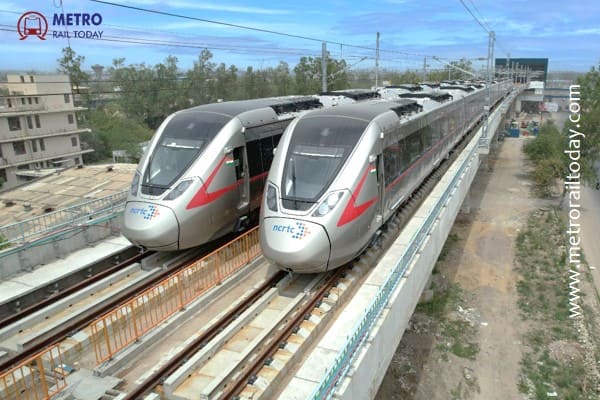 Karnataka proposes 270-km RRTS Network linking Bengaluru with Tumakuru, Mysuru and KGF
 Alstom and Vingroup sign MoU to supply up to 200 Metro Trains for Hanoi Urban Rail Projects
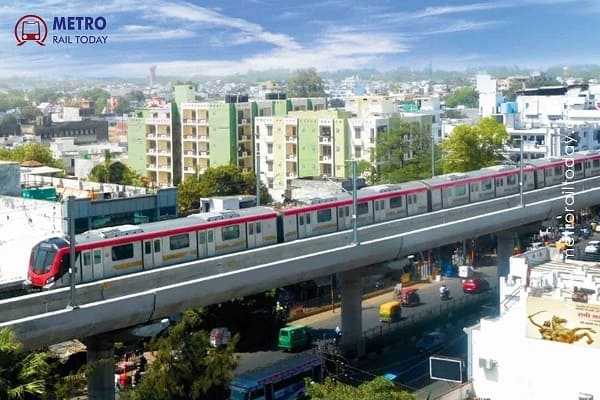 Afcons Infrastructure wins ₹1,383 crore Civil Contract for Lucknow Metro Phase 1B Corridor
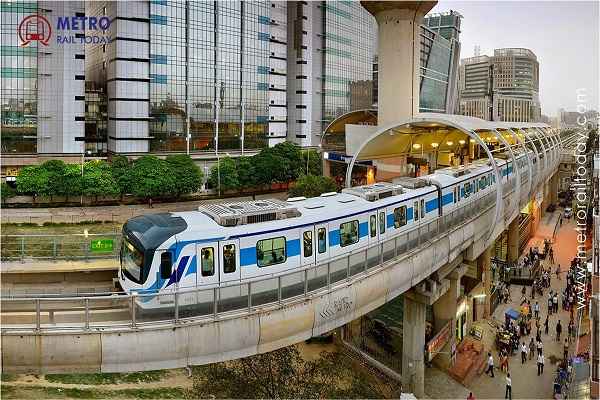 GMRL issues ₹1,662 crore Civil Tender for Sector 9–Cyber City Gurugram Metro Rail Corridor
 Madrid unveils €1.57 billion Metro Rail Expansion Programme with 27.8 km of New Corridors
 Global Tender launched for Project Management Consultancy for Abu Dhabi Tram Line 4
 NV Dynamics awarded Noise and Vibration Study contract for Jaipur Metro Phase 2 Project
 Two global consortia bid for India’s 350 kmph High-Speed Rail Design consultancy contract
 Larsen & Toubro (L&T) extends Hyderabad Metro stake sale timeline to 31 December 2026
 Haryana Govt approves ₹1,662 crore construction tender for Gurugram Metro Phase 2
Pune Metro Line 3 targets September-end opening with 17 stations on Hinjawadi–Shivajinagar corridor
MRT Online Desk
Posted on: 2026-09-15 08:16:00
Viewer: 2,326
Comments: 0
Country: India
City: Pune
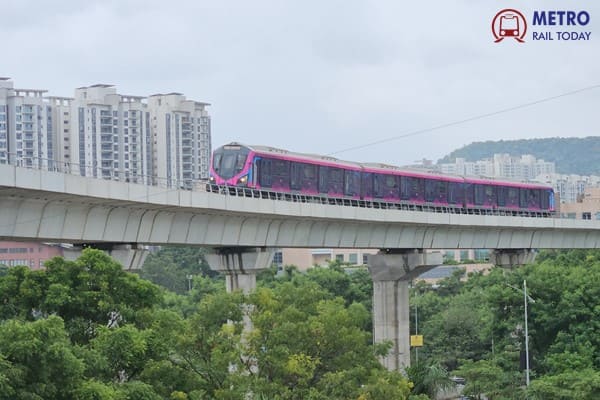
Pune, India (Rail & Metro Today): The much-awaited Pune Metro Line 3, connecting the Rajiv Gandhi IT Park in Hinjawadi with Shivajinagar and Civil Court in central Pune, is moving closer to passenger operations, with services now targeted to begin by the end of September 2026. The Pune Metropolitan Region Development Authority (PMRDA) has expanded the proposed first-phase opening from 12 to 17 stations, subject to safety clearance for the five additional stations.
The 23.203-km elevated corridor is being developed to improve public transport connectivity between Hinjawadi, Wakad, Balewadi, Baner and central Pune. The project is intended to provide a mass-transit alternative on the heavily congested Hinjawadi–Baner–Shivajinagar route and help reduce dependence on road-based travel.
Prime Minister Narendra Modi is likely to flag off the service virtually, according to the information provided.
CMRS Clearance Key to 17-Station Opening
The Commissioner of Metro Rail Safety (CMRS) has already cleared 12 stations for passenger operations. Five additional stations are now scheduled for safety inspection, and their clearance would enable passenger services to begin at 17 of the corridor’s 23 stations.
The proposed 17 stations are Maan/Megapolis Circle, Embassy Quadron Business Park, Dohler, Infosys Phase II, Wipro Phase II, Pall India, Shivaji Chowk, Hinjawadi, Wakad Chowk, Balewadi Stadium, NICMAR/RK Laxman Museum, Ram Nagar, Krushi Anusandhan, Sakal Nagar/YASHADA, Savitribai Phule Pune University, Agriculture College and Civil Court/District Court.
Six stations—Laxmi Nagar, Balewadi Phata, Baner Gaon, Baner, Reserve Bank of India and Shivajinagar—will initially remain closed. Construction and finishing activities at these stations and adjoining stretches will continue, followed by separate safety clearances.
The planned opening therefore does not represent a simple geographical sequence of the first 17 stations. Trains are expected to operate across a larger portion of the corridor while passing through the six stations that will not initially be opened for passenger use.
94.58% Physical Progress Achieved
According to the project information, physical progress on Pune Metro Line 3 has reached 94.58%, while financial progress stands at 97.40%. Land acquisition for the Right of Way and station locations is reported to be nearly 100% complete.
The project was originally scheduled for completion by March 25, 2025, based on a 40-month implementation period. Passenger operation targets subsequently shifted from June-end to early September and now to September-end 2026.
PMRDA had granted a formal Extension of Time up to March 31, 2026.
The project is being implemented under the New Metro Rail Policy, 2017, through a Public-Private Partnership (PPP) under the Design, Build, Finance, Operate and Transfer model. The concession period is 35 years.
₹8,313 Crore Pune Metro Line 3 Project
The total capital cost of the project is stated at ₹8,313 crore, including land acquisition, utility shifting and allied components.
The private concessionaire’s equity contribution is ₹1,315.39 crore, while ₹4,789 crore has been raised through term loans from the State Bank of India and other major financial institutions.
Construction-phase Viability Gap Funding (VGF) totals ₹1,315.39 crore. The Central Government’s share is ₹1,224.80 crore, while the State Government’s share is ₹90.58 crore.
The first Central Government tranche of ₹611 crore was released during October–November 2024. According to the information provided, ₹1,151 crore had been disbursed up to the 12th instalment, while ₹85.58 crore of the State Government’s share had been disbursed to the concessionaire.
PMRDA has separately spent around ₹1,200 crore on land acquisition, utility shifting and construction of associated infrastructure, including the double-decker flyover.
Double-Decker Flyover and Supporting Infrastructure
One of the major associated infrastructure components is the double-decker flyover at University Junction on Ganeshkhind Road. The flyover was constructed at a reported cost of ₹277 crore, apart from price escalation, replacing the earlier one-way flyovers that were demolished in August 2020.
Ganeshkhind Road has also been widened to as much as 45 metres.
The Aundh-to-Shivajinagar ramp opened on August 20, 2025, followed by the Baner ramps on March 8, 2026. Work on the Pashan ramp is continuing.
Utility shifting along the corridor, including the relocation of 220 kV and 132 kV high-voltage power lines, is reported to be around 95% complete.
The project also includes a 13.2-hectare car depot at Maan in Mulshi and a 15.6-hectare casting yard at Survey No. 24 in Tathwade, which was handed over in November 2020.
The transfer of Government Polytechnic land has been stayed by the High Court. PMRDA has subsequently submitted proposals for alternative land to the State Government.
Last-Mile Connectivity Planned Around Hinjawadi
PMRDA is separately working on a proposed 19.2-km last-mile road network around eight Metro stations in the Hinjawadi IT Park area.
An RFP has been issued for preparing a Detailed Report covering roads within a 500-metre radius of the stations and stretches extending up to 1.5 km.
The largest proposed road network is around Shivaji Chowk station at 4.85 km, followed by Megapolis Circle at 4.06 km and Quadron Circle at 3.67 km. The plan also covers 1.85 km around Hinjawadi station, 1.59 km around Pall India, 1.53 km around Dohler, 1.1 km around Wipro Technologies and 0.5 km around Infosys Phase II.
The proposed last-mile improvements include wider pedestrian walkways, dedicated cycle tracks, covered bus shelters, street-vending and green zones, benches, waste-segregation bins, directional signage, public plazas and street lighting.
The objective is to improve connections between Metro stations, IT parks and surrounding residential areas.
Passenger-Focused Facilities and Digital Ticketing
Pune Metro Line 3 is also planned with a range of passenger amenities and multimodal integration features.
Passengers will have access to the National Common Mobility Card through the One Pune Card, WhatsApp-based QR ticketing, UPI payments, physical ticket counters and automatic ticket vending machines.
The air-conditioned trains will include designated sections for women. Stations are being equipped with lifts, escalators, wheelchair ramps, tactile pathways for visually impaired passengers, accessible restrooms and step-free boarding.
Live train information will be displayed in Marathi, Hindi and English.
The corridor is also planned to integrate with PMPML bus services, auto-rickshaw pick-up areas, cab and Rapido drop-off points and cycle parking. Some IT companies have independently developed footbridges connecting their offices directly with Metro stations.
Emergency help points, female security personnel, first-aid counters and occupational health centres are also among the passenger facilities planned along the corridor.
“Pune Metro Line 3 is an important example of how rapid transit can be planned around a major employment and technology cluster. Connecting Hinjawadi with central Pune through a dedicated mass-transit corridor can strengthen public transport accessibility for employees and residents, while the planned last-mile infrastructure will be important for making the Metro genuinely convenient beyond the station itself,” said Mrs. Mamta Shah, MD & CEO, Urban Infra Group.
Five More Safety Clearances Remain
The immediate focus is now on the CMRS inspection and clearance of the additional five stations required for the expanded first-phase rollout.
If the necessary approvals are secured as planned, 17 stations could open to passengers by the end of September 2026, while construction and finishing work continues at the remaining six stations.
With physical progress already above 94%, Pune Metro Line 3 is entering the final stage of its transition from construction to passenger operations. Its opening would provide a new high-capacity public transport connection between Pune’s major IT and employment hub at Hinjawadi and the central parts of the city, while subsequent station openings would progressively complete the full 23.203-km corridor.

MRT Online Desk
Metro Rail Today is an authentic and global news provider for the Rail & Metro industry from and around the world.