


Trending Now
 Tender issued for Feasibility Study to Transition Hubballi-Dharwad BRTS to Modern Tram System
 Tamil Nadu Chief Minister seeks Centre’s approval for Bengaluru–Hosur Metro Link
 K-RIDE to appoint Detailed Design Consultant for Bengaluru Suburban Rail Project
 Prime Minister Narendra Modi inaugurates first 15-km stretch of Chennai Metro Phase 2
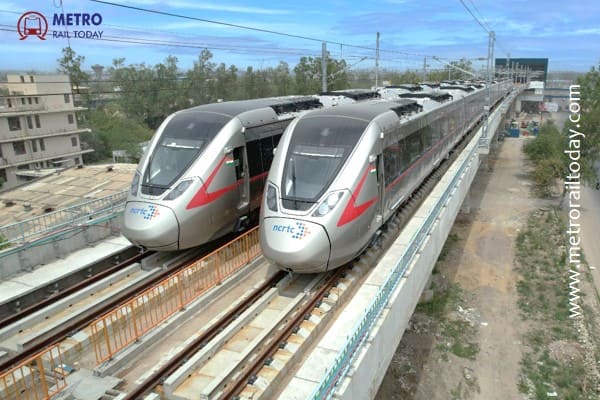 Karnataka proposes 270-km RRTS Network linking Bengaluru with Tumakuru, Mysuru and KGF
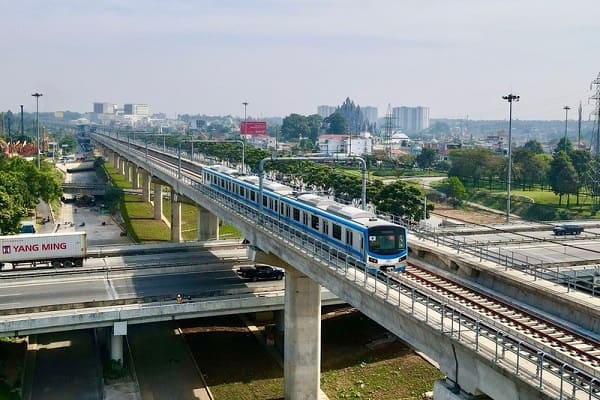 Alstom and Vingroup sign MoU to supply up to 200 Metro Trains for Hanoi Urban Rail Projects
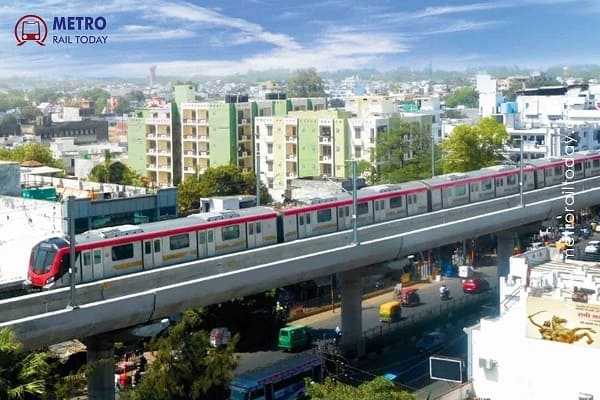 Afcons Infrastructure wins ₹1,383 crore Civil Contract for Lucknow Metro Phase 1B Corridor
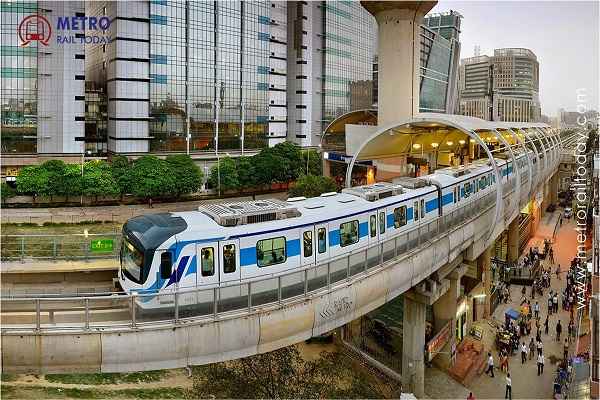 GMRL issues ₹1,662 crore Civil Tender for Sector 9–Cyber City Gurugram Metro Rail Corridor
 Madrid unveils €1.57 billion Metro Rail Expansion Programme with 27.8 km of New Corridors
 Global Tender launched for Project Management Consultancy for Abu Dhabi Tram Line 4
West Bengal proposes four RRTS Corridors linking Kolkata with South Bengal Cities
MRT Online Desk
Posted on: 2026-09-21 11:20:00
Viewer: 2,124
Comments: 0
Country: India
City: Kolkata
Kolkata, India (Rail & Metro Today): West Bengal BJP president Shamik Bhattacharya has proposed the development of a Regional Rapid Transit System (RRTS) for West Bengal, modelled on the Namo Bharat corridors being developed in the National Capital Region (NCR). In a letter to Union Minister Manohar Lal Khattar, Bhattacharya requested the Centre to examine the proposal and submitted a feasibility report and comprehensive preliminary study for a semi-high-speed regional rail network connecting Kolkata with major cities and economic centres across South Bengal.
The proposed West Bengal Regional Rapid Transit System (WB-RRTS) comprises four corridors with a combined length of around 604 km. The network is intended to provide faster and more frequent regional connectivity between Kolkata and emerging industrial, educational, commercial, port and tourism centres.
Four RRTS Corridors Proposed
The first proposed corridor would connect Kolkata–Kalyani–Krishnanagar–Mayapur, covering approximately 135 km. The second, stretching around 232 km, would link Kolkata with Burdwan, Durgapur and Asansol, creating a rapid regional connection towards one of eastern India’s major industrial belts.
A third corridor of approximately 102 km has been proposed between Kolkata–Falta–Diamond Harbour–Haldia–Nandigram, providing connectivity towards important port and industrial areas. The fourth corridor, covering around 135 km, would connect Kolkata–Santragachi–Kolaghat–Kharagpur–Medinipur.
According to the proposal, these corridors are intended to complement the existing railway and highway network while providing high-frequency regional passenger services between Kolkata and surrounding growth centres.
Bhattacharya has argued that West Bengal’s urban and economic activity remains strongly concentrated around Kolkata, while cities such as Durgapur, Asansol, Kharagpur, Krishnanagar and Haldia have developed into important industrial, educational, port and tourism centres. The proposal identifies improved regional connectivity as an important requirement for linking these centres more efficiently.
Proposal Seeks to Minimise Land Acquisition
One of the key features of the preliminary proposal is the suggested alignment of RRTS corridors along existing highways and railway corridors wherever feasible. The study states that this approach could help minimise additional land acquisition requirements.
The proposal also recommends establishing a dedicated institutional framework through a West Bengal Rapid Transit Corporation (WBRTC) on the lines of the National Capital Region Transport Corporation (NCRTC). The submitted study outlines a possible joint ownership structure involving the Government of India and the West Bengal Government.
The report also discusses a potential 50:50 joint venture structure, with the Centre and the West Bengal Government participating through different ministries and state departments. One structure examined in the study proposes 25% participation from the Ministry of Housing and Urban Affairs, 25% from the Ministry of Railways and the remaining 50% from the West Bengal Government through relevant departments or agencies.
Bhattacharya has requested the Union Ministry to examine the proposal and, if considered suitable, initiate a detailed feasibility study covering engineering requirements, passenger demand, financial viability and other project parameters in coordination with the state government.
Standard-Gauge RRTS with 25 kV Traction
The preliminary feasibility report proposes a technically standardised RRTS system. According to the study, each train would comprise three lightweight stainless-steel cars featuring an aerodynamic nose design intended to reduce air resistance at higher operating speeds.
The proposed network would use 1,435 mm standard gauge tracks. The study envisages high-speed ballastless precast slab track technology for elevated and underground sections, while ballasted track would be used on fenced at-grade and embankment sections.
Traction power is proposed through a 25 kV AC, 50 Hz overhead electrification system. Flexible catenary is proposed for elevated sections, while rigid overhead catenary would be used inside tunnels to reduce the vertical clearance requirement.
These technical provisions are part of the preliminary study and would require further engineering and feasibility assessment before any project implementation decision.
Proposed Financing Through Multilateral Loans
The preliminary study proposes the use of Official Development Assistance (ODA) loans from international development institutions such as the Japan International Cooperation Agency (JICA), Asian Development Bank (ADB) and World Bank. The balance capital expenditure, according to the study, could be jointly supported by the Central and West Bengal governments.
The financing structure would ultimately depend on detailed project preparation, demand assessment, financial analysis and decisions by the participating governments and institutions.
RRTS as a Regional Connectivity Network
The proposal describes South Bengal as having several characteristics that could support regional rapid transit, including a dominant metropolitan centre, high population density, emerging secondary cities and established travel corridors.
The proposed WB-RRTS is therefore envisioned not simply as a faster passenger railway but as a regional mobility network linking Kolkata with surrounding economic centres. The preliminary study suggests that improved travel times and reliable high-frequency services could support greater interaction between businesses, industries, educational institutions and residential areas across the region.
The study further envisages the emergence of a more integrated “Greater South Bengal Region”, in which Kolkata and surrounding cities function as interconnected economic centres rather than isolated urban areas.
For the railway and urban mobility sector, the proposal also highlights the potential role of RRTS in complementing conventional railways, metro systems and highways. If taken forward, detailed demand forecasting, corridor prioritisation, alignment studies, land requirements, station planning, financing arrangements and institutional mechanisms would determine the feasibility and phasing of the proposed network.
Commenting on the broader significance of regional rapid transit proposals, Mrs. Mamta Shah, MD & CEO, Urban Infra Group, said, “Regional rapid transit can play an important role in connecting major metropolitan centres with emerging economic and employment hubs. For a state such as West Bengal, a well-planned RRTS network could complement conventional railways and urban metro systems by addressing longer-distance regional commuting. The key will be to undertake robust demand assessment, integrated land-use planning, multimodal connectivity and financially sustainable project structuring before moving towards implementation.”
The immediate requirement, as outlined in the proposal, is for the Centre and the state government to examine the preliminary feasibility work and determine whether detailed studies should be undertaken. Such studies would establish the technical, financial, environmental and passenger-demand viability of the four proposed corridors.
If the proposal advances through these stages, the WB-RRTS could become part of a broader regional mobility strategy for South Bengal, linking Kolkata with industrial, port, educational and emerging urban centres through a dedicated rapid transit system.


MRT Online Desk
Metro Rail Today is an authentic and global news provider for the Rail & Metro industry from and around the world.