

Trending Now
 Lisha Engineers bags ₹138.70 crore Sanoth Depot Contract for Delhi Metro's Rithala-Kundli Corridor
 India commissions 1,506-km dedicated freight railway corridor connecting JNPA to New Dadri
 Exclusive Interview with Uwe Sperber, Site Manager, Hubner Interface Systems India
 Bangalore Metro floated tender for 13.8-km Phase-3 Double-Decker Rail Infrastructure
 AECOM–NIPPON KOEI JV appointed as PMC Consultant for Chennai Metro Phase 1 capacity enhancement
 EPC Leader Larsen & Toubro Ltd (L&T) joins Chamber of Railway Industries as Corporate Member
 Contractor prequalification deadline for Dubai Metro Gold Line is extended to October 9
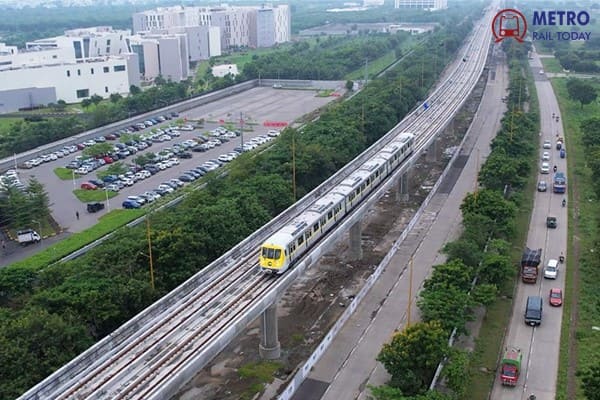 Indore Metro Rail Network expands to 17 km as Priority Corridor 2 opened to public
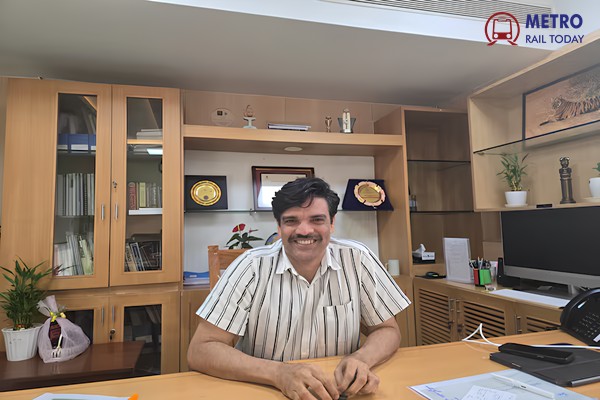 Jaffer PC appointed as Managing Director of Bangalore Metro Rail Corporation (BMRC)
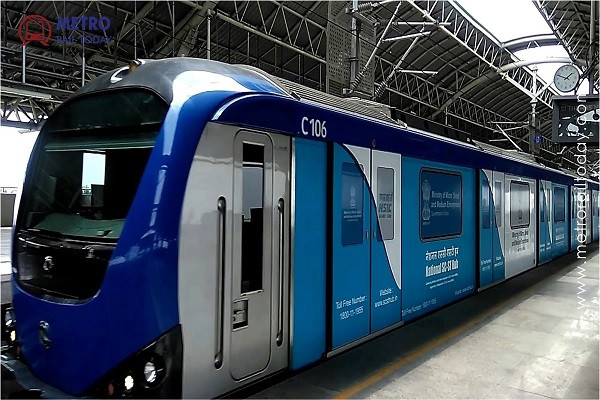 CMRL appoints Systra to prepare Multi-Modal Integration DPR for Chennai Metro Phase 1 stations
Kolkata Metro completes Aluminium Third Rail Upgrade on Blue Line
MRT Online Desk
Posted on: 2026-06-01 06:10:00
Viewer: 2,097
Comments: 0
Country: India
City: Kolkata
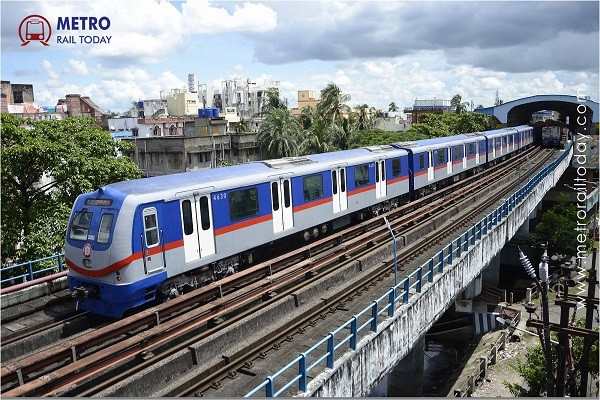
Kochi, India (Metro Rail Today): Metro Railway Kolkata has successfully completed the replacement of conventional steel third rail with advanced high-conductivity aluminium third rail across the entire underground section of its iconic Blue Line, marking a major milestone in the modernization of the city's metro traction infrastructure.
The upgrade is expected to play a critical role in enhancing power supply reliability, improving operational efficiency, and supporting Metro Railway’s long-term objective of reducing train headways to just 150 seconds, enabling more frequent services for commuters.
The modernization work covers the underground sections between Noapara and Dum Dum as well as Belgachia and Mahanayak Uttam Kumar (Tollygunge) stations, forming a significant portion of Kolkata Metro’s oldest and busiest corridor.
For decades, Kolkata Metro operated with a conventional steel third rail system manufactured by the Steel Authority of India Limited (SAIL). While the system served the network reliably since its early years, growing ridership and the need for higher train frequencies necessitated a transition to a more efficient power distribution technology.
Metro officials highlighted that aluminium third rail offers significantly superior electrical performance compared to steel. Aluminium possesses an electrical conductivity of approximately 38 million siemens per metre, compared to roughly 6 million siemens per metre for steel, allowing more efficient power transmission and reduced energy losses.
The Ministry of Railways had already adopted a policy direction in 2012 mandating the use of aluminium third rail systems for all newly constructed Kolkata Metro corridors. The latest upgrade now extends this modern technology to the legacy Blue Line infrastructure as well.
The improved conductivity of aluminium third rails enables a more stable and efficient power supply to metro trains, particularly during peak operations when multiple trains draw power simultaneously. This becomes increasingly important as Kolkata Metro prepares for future service enhancements and network expansion.
The Blue Line, India’s first metro corridor, remains the backbone of Kolkata’s urban transit network, carrying thousands of passengers daily across the city. The traction upgrade is expected to support smoother operations, enhanced reliability, and improved energy efficiency while preparing the corridor for future capacity augmentation.
Industry experts note that upgrading traction infrastructure is often one of the most critical prerequisites for reducing train intervals in high-capacity metro systems. With the aluminium third rail now fully operational across the underground section, Metro Railway Kolkata has taken a significant step toward meeting growing commuter demand and improving service frequency.
The modernization initiative also aligns with Indian Railways’ broader efforts to adopt advanced technologies across metro and urban transit systems, ensuring safer, more efficient, and sustainable transportation infrastructure.
Commenting on the development, Mrs. Mamta Shah, MD & CEO, Urban Infra Group, said: “The successful transition to aluminium third rail technology reflects Kolkata Metro’s commitment to modernizing its legacy infrastructure while preparing for future operational demands. Such upgrades are essential for improving energy efficiency, enhancing service reliability, and enabling higher train frequencies that will ultimately benefit millions of urban commuters.”
With this achievement, Kolkata Metro continues its journey of technological transformation, reinforcing its position as a pioneer in India’s urban rail transit sector while laying the foundation for next-generation metro operations.

MRT Online Desk
Metro Rail Today is an authentic and global news provider for the Rail & Metro industry from and around the world.