


Trending Now
 No DPR received for Metro, Metrolite or Urban Rail Extension to Rishikesh in Uttarakhand
 SYSTRA India announces Mega Recruitment Drive for High-Speed Rail, Metro and Railway Projects
 DB E&C–SYSTRA India JV Sign General Consultancy Contract for Pune Metro Phase 1 Extn and Phase 2
 Metro Man E. Sreedharan Awarded 23rd Honorary Doctorate by Gati Shakti Vishwavidyalaya
 India plans four new High-Speed Rail Corridors to connect Delhi with other major cities
 India’s Metro Network reaches 1,159 km; Government allocates ₹30,942 Crore for FY 2026–27
- RITES and MECON join hands to pursue Rail, Metro and Infrastructure Projects in India and Overseas
- Second TBM begins excavating India’s First Undersea High Speed Rail Tunnel on MAHSR Project
 Govt of India gives In-Principle approval to Meerut–Haridwar–Rishikesh Namo Bharat RRTS Corridor
 TÜV SÜD and MEDHA Servo Drives sign MoU to advance Hydrogen Rail Technologies in India
Maharashtra allocates ₹23,487 Crore for Metro Line 11 Extension and Navi Mumbai Metro
MRT Online Desk
Posted on: 2026-03-06 16:00:00
Viewer: 1,194
Comments: 0
Country: India
City: Mumbai
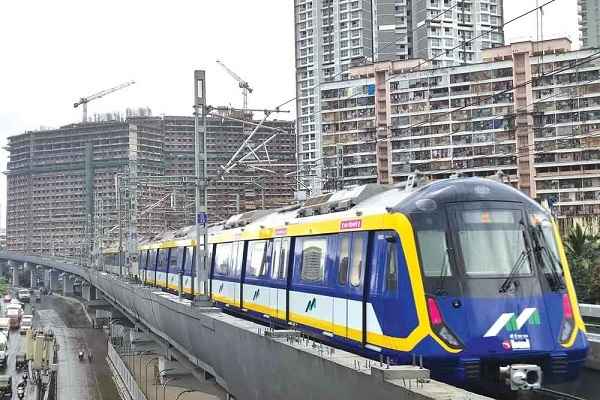
Mumbai, India (Metro Rail Today): The Maharashtra government has announced major urban transport and infrastructure initiatives in its latest state budget, including the extension of Mumbai Metro Line 11 from Wadala to the Gateway of India via Dharavi and Bandra, along with renewed momentum for the second line of the Navi Mumbai Metro.
The proposed Metro Line 11 extension, to be implemented by the Mumbai Metro Rail Corporation Ltd (MMRCL), is estimated to cost ₹23,487 crore. The underground corridor is currently awaiting approval from the Union Ministry of Housing and Urban Affairs, and construction is expected to begin in 2027.
Once completed, the extended corridor will connect Wadala to the Gateway of India, passing through key urban zones including the redeveloped Dharavi area, Bandra station, and Bandra Terminus, significantly strengthening connectivity between Mumbai’s eastern and western suburbs and its historic southern district.
The state government has also allocated ₹5,575 crore for the long-awaited Navi Mumbai Metro Line 2, which will connect Taloja and Khandeshwar.
The project has been under discussion for more than a decade and is expected to improve connectivity across the rapidly growing Navi Mumbai region, supporting residential, industrial, and commercial development in the area.
In addition to metro expansion, the state budget outlined an ambitious plan to expand the water transport network across the Mumbai Metropolitan Region (MMR).
The existing 125-kilometre waterway network will be expanded to 340 kilometres, with the development of 24 new passenger terminals across 11 routes and the modernisation of 30 existing terminals. The total investment for this initiative is estimated at ₹6,600 crore.
According to Chief Minister Devendra Fadnavis, the expansion will significantly enhance the role of water transport as a sustainable mobility option for the region.
The initiative is expected to increase the annual passenger capacity from the current 1.6 crore to 7.39 crore by 2031, offering an environmentally friendly and cost-effective alternative to road-based transport.
The state government also announced plans to prepare a master plan for areas surrounding upcoming Bullet Train stations at Virar, Boisar, and Thane.
The initiative aims to maximise economic opportunities and promote transit-oriented development (TOD) around the Mumbai–Ahmedabad High-Speed Rail corridor, with the three stations expected to be completed by February 2027.
Currently, about 173 kilometres of metro corridors are operational across Mumbai, Pune, and Nagpur.
The government said another 50 kilometres of metro lines will become operational within the next year, including key sections of Metro Line 9 (Dahisar–Mira Bhayandar), Line 2B (Mandale–DN Nagar), Line 4 (Wadala–Thane), and Line 5 (Thane–Bhiwandi–Kalyan).
By 2029, an additional 165 kilometres of metro network is expected to be operational across the state. This includes Metro Line 8, which will connect Chhatrapati Shivaji Maharaj International Airport with the upcoming Navi Mumbai International Airport, at an estimated cost of ₹22,862 crore.
The budget also highlighted plans to redevelop large slum settlements across the Mumbai Metropolitan Region.
The Slum Rehabilitation Authority (SRA) is preparing a master plan to redevelop around 20 lakh slum homes and construct 10 lakh affordable housing units for displaced residents.
Commenting on the announcements, Mrs. Mamta Shah, MD & CEO, Urban Infra Group, said the initiatives reflect Maharashtra’s continued focus on integrated urban mobility and infrastructure development.
“The expansion of metro corridors, coupled with investments in water transport and transit-oriented development around high-speed rail stations, demonstrates a comprehensive approach to urban mobility planning. Such integrated infrastructure strategies are essential for managing the rapid growth of metropolitan regions like Mumbai,” she said.
She added that strengthening multimodal transport systems will play a key role in reducing congestion, improving connectivity, and supporting long-term economic growth across the Mumbai Metropolitan Region.
The redevelopment strategy will utilise GIS mapping and satellite imagery under a proposed “No New Slum Framework”, aimed at preventing further expansion of informal settlements in the region.

MRT Online Desk
Metro Rail Today is an authentic and global news provider for the Rail & Metro industry from and around the world.