


Trending Now
 RITES submits fresh DPR to UPMRC for ₹12,000 crore Prayagraj Metro Rail Project
 Paras Railtech wins ₹84.72 crore Ballastless Track Contract for Jaipur Metro Rail Project
 Indian Railways announces 3,548 Graduate-Level Vacancies under NTPC Recruitment 2026
 European Union sanctions €10 million to support extension of Hanoi Metro Line 3
 GMRC issues ₹683 crore Tender for construction of 8.68 km stretch for Ahmedabad Metro
- GMRC launches ₹439 crore Tender for construction of 5 New Ahmedabad Metro Stations
 Global tender issued for procurement of 60 Rolling Stock coaches for Hyderabad Metro Rail Project
 Global tender issued for procurement of 102 Rolling Stock coaches for Patna Metro Rail Project
 Gamuda awarded RM3.7 billion contract to build Keelung Mass Rapid Transit in Taiwan
 Maharashtra forms special Task Force to plan Rail, Metro and RRTS expansion
JICA approves ¥92.4 billion ODA Loan for Mumbai Metro Line 11
MRT Online Desk
Posted on: 2026-04-03 16:10:00
Viewer: 1,588
Comments: 0
Country: India
City: Mumbai
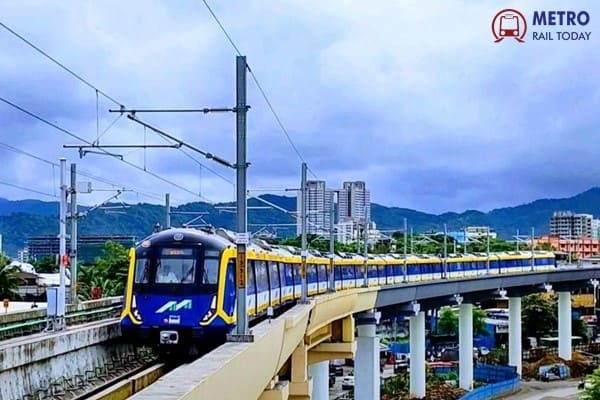
New Delhi, India (Metro Rail Today): In a major boost to Mumbai’s urban transport infrastructure, the Japan International Cooperation Agency (JICA) has approved an Official Development Assistance (ODA) loan worth ¥92.4 billion (approximately ₹5,000+ crore) for the Mumbai Metro Line 11 (Phase I) project.
The fully underground corridor is set to play a transformative role in enhancing east–west connectivity, reducing congestion, and advancing sustainable urban mobility across the Mumbai Metropolitan Region (MMR).
The loan agreement was formalised in New Delhi between Dr. Alok Tiwari, Joint Secretary, Department of Economic Affairs, Ministry of Finance, and Mr. Takeuchi Takuro, Chief Representative, JICA India Office.
This development further strengthens the long-standing India–Japan collaboration in metro rail and high-quality infrastructure development, with JICA already playing a key role in projects such as the Mumbai Metro Line 3 and Delhi Metro.
The Mumbai Metro Rail Corporation Limited (MMRC) has been designated as the executing agency for the project.
Project Scope: Fully Underground Strategic Corridor
Mumbai Metro Line 11 (Phase I) will feature:
- 17.51 km fully underground corridor
- 14 underground stations
- Alignment from Anik Depot to Gateway of India
The corridor is strategically designed to create a critical east–west transit link, connecting key residential, commercial, and heritage zones of Mumbai.
Key Features and Multimodal Integration
The project is notable for its strong focus on integration and future-ready infrastructure:
- Seamless connectivity with Mumbai Trans Harbour Link (MTHL)
- Improved access to Mumbai Port Trust redevelopment areas
- Integration with existing and upcoming metro corridors and transport systems
- Enhanced last-mile connectivity and multimodal transport options
This integration is expected to significantly improve passenger movement across the city and reduce dependence on road-based transport.
Addressing Congestion and Environmental Concerns
Mumbai continues to face severe traffic congestion and rising vehicular density. Metro Line 11 is expected to:
- Reduce travel time across key corridors
- Ease pressure on road networks
- Lower carbon emissions and air pollution
- Promote a shift towards public transport usage
The project aligns with India’s broader push toward green and sustainable urban mobility solutions.
Economic and Strategic Impact
Beyond mobility, the corridor is expected to unlock substantial economic value by:
- Enhancing connectivity to business districts and port zones
- Supporting redevelopment and urban regeneration initiatives
- Improving access to Navi Mumbai via MTHL
- Generating employment and boosting regional economic activity
The project also aligns with multiple UN Sustainable Development Goals (SDGs), including sustainable cities, climate action, and resilient infrastructure.
Implementation Timeline
- Consultancy tenders: Expected from June 2026
- Civil works tenders: Likely by September 2026
- Target completion: August 2032
Commenting on the development, Mrs. Mamta Shah, MD & CEO, Urban Infra Group, said:
“JICA’s continued investment in India’s metro infrastructure reflects strong global confidence in the country’s urban mobility vision. Mumbai Metro Line 11 is particularly significant as it strengthens east–west connectivity while unlocking redevelopment potential in key port and coastal zones. Such projects are critical for building resilient, low-carbon urban transport systems in megacities like Mumbai.”
With strong international financing and a focus on sustainability, Mumbai Metro Line 11 represents a crucial step toward building a modern, integrated, and environmentally responsible urban transport network.
As Mumbai continues to expand, projects like this will be central to shaping the city’s long-term mobility landscape and economic growth trajectory.

MRT Online Desk
Metro Rail Today is an authentic and global news provider for the Rail & Metro industry from and around the world.