

Trending Now
 Ghaziabad plans New Metro Corridor linking Vaishali to Gokulpuri via Hindon Airport
 Telangana Government takes full control of Hyderabad Metro from L&T in ₹1,461 crore Deal
 R Mohanraja appointed as new Secretary of Railway Board, Ministry of Railways
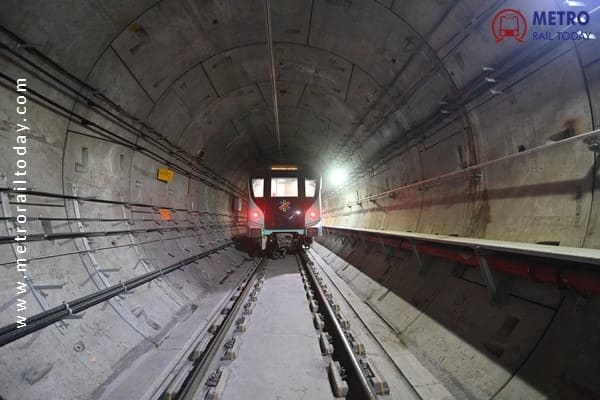 Adani Group's construction arm bags first ₹1,024 crore Civil Contract of Delhi Metro Phase 5
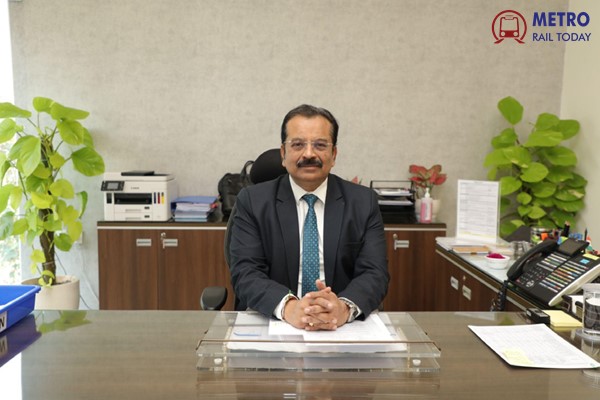 Govt approves permanent absorption of NCRTC Managing Director Shalabh Goel from Indian Railways
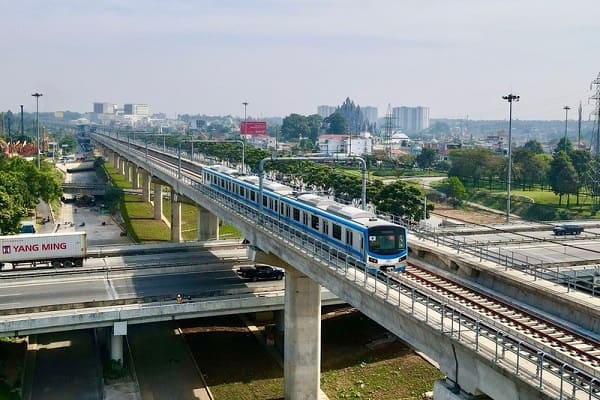 Hyundai Rotem signs $332 million Rolling Stock Contract with Vietnam for Ho Chi Minh City Metro
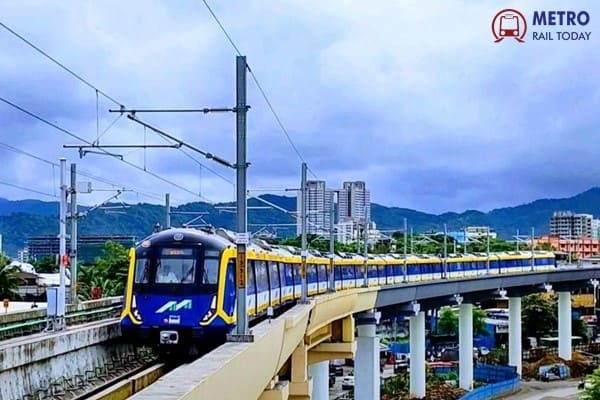 Maharashtra approves ₹18,130 Crore Mumbai Metro Line 5 Expansion & New Line 5A
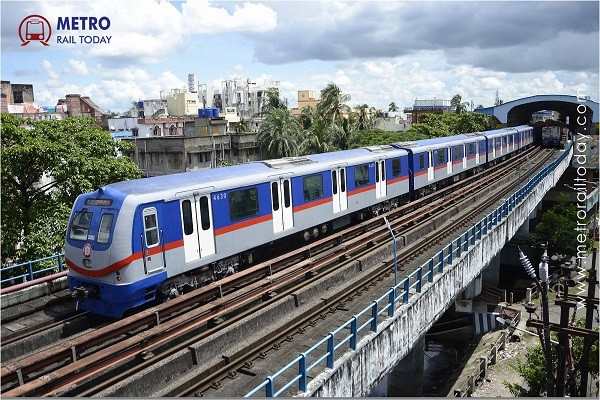 Telangana Govt approves ₹13,615 crore IRFC loan to takeover Hyderabad Metro from L&T
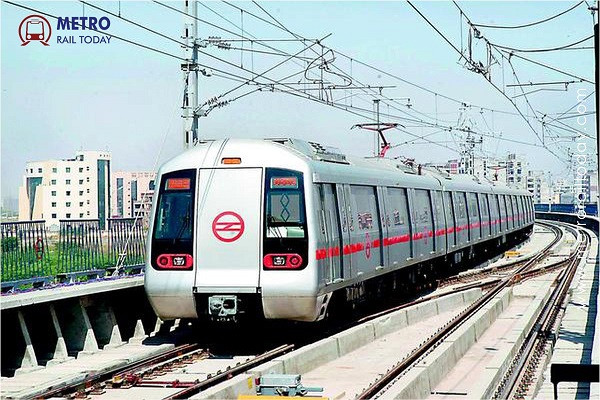 DMRC appoints Sanjay Jamuar as First CEO of Delhi Metro International Limited
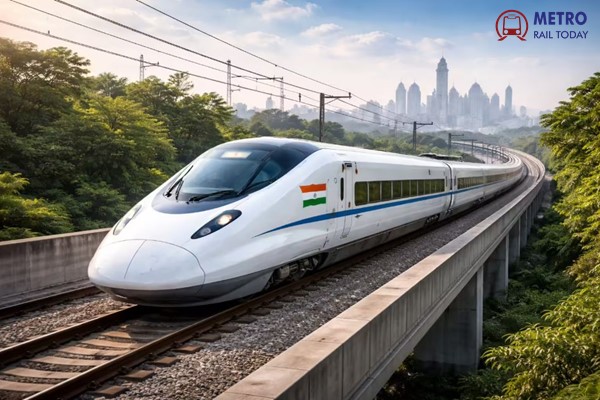 India launches first High Speed Bullet Train Manufacturing Complex in Bengaluru
NHSRCL to complete construction of 8 Mumbai-Ahmedabad Bullet Train stations by 2027
MRT Online Desk
Posted on: 2025-07-28 17:01:00
Viewer: 5,719
Comments: 0
Country: India
City: New Delhi
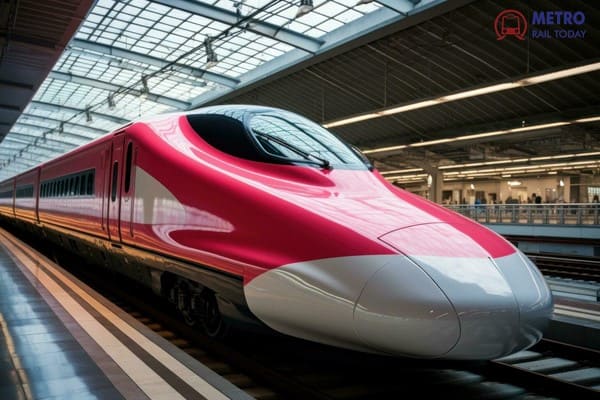
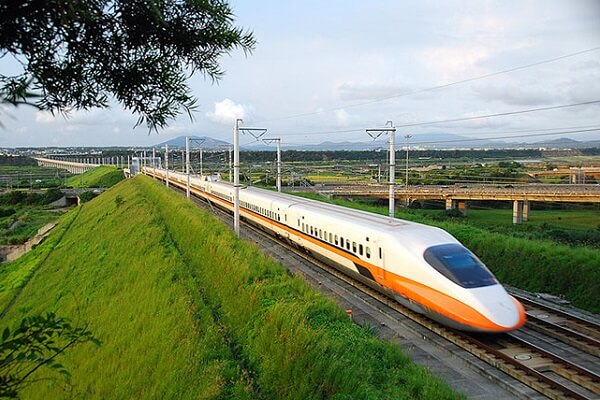
New Delhi, India (Metro Rail Today): The Ministry of Railways is accelerating efforts to complete India’s first bullet train project—the 508-km Mumbai-Ahmedabad High-Speed Rail (MAHSR) corridor—with the ambitious goal of making a significant portion of the Gujarat segment operational by December 2027. Being executed by the National High Speed Rail Corporation Limited (NHSRCL), the high-speed corridor will revolutionize intercity transport in western India and position India among the elite group of nations with cutting-edge bullet train infrastructure.
In a written reply to the Lok Sabha on July 23, Union Railway Minister Ashwini Vaishnaw confirmed that the Vapi to Sabarmati stretch in Gujarat is planned to be completed by 2027. This critical segment comprises eight stations: Vapi, Bilimora, Surat, Bharuch, Vadodara, Anand, Ahmedabad, and Sabarmati. Once operational, this stretch will serve as the backbone of India’s first high-speed rail service, drastically reducing travel time between Gujarat's key commercial hubs.
The full corridor—running from Mumbai to Ahmedabad—will feature 12 stations, including Mumbai, Thane, Virar, and Boisar in Maharashtra. The entire 508-km MAHSR project is now targeted for completion by December 2029, with the Maharashtra segment, including the vital Mumbai terminal at Bandra-Kurla Complex (BKC), progressing steadily after initial delays.
In a major engineering breakthrough, NHSRCL this month achieved the first tunnel breakthrough in the 21-km-long tunnel section between BKC and Shilphata. This section includes a 7-km undersea tunnel beneath Thane Creek—a first in India’s rail construction history. Of the 21 km tunnel, 5 km is being constructed using the New Austrian Tunnelling Method (NATM), while the remaining 16 km will be built using advanced Tunnel Boring Machines (TBMs), showcasing India’s growing capabilities in complex tunneling technology.
The bullet train is designed to run at speeds up to 320 kmph, enabling commuters to travel between Mumbai and Ahmedabad in just about 2 hours, compared to the current travel time of 6–7 hours. Apart from speed and comfort, the project emphasizes sustainability and efficiency, incorporating Japanese Shinkansen technology known for its safety record and punctuality.
Commenting on the project’s national significance, Mrs. Mamta Shah, MD & CEO of Urban Infra Group, stated, “India’s bullet train project represents a transformative leap in the country’s transportation infrastructure. The Vapi to Sabarmati completion target by 2027 is a positive indicator of progress. This project is more than just a high-speed rail—it's a symbol of India’s vision to modernize its mobility systems and create new economic corridors.”
The MAHSR corridor is not just a transport project; it is expected to generate over 90,000 direct and indirect jobs, catalyze transit-oriented development, and promote Make in India by fostering domestic production of high-speed rail components. It also sets the stage for future corridors planned under India’s National Rail Plan, including routes like Delhi–Varanasi and Mumbai–Nagpur.
With significant milestones already achieved and construction work progressing across multiple fronts, the Mumbai-Ahmedabad bullet train is on track to redefine travel in India—ushering in a new era of speed, connectivity, and innovation in public transport.

MRT Online Desk
Metro Rail Today is an authentic and global news provider for the Rail & Metro industry from and around the world.