


Trending Now
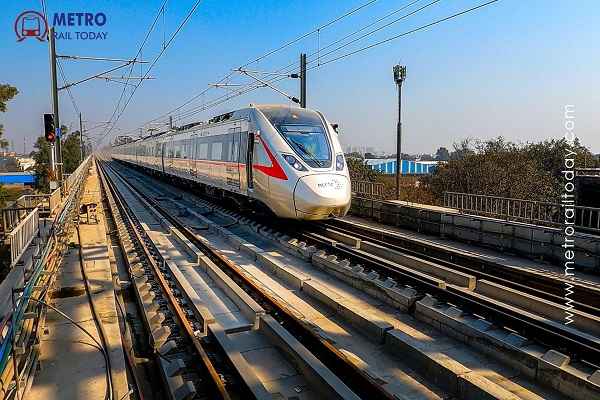 NCRTC begins groundwork for 136-km Delhi–Panipat–Karnal Namo Bharat RRTS Corridor
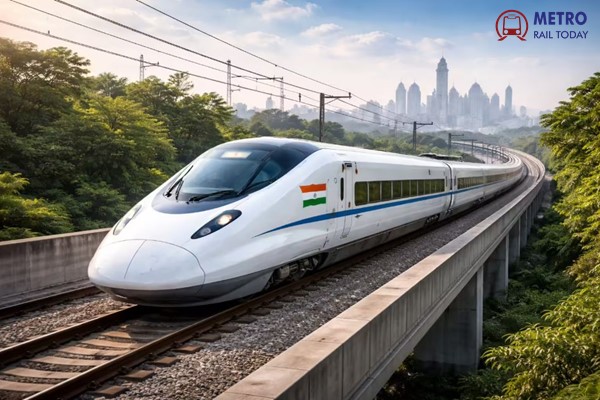 India targets March 2027 Rollout of First Indigenous Bullet Train 'Bharat B28’
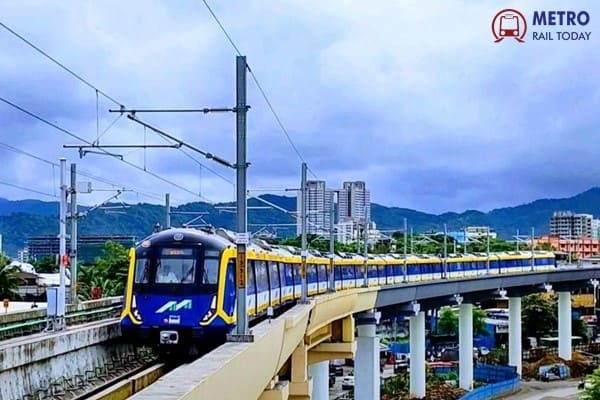 JICA approves ¥92.4 billion ODA Loan for Mumbai Metro Line 11
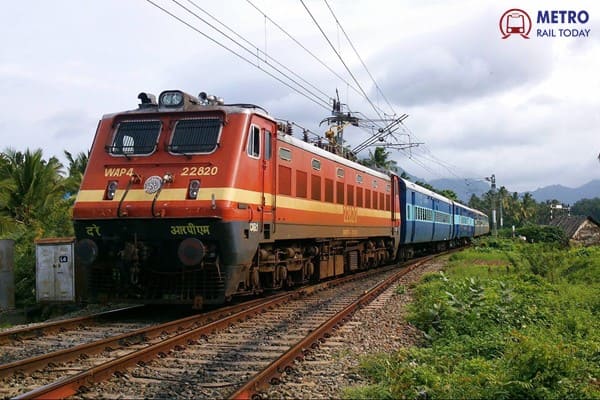 CLW sets Global Benchmark with record 800 Electric Locomotives production in FY 2025–26
 NMRC invites Applications for Key Executive Positions for Noida Metro Rail Project
 Central Govt rejects revised DPR of 7.5 km Noida-Greater Noida Metro Rail Extension Project
 Revised DPR of Prayagraj Metro focuses on seamless Rail-Air connectivity
 DMRC floats Tender for Central Vista Depot Design in Delhi Metro Phase V Expansion
- MMRDA seeks ₹14,100 Crore Loan for two upcoming Mumbai Metro Corridors
 Jupiter Wagons Eyes ₹20,000-Crore Mumbai Suburban Mega Rolling Stock Tender
PM Modi inaugurates Two Delhi Metro Corridors, Lays Foundation for Phase V Expansion Projects
MRT Online Desk
Posted on: 2026-03-08 17:00:00
Viewer: 614
Comments: 0
Country: India
City: New Delhi
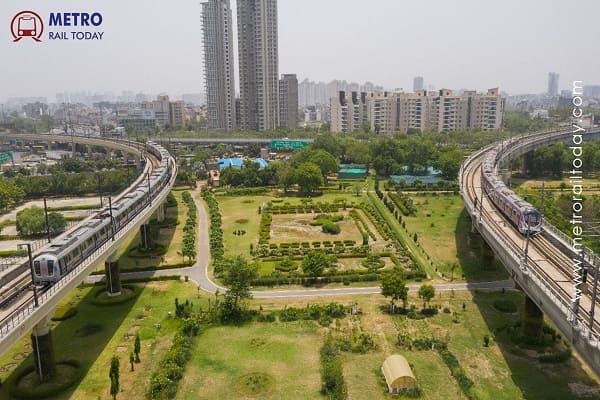
New Delhi, India (Metro Rail Today): Prime Minister Narendra Modi on Sunday inaugurated major infrastructure projects in the national capital worth approximately ₹33,500 crore, including the opening of two new Delhi Metro corridors valued at over ₹18,300 crore and the foundation laying for additional routes under Delhi Metro Phase V-A.
The projects aim to strengthen public transport in Delhi while improving regional connectivity across the National Capital Region (NCR).
Delhi Chief Minister Rekha Gupta said the metro expansion will help ease daily commuting, reduce traffic congestion, and support efforts to curb air pollution in the capital. She added that the new corridors will also enhance connectivity for residents travelling from Noida and Faridabad, particularly those heading to Indira Gandhi International Airport.
Majlis Park–Maujpur-Babarpur (Pink Line) Corridor
One of the key projects inaugurated is the Majlis Park–Maujpur-Babarpur stretch of the Pink Line, which spans approximately 12.3 kilometres and includes eight elevated stations.
With the addition of this section, the Pink Line now extends to about 71.56 kilometres, making Delhi home to India’s first fully operational ring metro corridor.
Stations along the newly inaugurated stretch include Majlis Park, Burari, Jharoda Majra, Jagatpur-Wazirabad, Soorghat, Nanaksar-Sonia Vihar, Khajuri Khas, Bhajanpura, Yamuna Vihar, and Maujpur-Babarpur.
The project also features significant engineering elements, including the construction of a new bridge across the Yamuna River and a double-decker viaduct carrying both a metro track and a road flyover, designed to optimise urban space and improve traffic movement.
Magenta Line Extension
The Prime Minister also inaugurated the Deepali Chowk–Majlis Park section of the Magenta Line, which spans approximately 9.9 kilometres.
This corridor is expected to improve connectivity in several northern areas of Delhi, including Madhuban Chowk, Haiderpur Badli Mor, Bhalaswa, and Majlis Park, strengthening the overall urban transport network in the region.
According to Chief Minister Rekha Gupta, the project also represents an engineering achievement, noting that a portion of the corridor rises to a height of around 28.36 metres, making it one of the highest elevated sections in the Delhi Metro network.
Foundation Stone Laid for Three Phase V-A Corridors
Alongside the inauguration of the two metro sections, the Prime Minister laid the foundation stone for three new corridors under Delhi Metro Phase V-A, covering a combined length of approximately 16.10 kilometres.
The proposed corridors include:
-
Central Vista Corridor: R.K. Ashram Marg to Indraprastha
-
Golden Line Extension: Aerocity to Indira Gandhi Airport Terminal 1
-
Golden Line Extension: Tughlakabad to Kalindi Kunj
Commenting on the development, Mrs. Mamta Shah, MD & CEO, Urban Infra Group, said the expansion of Delhi Metro highlights the growing importance of urban rail systems in addressing mobility challenges in megacities.
“The continued expansion of the Delhi Metro network demonstrates how integrated urban transit systems can significantly improve mobility, reduce congestion, and support sustainable urban development. Projects such as the Pink Line ring corridor and new Phase V routes will play an important role in strengthening connectivity across Delhi and the wider NCR region,” she said.
She added that expanding metro networks alongside other public transport modes will be essential for building efficient, multimodal transport ecosystems in India’s rapidly growing cities.
Delhi Metro Officials said these corridors will improve connectivity to key areas across Delhi while enhancing travel options for commuters moving between South Delhi, Noida, and the airport region.


MRT Online Desk
Metro Rail Today is an authentic and global news provider for the Rail & Metro industry from and around the world.