


Trending Now
 Japanese Delegation visits KRIDE to explore Bengaluru Suburban Rail Project opportunities
 GMRC issues ₹879 crore Civil Tender for Airport Extension under Ahmedabad Metro Phase 2A
 Global Mobility Leaders Alstom and Siemens become Corporate Member of Chamber of Railway Industries
 L&T-MHI JV wins contract for Automated People Mover at Dubai’s Al Maktoum International Airport
 Delhi Metro Rail Network to expand to 695 km by 2047, Six new RRTS Corridors planned
 HÜBNER at InnoTrans 2026: Global rail expertise and local capability for India’s Next-Gen Mobility
 Australia shortlists three firms/consortia for Sydney–Newcastle High Speed Rail Project
 MRVC set to procure 238 AC Vande Metro Trainsets worth ₹19,293 crore from Indian Railways
 Maharashtra approves ₹17,725 crore Mumbai Metro Line 13 linking Mira-Bhayandar with Vasai-Virar
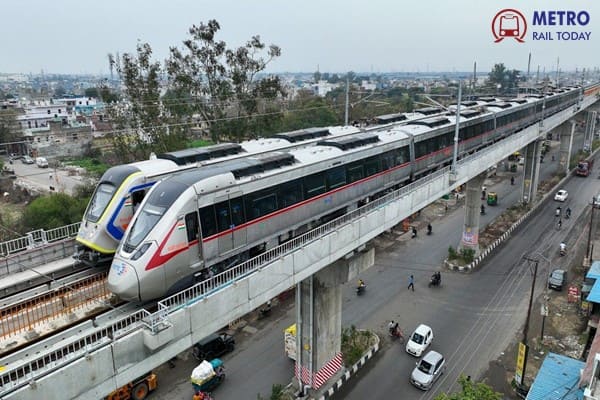 Gujarat issues three tenders for 48.38-km Metro-RRTS Hybrid corridors under Ahmedabad Metro Phase 3
Railway Ministry to bear ₹90,000 Crore Cost Escalation for Mumbai–Ahmedabad Bullet Train Project
MRT Online Desk
Posted on: 2026-03-05 07:00:00
Viewer: 2,589
Comments: 0
Country: India
City: New Delhi
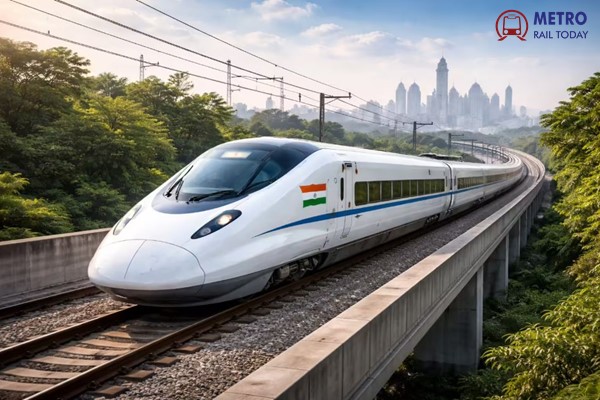
New Delhi, India (Metro Rail Today): The Ministry of Railways is considering absorbing the nearly ₹90,000 crore additional cost arising from the Mumbai–Ahmedabad High-Speed Rail (MAHSR) project, without seeking further loans from the Japan International Cooperation Agency (JICA). The total project cost has escalated by approximately 83 per cent, rising from the original estimate of ₹1.1 lakh crore to about ₹1.98 lakh crore due to delays and related factors.
According to officials familiar with the development, the Railway Ministry is preparing a revised cost estimate for the 508-km high-speed rail corridor and is expected to seek Cabinet approval for additional funding. The ministry is likely to approach the Finance Ministry for the required financial support to ensure timely completion of the project.
JICA currently finances around 81 per cent of the original project cost through an Official Development Assistance (ODA) loan at a highly concessional interest rate of 0.1 per cent per annum. The loan carries a repayment tenure of 50 years, including a 15-year grace period. Despite the cost escalation, the Railways is not expected to request additional borrowing under the existing Japanese funding framework.
Meanwhile, during a recent webinar on the seven proposed high-speed rail corridors spanning over 4,000 km with an estimated investment of ₹16 lakh crore, Railway Board officials outlined a diversified funding strategy for future projects. Railway Board Chairman Satish Kumar stated that financing models under consideration include multilateral support, Special Purpose Vehicles (SPVs), and Centre–State partnership structures.
The Railways is also exploring Transit-Oriented Development (TOD) along upcoming high-speed corridors to improve financial viability. TOD-based planning can unlock significant non-fare revenue streams through real estate development, commercial leasing and integrated urban infrastructure, thereby strengthening long-term project sustainability.
In the post-budget discussion, BEML Chairman and Managing Director Shantanu Roy highlighted the importance of self-reliance in bullet train manufacturing. He stated that BEML has initiated efforts to manufacture the first two indigenous high-speed trainsets and indicated that future models could potentially see speed enhancements from 280 kmph to 350 kmph.
Railway officials and sector experts have also underscored the importance of system-wide standardisation across civil construction, signalling systems and rolling stock manufacturing for future bullet train projects. Standardisation is expected to create economies of scale, reduce procurement costs and streamline execution timelines across upcoming corridors.
Commenting on the development, Mrs. Mamta Shah, MD & CEO, Urban Infra Group, said, “Absorbing the cost escalation internally reflects the government’s strategic commitment to completing India’s first high-speed rail corridor. Going forward, diversified funding models, TOD-based value capture and system standardisation will be critical to ensuring financial sustainability across the next generation of bullet train projects.”
The Mumbai–Ahmedabad corridor remains India’s flagship high-speed rail initiative and is seen as the foundation for a broader national high-speed rail network.

MRT Online Desk
Metro Rail Today is an authentic and global news provider for the Rail & Metro industry from and around the world.