


Trending Now
 AI-Powered Monitoring System to safeguard Mumbai–Ahmedabad Bullet Train Operations
 Kerala not submitted DPR to Centre for proposed Thiruvananthapuram–Kasaragod RRTS Corridor
 Telangana allocates ₹1,100 crore for Hyderabad Metro Expansion in 2026–27 Budget
 RITES bags ₹105.69 crore contract to maintain India’s First High-Speed Rail Test Track in Rajasthan
 Airfloa Rail Technology awarded Rolling Stock Order for Chennai Metro Phase 2
 18 Metro Stations planned along Gurugram–Faridabad Namo Bharat RRTS Corridor
- BEML–Medha Consortium bids to supply 16 Trainsets for Mumbai–Ahmedabad Bullet Train Project
 Indian Railways attracts $942 million FDI in 11 years as Rail Exports cross ₹26,000 Crore
 Konkan Railway, Aarvee Engineering join hands to expand Rail & Metro Infrastructure Projects
 CMRS completes Safety Inspection of Indore Metro Phase 2 Priority Corridor
Digitalisation of Metro Railway - Asset Management and Cyber Security
Lalit Chandra Trivedi
Posted on: 2022-02-26 09:36:00
Viewer: 4,126
Comments: 0
Country: India
City: New Delhi
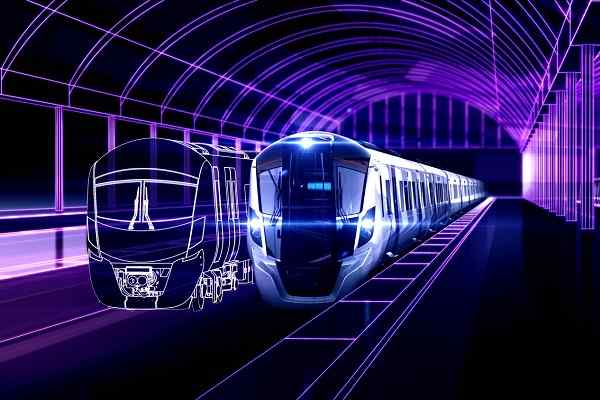
In last few years , Digitalisation of Railway assets be it Metro systems or Main line Railways has grown exponentially. Whether it’s, centralised control and command system , Asset management, signalling and OFC networks , driverless trains , ticketing system, passenger information systems, electrical equipment, CCTV based integrated surveillance systems, platform screen doors , crowd management and face recognition systems , Digitalisation is behind every core activity.
Success of digital assets and their response is based on capturing BIG and QUALITY data . Here we are dealing with high volume, high velocity and high variety data . Further Data Analytics is needed to make use of captured data .
These digital assets and system also need to be secured from cyber attacks .
The systems need to be ISO 55000 compliant for efficient asset management, and ISO 27032 compliant to ensure cyber security of assets .
The new dimension which has now been added is that while, earlier on onboard OT networking of rolling stock controlling aspects like traction , braking , automatic doors , passenger display systems were not having any interface with the outside IT world supported by IOT devices , AI and machine learning tools , today with the arrival of E maintenance platforms, track side equipment (like hot box/flat wheel detectors), remote diagnostic platforms the onboard systems on trains have become vulnerable to cyber attacks .
Under the circumstances, LCC (life cycle costing) based approach needs to be adopted for asset acquisition.
Railway system is basically a system of systems, which are spatially dispersed . We are dealing with assets in varying stages of life cycle in multiple layers. To control the system we need to have configuration management right . DSS (Decision support systems) based on facts and logic with every system feeding the superior system needs to be in place .
Asset Management is now required to take into consideration impact of IoT, AI and Machine learning based devices and is now therefore called Augmented Asset Management.
BIM is now increasingly being used for 3 D simulation of assets before their creation. With simulations of all conceivable activities before hand it has been reported that a reduction of almost 30 % in cost can be achieved besides eliminating unanticipated surprises appearing at the completion stage having potential for causing avoidable delays.
Digital fencing of assets is another potential technology to enhance asset security without correspondingly increasing costs thereof.
All these technologies and and systems are leading to higher level of RAMS (Reliability, Availability, Maintainability and Safety) helping Rail based transportation systems both metro and mainline ones to make the life of millions of passengers more comfortable and secured .


Lalit Chandra Trivedi
Lalit Chandra Trivedi is ex-IRSME officer and presently working as Chairman of the Rail division of the Indian Chapter of Institute of Mechanical Engineers.