

Trending Now
 India unveils draft National Water Metro Policy 2026 to expand Urban Water Transport
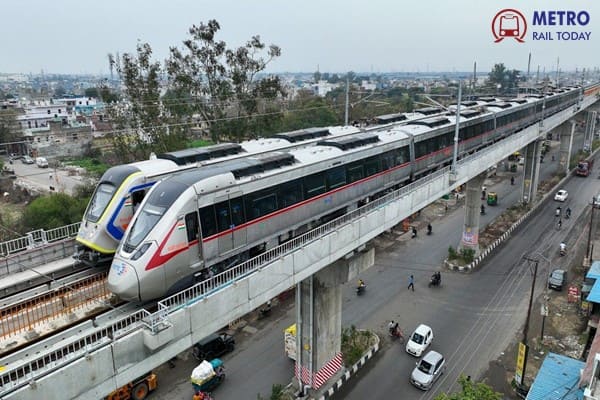 Rewriting Regional Mobility with India’s first Namo Bharat Corridor
 Hyderabad plans Pod Taxi System to enhance Last-Mile Connectivity for Metro commuters
 Maharashtra to expand 200 kilometers metro rail network across Pune and Pimpri-Chinchwad
- Govt of India explores Namo Bharat Rapid Rail to replace proposed Cuttack–Bhubaneswar Metro Project
 Global tender floated for Automatic Fare Collection System for Mumbai Metro Line 6
 Delhi Metro secures 6th rank among largest metro rail systems in the world by network length
 Indian Railways grants NOC to resume tunnelling works on Patna Metro Corridor 2
 Efkon India Bags ₹103 Crore Telecom Systems Contract for Mumbai Metro Lines 7A and 9
 Bids invited for Telecommunication Systems Contract for Kochi Metro Phase 2 Pink Line
Rewriting Regional Mobility with India’s first Namo Bharat Corridor
Dr. Sarvesh Tiwari
Posted on: 2026-03-17 15:45:00
Viewer: 116
Comments: 0
Country: India
City: New Delhi
The sight of India’s first Namo Bharat gliding along its tracks at 160 kmph today represents far more than the commencement of commercial operation of the full corridor; it is the dawn of a transformative era in regional connectivity. For millions across the National Capital Region, it marks the realisation of a long-envisioned transformation in regional mobility. For those like me who have watched the project evolve from early conversations and planning tables to engineering drawings and finally to operational tracks, it reflects the journey of an idea gradually becoming part of our everyday life. While initially the idea came across as very ambitious now stands as a reality with people actually flying from Delhi to Meerut and vice a versa in less than an hour.
On 22 February, this year, the Hon’ble Prime Minister dedicated the entire Delhi–Ghaziabad–Meerut Namo Bharat corridor which happens to be India’s first Namo Bharat Corridor to the nation, marking full operations across its 82-kilometre length from Sarai Kale Khan in Delhi to Modipuram in Meerut with 15 stations en route. With trains operating at speeds up to 160 kmph, the corridor now connects dense neighbourhoods, commercial, industrial centres and emerging residential belts across the region in under an hour. What once existed on drawings now shapes daily movement.
A Mobility Challenge Waiting for a Structural Solution
For decades, the National Capital Region has grappled with challenges related to mobility. Economic activities were concentrated in a very few areas like Delhi and a large population from surrounding cities and towns like Ghaziabad, Noida, Modinagar, Meerut and so on travelled long distances in search of them.
Travel depended largely on road networks, leading to long and unpredictable commute times, rising congestion, pollution levels and growing environmental pressure. I have known people who used to start from their homes in Meerut at 4:30 AM to catch chartered buses for reaching office in Delhi by 9:30 AM and then reaching back home again by 11:00 PM.
As the region expanded, it became increasingly clear that conventional solutions would not be sufficient. The scale of the NCR demanded high-speed, high-capacity mobility system capable of connecting regional centres efficiently while supporting more balanced urban development. The Namo Bharat corridor emerged as one such solution; a regional rapid transit system designed to enable fast, reliable and sustainable connectivity across cities. By reducing dependence on private vehicles and improving access between economic hubs and residential clusters, the system aims to reshape commuting patterns across the region.
Not Another Metro
As India’s first regional rapid transit system, the project initially faced a familiar positioning challenge. Many assumed it was another metro line. Others casually compared it to a bullet train. In reality, the system represents an entirely new category of mobility designed specifically for regional travel.
Unlike metro systems that cater primarily to short intra-city journeys, Namo Bharat is designed for longer inter-city travel across metropolitan regions. Inter-station distances range between five to seven kilometres, allowing trains to operate at significantly higher speeds.
Technologically too, the system differs substantially from conventional metro rail networks. From civil structures and advanced track systems like precast ballast less slab track to traction power and advanced signalling technologies like ETCS Level 2, a global first deployment, the entire ecosystem has been designed to support high-speed regional operations. The trains themselves are built for a design speed of 180 kilometres per hour, with an operational speed of up to 160 kilometres per hour.
From Blueprint to Reality
Delivering an 82-kilometre semi high-speed corridor across two states and multiple administrative jurisdictions is a complex undertaking. Land acquisition was extended across districts, tunnelling had to be carried out through dense urban hubs en route and through the historic city of Meerut, and utility shifting required coordination with numerous local agencies. The project also involved intricate financial arrangements combining central government support with funding from other multilateral institutions.
The commissioning of the 17-kilometre priority section proved to be a decisive moment. Once trains began plying, the narrative shifted from expectation to experience. Commuters could see and feel the system in action, and confidence grew steadily as additional sections were completed.
With the final segments between New Ashok Nagar and Sarai Kale Khan, and from Meerut South to Modipuram now operational, the corridor functions seamlessly end to end. The ability to travel between Delhi and Meerut in under an hour has the potential to reshape daily commuting patterns and influence long-term decisions about where people live and work and it is already being witnessed.
Communication Along the Corridor
Infrastructure projects of this scale do not exist in isolation from the communities around them. Public understanding and local ownership develop gradually, especially when construction stretches over several years.
Throughout the development of the Namo Bharat corridor, sustained community interaction programmes were carried out across towns and neighbourhoods along the alignment. Schools, colleges and local residents were engaged through outreach programmes that familiarised them with the project and the opportunities it would bring to the region.
In areas such as Guldhar and Duhai, where several educational institutions are located, students witnessed the corridor being built in real time. Engagement sessions in engineering colleges introduced students to the advanced technologies powering the system, while younger students participated in creative activities such as drawing competitions that encouraged them to imagine the future of mobility in their cities.
For communities living along the alignment, the corridor was never just an abstract infrastructure project. They watched it rise pillar by pillar, segment by segment and with it grew a quiet sense of anticipation about the transformation it would bring.
Public awareness efforts also extended to street-level engagement through nukkad nataks and local outreach programmes that explained the project, its benefits and important safety practices around urban mobility infrastructure.
As sections of the corridor became operational, engagement evolved from awareness to experience. School and college groups were invited to travel on the trains, allowing students to experience the speed and comfort of the system first-hand. Engineering students also had the opportunity to visit facilities such as the Operations Control Centre, offering them direct exposure to the advanced technologies that power the network.
Media as Partners in the Story
Alongside community outreach, a strong partnership with media played a critical role in shaping public understanding of the corridor.
From the early phases of construction to the commissioning of operational sections, journalists were regularly invited to visit the project site and witness key milestones first-hand. Tunnel breakthroughs, the installation of major steel spans, station developments and commissioning of sections were documented through their reports and visual coverage.
These moments, captured through cameras and narrated through reportage, helped translate complex engineering progress into stories that resonated with the wider public.
In large infrastructure projects, such partnerships are invaluable. Media does not merely report progress; it helps contextualise it. In doing so, it becomes a bridge between the project and the people whose lives it ultimately aims to transform.
Engineering Integration and Infrastructure Sharing
From a technological perspective, the corridor establishes several new benchmarks for regional rail in India. As mentioned earlier, Namo Bharat trains are designed for speeds of up to 180 kilometres per hour, with an operational speed of 160 kilometres per hour.
The corridor also pioneered a unique model of infrastructure-sharing through the integration of Meerut Metro services along a 23-kilometre stretch within the city. While Namo Bharat serves longer regional journeys, the metro caters to intra-city mobility in Meerut, operating at speeds of up to 120 kilometres per hour.
Multi-modal integration is another defining feature of the system. Stations are integrated with other modes of public transport wherever possible. For example, Sarai Kale Khan and Anand Vihar connects with Indian Railways, Delhi Metro and major bus networks, establishing them as a major transit hub across NCR. At New Ashok Nagar, NCRTC has partnered with DMRC to provide single-point security check system for travelling between the systems, reducing the travel time and making journey seamless.
Various ticketing options are available for passengers like QR-based digital tickets, UPI-enabled ticket vending machines or the National Common Mobility Card, ensuring that the experience of using the corridor remains simple and convenient.
Ridership and Environmental Impact
Early ridership trends already suggest strong public acceptance of the service. On the first full weekday following complete commissioning, daily ridership crossed one lakh passengers, with stations such as Begumpul, Anand Vihar and Ghaziabad witnessing encouragingly high footfall.
Since the phased operations began, more than 2.5 crore commuters have travelled on the corridor, indicating that the system is steadily integrating into the everyday mobility patterns of the region.
The environmental implications are equally significant. Once operating at full capacity, the corridor is expected to remove more than one lakh private vehicles from the roads, resulting in an estimated reduction of around 2.5 lakh metric tonnes of carbon dioxide emissions annually thereby contributing towards achieving India’s vision of Net Zero
A Template for Regional India
Two decades ago, the Delhi Metro reshaped expectations of urban mobility in India. The Namo Bharat corridor is set to redefine regional mobility in a similar way.
As metropolitan regions continue to expand beyond traditional city boundaries, the need for efficient inter-city connectivity within urban clusters will only grow stronger. Regional rapid transit systems provide one pathway to address these pressures while supporting more balanced economic development.
With the success of Delhi-Meerut Namo Bharat corridor, more states are showing interest to implement it in their areas.
For commuters, the corridor already means faster and more predictable journeys. For planners and policymakers, it offers a working model of integrated regional transport.
Infrastructure rarely announces its transformation loudly. Its impact reveals itself quietly in altered routines. Today, the Delhi–Ghaziabad–Meerut Namo Bharat corridor has begun to shape those routines, one journey at a time.

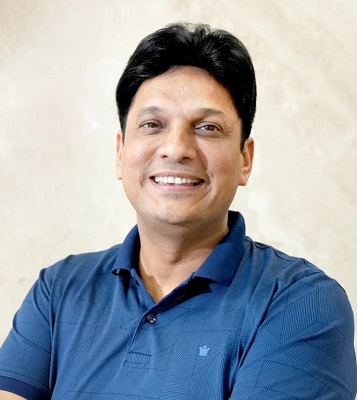
Dr. Sarvesh Tiwari
Dr. Sarvesh Tiwari, Founder & MD of PR Professionals, is a seasoned communication strategist with deep expertise in infrastructure and consulted on multiple metro rail and large-scale infrastructure projects across India.