

Trending Now
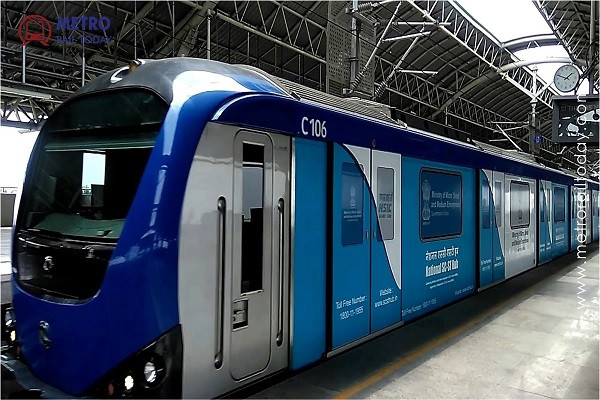 Alstom eyes ₹2,000 crore Chennai Metro tender for supply of 168 Train Coaches
 SYSTRA India emerges as lowest bidder for Thane Metro Design Consultancy Contract
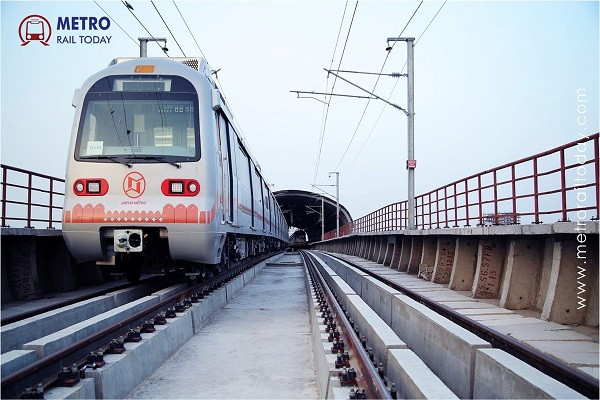 Adani Group's Cemindia Projects wins ₹921.63 crore Underground Package for Jaipur Metro
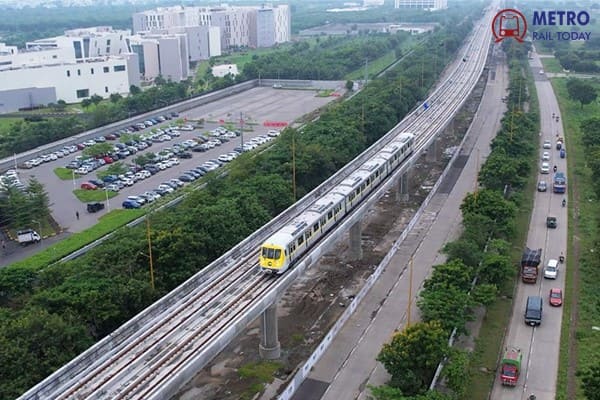 EFKON India wins ₹288.11 crore Station Systems Contract for Indore Metro Rail Project
 L&T partners with IIT Madras-Backed TuTr Hyperloop to explore Next-Gen Mobility
 Alstom, Larsen & Toubro unveil First Driverless Trainset for Mumbai Metro Lines 4 and 4A
 BEML, Czech Republic delegation explore strategic Industrial and Technology Partnerships
- Six Firms qualify for ₹1,160 crore Underground Tunnel Package of Jaipur Metro Rail Project
 Alstom and Siemens sign $1.5 billion Rolling Stock contract for Riyadh Metro Rail Project
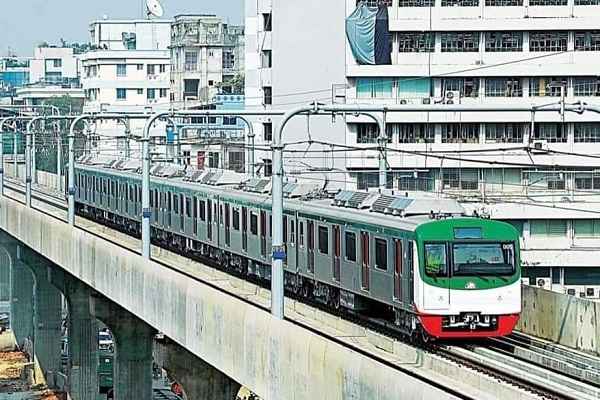 Bangladesh approves Tk 58,477 crore contracts for Dhaka Metro Lines 1 and 5
Exclusive Insights from Niko Warbanoff, CEO of DB E.C.O. Group on India's Rail & Mobility Future
MRT Online Desk
Posted on: 2026-01-28 10:10:00
Viewer: 48,926
Comments: 0
Country: India
City: New Delhi
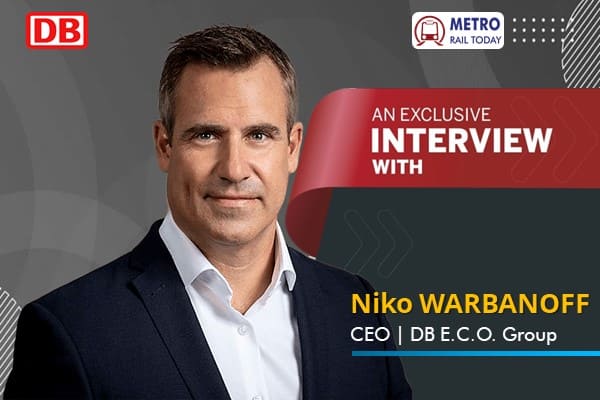
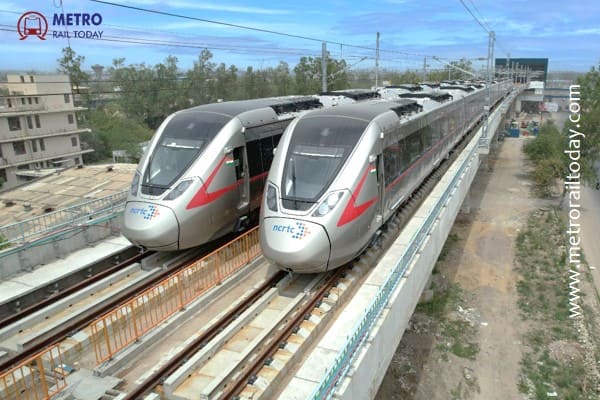
As the Delhi-Ghaziabad-Meerut Namo Bharat RRTS moves toward full-corridor operations, the eyes of the global rail industry are on India. Niko Warbanoff, CEO of DB E.C.O. Group, sat down with Metro Rail Today to discuss the operational successes of India’s first regional rapid rail, the role of local talent, and why Indian engineers are now designing German infrastructure.
It has been over two years since DB began operating and maintaining the Namo Bharat RRTS. How would you describe the journey so far, and what are the most important learnings from the Indian context?
Niko Warbanoff: It has been a challenging but incredibly rewarding journey. We started building the company from scratch almost four years ago, and we are now very close to having the full corridor in operations. I always call this a "lighthouse project"—not just for India, but globally. It is truly transforming mobility in the capital region by providing a mode of transport that is fast, safe, and comfortable.
With more RRTS corridors planned for the Delhi-NCR region, how does DB view future opportunities in India’s regional rail space?
Niko Warbanoff: I am a huge fan of the RRTS system. India has many modes—long-distance, metro, and conventional rail—but the RRTS is the game-changer for high-density areas. I would be very motivated to see this concept used as a "template" and replicated across India. It fosters urban development by connecting airports, bus systems, and other rail networks in a very smart way.
You employ a large local workforce. How does DB ensure that German standards of safety and quality are maintained with local recruitment?
Niko Warbanoff: People are our key success factor. We recruit locally from cities like Ghaziabad and Meerut, and we have invested heavily in training. We have over 40 different training disciplines to ensure the system is operated and maintained to the highest standards. We’ve also implemented a "Lead Program" for our management, which is derived directly from the best practices of Deutsche Bahn in Germany to ensure our leadership culture and values remain consistent.
Looking ahead, what is your long-term vision for DB E.C.O. Group in shaping India’s mobility ecosystem over the next decade?
Niko Warbanoff: We want to expand across all sectors—engineering, consulting, and operations. This includes passenger services, high-speed rail, and even freight. Beyond operations, we have a major Design Center in Bangalore with over 400 engineers. Interestingly, these Indian engineers are actually contributing to the design of rail infrastructure projects back in Germany. We see this as a mutual partnership where we grow together.
There has been a lot of political momentum recently between India and Germany. How does that affect the rail sector?
Niko Warbanoff: The momentum is very positive. The recent free trade agreement between the EU and India and the visit of the German Chancellor to India have brought us closer. With many Indian students in Germany and our increasing collaboration on the ground, my feeling is that our two regions are becoming more integrated, which is vital for future innovation.
Finally, DB has been a strong supporter of the RailTrans Expo. How important are these platforms for the industry?
Niko Warbanoff: These platforms are essential. We need spaces to exchange ideas and see the latest technological innovations. Success in the rail sector only happens when different players—authorities, government, industry, and operators—come together. I am already looking forward to the RailTrans Expo 2026 edition.
Watch Full Video Interview: https://youtu.be/--X3YHp7Q9M
For more exclusive insights into India's metro and rail projects, stay tuned to Metro Rail Today.

MRT Online Desk
Metro Rail Today is an authentic and global news provider for the Rail & Metro industry from and around the world.