

Trending Now
 Siemens Bags Order from Titagarh Rail Systems for Pune Metro Extension Trainsets
 Titagarh Rail Systems becomes Corporate Member of Chamber of Railway Industries (Rail Chamber)
 World Bank approves ₹1,400 crore Civil Tender for Gurugram Metro Phase 2
 Bi-RIDE invites ₹200 crore Tender for Soladevanahalli Depot of Bengaluru Suburban Rail Project
 GHV India awarded ₹107.79 crore Civil Contract for Lucknow Metro East-West Corridor
 Pune Metro Line 3 set to launch First 12-km Section on 15 July 2026
 DMRC gets approval to Fell or Transplant 364 Trees for Central Vista Metro Corridor under Phase IV
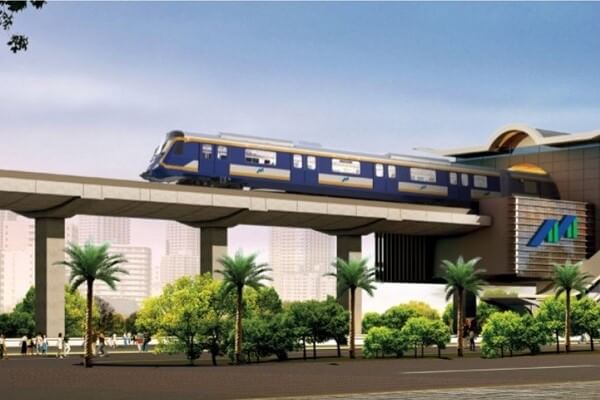 ₹4.5 Lakh crore Metro Rail Investment reaches less than 5% of Urban Population in India
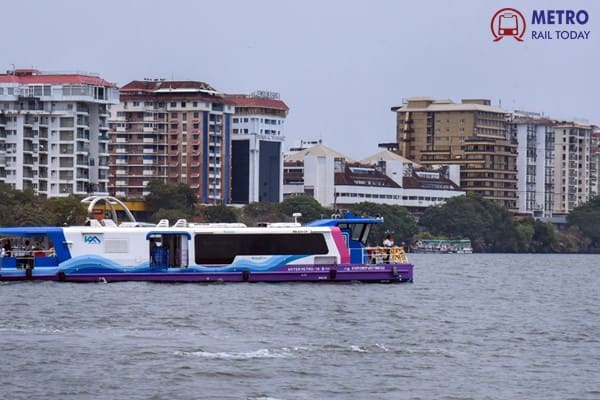 West Bengal plans to launch Water Metro Systems in Kolkata
- Titagarh Rail Systems targets full Indigenous Aluminium Coach Manufacturing by FY2027
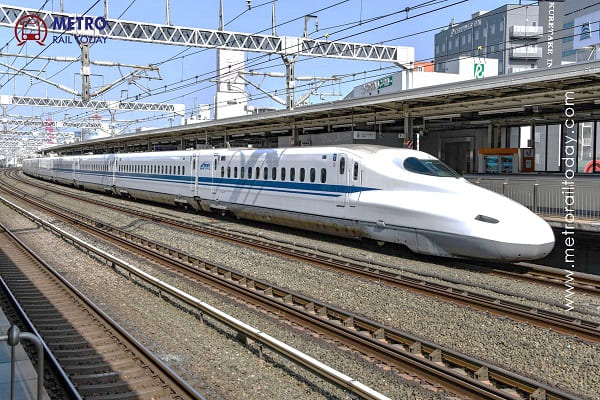
India targets 350 kmph Indigenous Bullet Train to accelerate High-Speed Rail ambitions
MRT Online Desk
Posted on: 2026-05-19 14:15:00
Viewer: 2,710
Comments: 0
Country: India
City: New Delhi
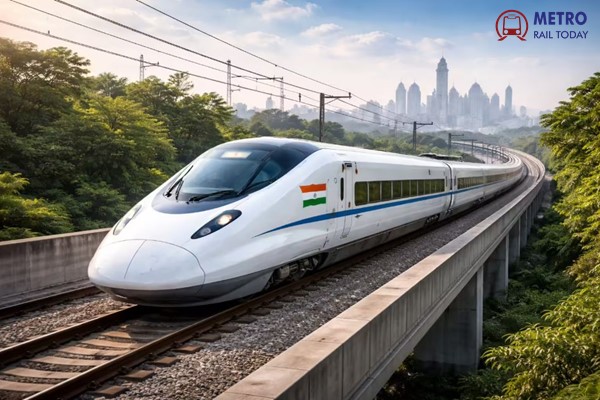
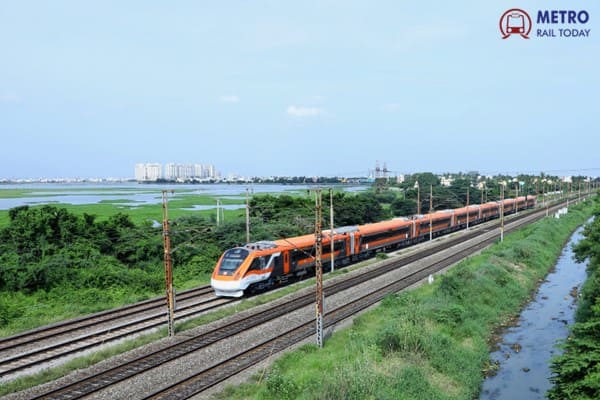
New Delhi, India (Metro Rail Today): India is preparing to enter a new era of ultra-high-speed rail transportation with Union Railway Minister Ashwini Vaishnaw announcing plans for the country’s next-generation indigenous bullet train capable of operating at speeds of up to 350 kmph. The ambitious move marks a significant technological leap for Indian Railways and reinforces the government’s long-term vision of building a globally competitive high-speed rail ecosystem under the Atmanirbhar Bharat initiative.
According to the Railway Minister, the design process for the advanced high-speed train platform will begin within the next six months. The proposed trainset is expected to become India’s fastest indigenously developed railway system and could eventually form the backbone of future dedicated high-speed corridors planned across the country.
The announcement comes at a time when Indian Railways, in partnership with domestic manufacturing agencies, is already developing the B28 high-speed trainset project. The B28 platform, being jointly developed by BEML Limited and the Integral Coach Factory (ICF), has been designed for operational speeds of up to 280 kmph and is expected to emerge as India’s first fully indigenous high-speed train prototype.
Railway officials indicate that the future 350 kmph train platform may evolve into a new “B35” category designed specifically for ultra-high-speed operations. The new generation trainsets are expected to build upon the technical expertise and manufacturing capabilities being developed through the ongoing B28 programme.
The B28 prototype is currently targeted for rollout by early next year and could begin trial operations on sections of the Mumbai–Ahmedabad High-Speed Rail corridor around 2027. The experience gained from this project is expected to play a crucial role in shaping India’s next phase of bullet train technology.
Indigenous Technology Push Gains Momentum
The upcoming 350 kmph platform is expected to feature advanced aerodynamics, distributed traction technology, intelligent monitoring systems, enhanced braking systems, and next-generation safety architecture tailored specifically for Indian climatic and operational conditions.
Officials say the trains are being engineered to perform reliably in high-temperature environments, dust-prone regions, heavy rainfall zones, and humid coastal conditions. The localisation strategy also aims to reduce India’s dependence on imported railway technologies while strengthening domestic manufacturing capabilities in rolling stock, propulsion systems, signalling, precision engineering, and rail electronics.
Industry experts believe India’s ability to design and manufacture indigenous high-speed trainsets could position the country among a select group of nations with advanced bullet train capabilities.
Mrs. Mamta Shah, MD & CEO of Urban Infra Group, said, “The development of a 350 kmph indigenous bullet train platform represents a transformational milestone for India’s railway sector. It is not only a transportation achievement but also a strategic industrial and technological advancement that will strengthen India’s manufacturing ecosystem, engineering capabilities, and global competitiveness in high-speed rail technologies.”
Expanding High-Speed Rail Network Across India
India’s high-speed rail ambitions have expanded rapidly over the past few years. While the Mumbai–Ahmedabad Bullet Train project remains the country’s flagship high-speed corridor, multiple new corridors are now under planning and development.
The government is actively working on future high-speed and semi high-speed routes including Delhi–Varanasi, Mumbai–Nagpur, Chennai–Mysuru, Ahmedabad–Dholera, Bengaluru–Hyderabad, and Bengaluru–Chennai corridors. Several of these proposed routes are being designed for operational speeds ranging between 320 kmph and 350 kmph.
Recently, the Union Cabinet also approved India’s first semi-high-speed rail corridor between Sarkhej and Dholera in Gujarat, designed for speeds of up to 200 kmph. Simultaneously, surveys and alignments are progressing for multiple bullet train corridors across southern and western India.
Railway officials believe the future indigenous 350 kmph platform will play a central role in supporting these emerging corridors while helping India build a scalable and cost-efficient high-speed rail ecosystem.
Beyond passenger mobility, the expansion of high-speed rail is expected to stimulate industrial growth, urban development, tourism, regional connectivity, and large-scale job creation. The projects are also likely to accelerate investments in advanced railway engineering, component manufacturing, and smart mobility technologies across the country.
With India now aiming to join the global league of nations capable of designing and producing ultra-high-speed trainsets domestically, the proposed 350 kmph platform could become one of the most defining milestones in the modernisation journey of Indian Railways.


MRT Online Desk
Metro Rail Today is an authentic and global news provider for the Rail & Metro industry from and around the world.