


Trending Now
 Siemens Bags Order from Titagarh Rail Systems for Pune Metro Extension Trainsets
 Titagarh Rail Systems becomes Corporate Member of Chamber of Railway Industries (Rail Chamber)
 World Bank approves ₹1,400 crore Civil Tender for Gurugram Metro Phase 2
 Bi-RIDE invites ₹200 crore Tender for Soladevanahalli Depot of Bengaluru Suburban Rail Project
 GHV India awarded ₹107.79 crore Civil Contract for Lucknow Metro East-West Corridor
 Pune Metro Line 3 set to launch First 12-km Section on 15 July 2026
 DMRC gets approval to Fell or Transplant 364 Trees for Central Vista Metro Corridor under Phase IV
 ₹4.5 Lakh crore Metro Rail Investment reaches less than 5% of Urban Population in India
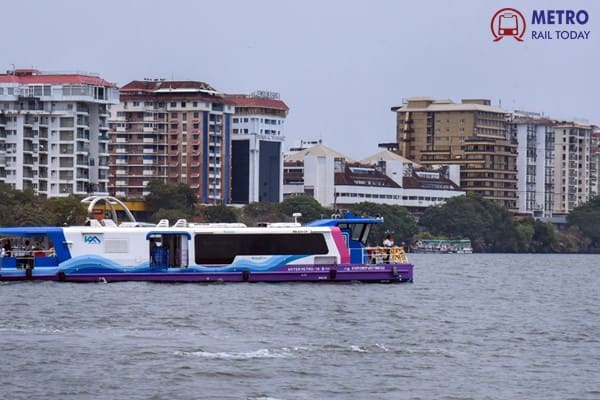 West Bengal plans to launch Water Metro Systems in Kolkata
- Titagarh Rail Systems targets full Indigenous Aluminium Coach Manufacturing by FY2027
Govt proposes 270-km Orbital Rail Corridor to transform Regional connectivity in Delhi-NCR
MRT Online Desk
Posted on: 2026-05-14 14:40:00
Viewer: 2,056
Comments: 0
Country: India
City: New Delhi
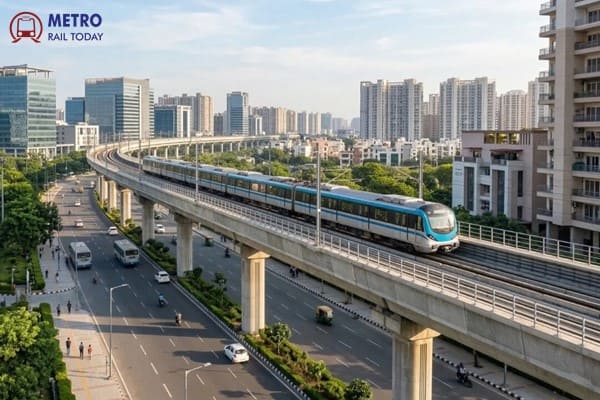
New Delhi, India (Metro Rail Today): The proposed 270-km Orbital Rail Corridor, often described as the “Mega Ring Rail” project for Delhi-NCR, is emerging as one of India’s most ambitious regional rail infrastructure plans. Designed as a high-speed peripheral transit network, the project aims to create seamless rail connectivity between key satellite cities across Haryana and Uttar Pradesh without requiring trains, passengers, or freight traffic to pass through central Delhi.
Planned along the alignment of the Eastern Peripheral Expressway and Western Peripheral Expressway, the corridor is expected to significantly decongest the National Capital Region while strengthening regional mobility, logistics efficiency, and economic integration.
Semi-High-Speed Ring Rail Around Delhi
The Orbital Rail Corridor is proposed as a semi-high-speed rail system with trains capable of operating at speeds of up to 160 kmph. Once completed, it will form a complete rail ring around Delhi, connecting major urban, industrial, and logistics hubs on the outskirts of the capital.
The total corridor length is estimated at approximately 270 km, including nearly 90 km passing through Uttar Pradesh. Current alignment plans indicate the development of passenger and freight stations at intervals of around 5 km, enabling both regional commuter movement and cargo operations.
The project is being viewed as a strategic infrastructure intervention aimed at reducing pressure on Delhi’s already saturated railway network and road corridors.
Strategic Connectivity Across NCR Satellite Cities
The proposed alignment will connect multiple important NCR cities and industrial regions across Haryana and Uttar Pradesh.
On the Haryana side, the corridor is expected to begin near Sonipat and Kundli before extending southward through major urban and industrial clusters towards Palwal.
The Uttar Pradesh section is planned to connect emerging urban centres and logistics hubs located along the eastern edge of NCR, supporting both commuter mobility and freight movement.
By bypassing central Delhi, the corridor will allow direct intercity connectivity between peripheral regions, drastically reducing travel time and operational bottlenecks for both passengers and goods trains.
Urban transport experts believe the corridor could eventually function as a critical backbone for regional transit integration in NCR, complementing existing metro, RRTS, and dedicated freight infrastructure.
Boost for Freight Movement and Logistics
Apart from passenger operations, the Orbital Rail Corridor is expected to play a major role in freight transportation by enabling cargo trains to avoid congested railway routes within Delhi.
The project aligns with broader national efforts to modernise logistics infrastructure, improve freight efficiency, and support industrial growth corridors around NCR.
The integration of freight and passenger operations on a peripheral rail ring is expected to create significant economic benefits for manufacturing clusters, warehousing hubs, and industrial zones developing around Delhi’s outskirts.
Mrs. Mamta Shah, MD & CEO of Urban Infra Group, said, “The Orbital Rail Corridor has the potential to become a game-changing regional mobility project for Delhi-NCR. By integrating high-speed passenger movement with efficient freight connectivity along the peripheral growth zones, the project can significantly reduce congestion, support economic development, and strengthen sustainable transportation across the region.”
Supporting NCR’s Long-Term Urban Expansion
Delhi-NCR continues to witness rapid urbanisation and expansion of satellite cities such as Sonipat, Kundli, Greater Noida, Faridabad, Palwal, and other emerging industrial regions. Existing transport systems are increasingly under pressure from rising commuter and freight demand.
The Orbital Rail Corridor is expected to support decentralised urban growth by improving accessibility between peripheral cities while reducing dependency on central Delhi as the primary transport interchange.
The project also complements other major regional mobility initiatives such as the Namo Bharat RRTS corridors, Delhi Metro expansion, the Dedicated Freight Corridor, and upcoming semi-high-speed rail projects.
Towards a Future-Ready Regional Transit Network
If implemented as planned, the Mega Ring Rail project could become one of the most significant regional rail infrastructure developments in India, creating a high-capacity mobility network around the national capital.
The combination of semi-high-speed operations, multimodal integration, freight capability, and peripheral connectivity positions the Orbital Rail Corridor as a critical component of NCR’s future transportation ecosystem.
As planning and feasibility studies progress, the project is expected to gain importance in India’s broader vision of building integrated, sustainable, and future-ready regional transport infrastructure.


MRT Online Desk
Metro Rail Today is an authentic and global news provider for the Rail & Metro industry from and around the world.