


Trending Now
 Siemens Bags Order from Titagarh Rail Systems for Pune Metro Extension Trainsets
 Titagarh Rail Systems becomes Corporate Member of Chamber of Railway Industries (Rail Chamber)
 World Bank approves ₹1,400 crore Civil Tender for Gurugram Metro Phase 2
 Bi-RIDE invites ₹200 crore Tender for Soladevanahalli Depot of Bengaluru Suburban Rail Project
 GHV India awarded ₹107.79 crore Civil Contract for Lucknow Metro East-West Corridor
 Pune Metro Line 3 set to launch First 12-km Section on 15 July 2026
 DMRC gets approval to Fell or Transplant 364 Trees for Central Vista Metro Corridor under Phase IV
 ₹4.5 Lakh crore Metro Rail Investment reaches less than 5% of Urban Population in India
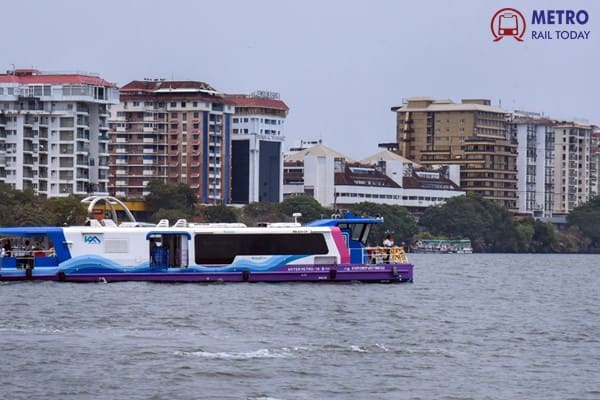 West Bengal plans to launch Water Metro Systems in Kolkata
- Titagarh Rail Systems targets full Indigenous Aluminium Coach Manufacturing by FY2027
J. Kumar Infraprojects achieves TBM Breakthrough at Mahipalpur for Delhi Metro Phase IV
MRT Online Desk
Posted on: 2026-05-16 16:22:00
Viewer: 2,149
Comments: 0
Country: India
City: New Delhi
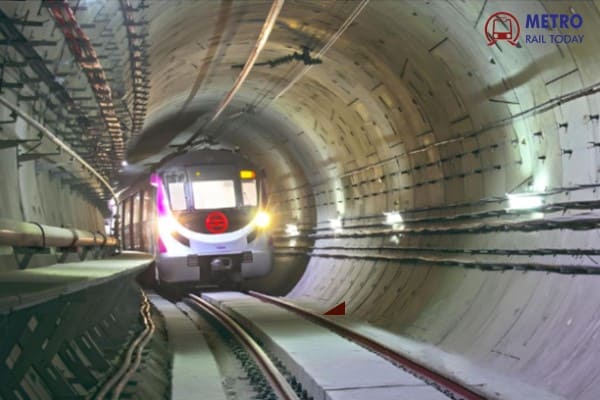
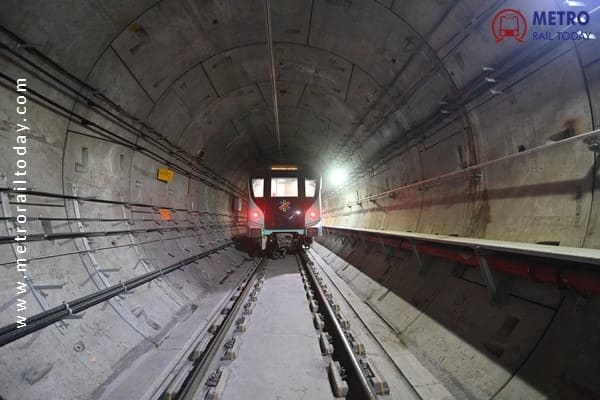
New Delhi, India (Metro Rail Today): J. Kumar Infraprojects Ltd (JKIL) has achieved a major construction milestone with the successful breakthrough of a Tunnel Boring Machine (TBM) at Mahipalpur under Delhi Metro Rail Corporation’s (DMRC) Phase IV expansion project.
The breakthrough is part of Contract DC-08, a technically challenging underground package on the Aerocity–Tughlakabad corridor, one of the most critical sections of Delhi Metro’s ongoing Phase IV expansion programme.
The contract involves the design and construction of twin tunnels, four underground stations, and a crossover box along the corridor, which is expected to significantly enhance connectivity across South Delhi and the airport region.
Challenging Underground Engineering Beneath Sensitive Urban Zones
According to the company, the TBM drive at Mahipalpur was executed under extremely demanding geotechnical and hydrogeological conditions.
The tunnelling alignment encountered hard rock formations interspersed with unexpected boulders, micaceous soil zones, and continuous water ingress throughout the excavation process. One of the most complex stretches involved nearly 300 metres of tunnelling beneath interconnected ponds, creating sustained hydrostatic pressure and highly sensitive ground conditions.
Project teams carried out continuous geotechnical monitoring and real-time engineering interventions to maintain safety and structural stability during tunnelling operations.
The TBM successfully achieved breakthrough at the diaphragm wall at Mahipalpur without any compromise to structural integrity or operational safety, highlighting the engineering precision involved in the execution.
Key Package on Delhi Metro’s Aerocity–Tughlakabad Corridor
The Aerocity–Tughlakabad corridor forms part of Delhi Metro Phase IV and is among the most strategically important metro expansion projects currently underway in the national capital.
The corridor is expected to improve connectivity between South Delhi, the airport zone, and emerging urban clusters while strengthening integration with existing metro lines.
Underground sections of the corridor are considered particularly complex due to dense urban development, underground utilities, varying soil conditions, and proximity to sensitive infrastructure.
The successful TBM breakthrough at Mahipalpur is expected to accelerate progress on the underground package and support timely completion of the corridor.
JKIL Strengthens Position in Underground Metro Construction
Commenting on the achievement, Dr. Nalin Gupta, Managing Director, J. Kumar Infraprojects Ltd, said, “The TBM drive at Mahipalpur tested us in ways that few projects do. The geotechnical conditions were among the most demanding we have worked through, but the team never lost focus. What broke through that D-wall was not just a machine. It was months of precision, persistence, and collective resolve. This is what JKIL is built on.”
JKIL has steadily expanded its presence in India’s underground metro construction segment and currently operates seven Tunnel Boring Machines across multiple active project sites.
The company has emerged as one of DMRC’s major infrastructure partners by order book value, with involvement in several complex tunnelling and underground station packages.
Mrs. Mamta Shah, MD & CEO of Urban Infra Group, said, “The successful TBM breakthrough at Mahipalpur reflects the growing engineering capabilities of Indian infrastructure companies in executing highly complex underground metro projects. Such milestones are crucial for accelerating urban transit development and strengthening India’s expertise in advanced tunnelling technologies.”
Delhi Metro Phase IV Gains Momentum
Delhi Metro Phase IV is one of the largest metro expansion programmes currently under execution in India, aimed at extending metro connectivity to underserved areas and improving multimodal urban mobility across the National Capital Region.
The project includes multiple underground and elevated corridors featuring advanced signalling systems, interchange integration, and improved passenger infrastructure.
As tunnelling work progresses across various packages, engineering achievements like the Mahipalpur breakthrough highlight the scale and technical sophistication involved in expanding one of the world’s largest metro networks.


MRT Online Desk
Metro Rail Today is an authentic and global news provider for the Rail & Metro industry from and around the world.