

Trending Now
 Kalpataru-SOMA JV bags ₹1,522 Cr Contract for Delhi Metro's Inderlok–Indraprastha Magenta Line Extn
 Ghaziabad plans New Metro Corridor linking Vaishali to Gokulpuri via Hindon Airport
 Telangana Government takes full control of Hyderabad Metro from L&T in ₹1,461 crore Deal
 R Mohanraja appointed as new Secretary of Railway Board, Ministry of Railways
 Adani Group's construction arm bags first ₹1,024 crore Civil Contract of Delhi Metro Phase 5
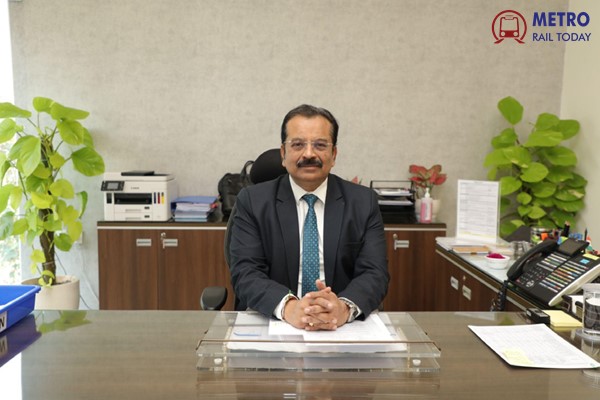 Govt approves permanent absorption of NCRTC Managing Director Shalabh Goel from Indian Railways
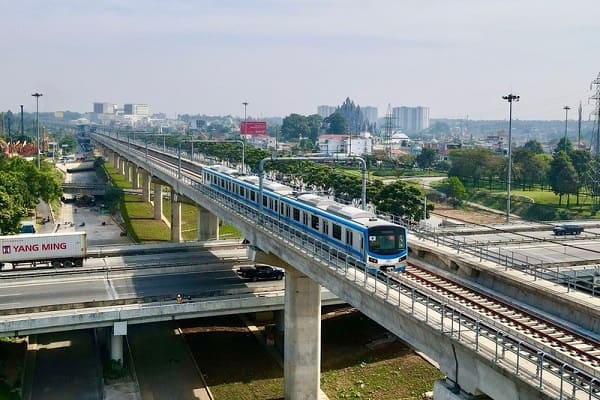 Hyundai Rotem signs $332 million Rolling Stock Contract with Vietnam for Ho Chi Minh City Metro
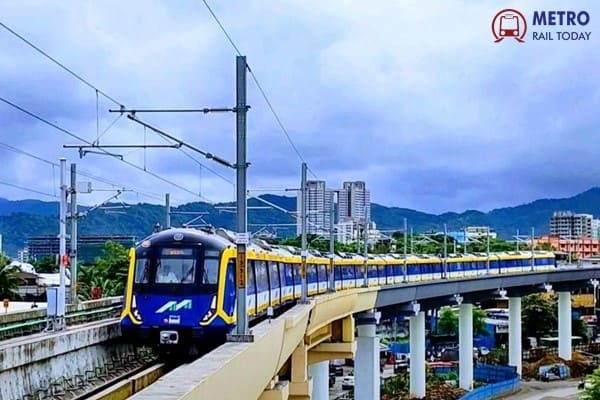 Maharashtra approves ₹18,130 Crore Mumbai Metro Line 5 Expansion & New Line 5A
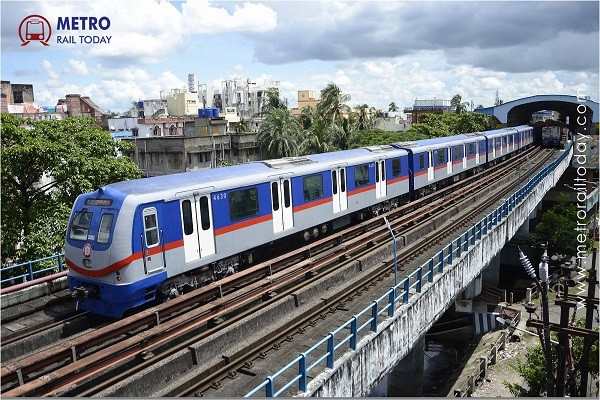 Telangana Govt approves ₹13,615 crore IRFC loan to takeover Hyderabad Metro from L&T
 DMRC appoints Sanjay Jamuar as First CEO of Delhi Metro International Limited
100-meter-long steel bridge launched on Mumbai-Ahmedabad High Speed Rail Corridor
MRT Online Desk
Posted on: 2024-04-24 14:50:00
Viewer: 1,934
Comments: 0
Country: India
City: New Delhi
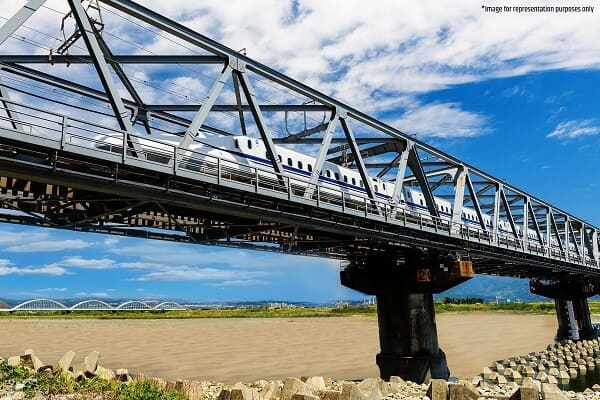
New Delhi, India (Metro Rail Today): In a significant stride towards bolstering infrastructure and fostering indigenous manufacturing capabilities, a remarkable 100-meter-long steel bridge has been successfully launched over the Vadodara-Ahmedabad main line of Indian Railways. This monumental feat, achieved near Nadiad in Gujarat, marks a pivotal milestone in the ambitious Bullet Train Project, specifically the Mumbai-Ahmedabad Bullet Train Corridor.
The construction of this steel bridge stands as a testament to India's commitment to the "Make in India" initiative, where domestic technical expertise and materials are harnessed alongside Japanese know-how. This collaborative effort underscores the nation's dedication to self-reliance and innovation in infrastructure development.
Fabricated at a workshop in the Bhuj district of Gujarat, approximately 310 kilometers away from its final installation site, the steel bridge, weighing a staggering 1486 metric tons, showcases the prowess of Indian engineering. Transported to the site via trailers, the assembly process involved meticulous planning and execution.
Technical Marvel and Precision Engineering
At the site, the assembly of the steel bridge took place at a height of 15.5 meters from the ground, supported by temporary trestles. Integrating the 63-meter-long launching nose, weighing around 430 metric tons, with the main bridge assembly was a meticulously orchestrated endeavor. Employing an automatic mechanism comprising two jacks, each with a capacity of 180 metric tons, the bridge was carefully pulled into position using high-tension strands. Notably, this operation was conducted with utmost precision amidst live railway traffic and power blocks.
Rigorous Quality Assurance
Each stage of the production process adhered to stringent quality standards. Before assembly, every batch of steel underwent Ultrasonic Testing (UT) at the manufacturer's premises to ensure structural integrity. Skilled welders and supervisors, certified by International Welding Experts, oversaw the welding process, which was closely monitored by Japanese International Welding Experts stationed at each workshop. The fabrication followed precise design specifications prepared by Japanese engineers, encompassing cutting, drilling, welding, and painting operations.
Innovative Techniques and Milestones
The painting technique employed for the steel girders adheres to the C-5 Painting system of the Japan Road Association's "Handbook for Corrosion Protection of Steel Road Bridges," setting a new standard in India. Furthermore, the jointing of steel members utilizes Tor Shear Type High Strength Bolts (TTHSB), a first for railway projects in the country.
This remarkable achievement marks the completion of the second out of 28 steel bridges planned for the corridor, following the launch of the first steel bridge across National Highway 53 in Surat, Gujarat. With approximately 70,000 metric tons of specified steel utilized in these structures, their span ranges from 60 meters for 'simply supported' bridges to 130+100 meters for 'continuous span' bridges.
Future Implications and High-Speed Rail Development
Steel bridges, renowned for their suitability in crossing highways, expressways, and railway lines, signify a leap forward in India's infrastructure capabilities. Unlike pre-stressed concrete bridges, which are typically suitable for spans of 40 to 45 meters, steel bridges offer unparalleled adaptability for heavy haul and semi-high-speed trains, operating between 100 and 160 kilometers per hour. This expertise in steel bridge fabrication will be instrumental in the Mumbai–Ahmedabad High-Speed Rail Corridor (MAHSR), India's first under-construction high-speed rail line.
The successful launch of the 100-meter-long steel bridge for the Bullet Train Project underscores India's prowess in infrastructure development and manufacturing capabilities. Through a collaborative effort blending domestic expertise with international standards, this milestone sets a precedent for future endeavors in high-speed rail and infrastructure projects nationwide.


MRT Online Desk
Metro Rail Today is an authentic and global news provider for the Rail & Metro industry from and around the world.