

Trending Now
 Kochi Metro unveils Visionary Design for Phase II Pink Line Metro Stations
 Design Consultancy Tenders floated for Ahmedabad Metro Phase 3 Elevated Corridors
 Global Metro Rail Infrastructure Market projected to reach US$ 78.3 billion by 2033
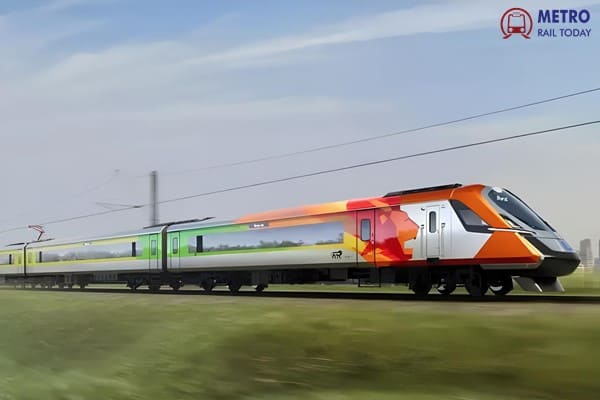 Kinet’s Vande Bharat Sleeper Concept wins prestigious Italian A’ Design Award
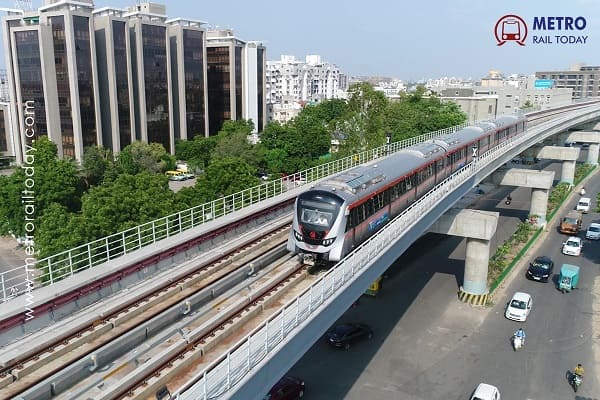 SYSTRA awarded Design Consultancy Contract for Ahmedabad Metro Phase 2 Extensions
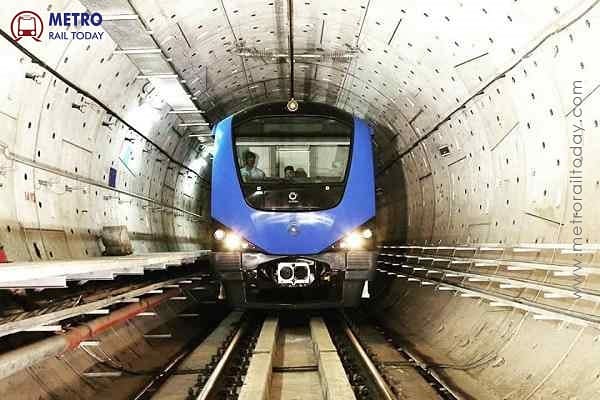 TBM Servarayan achieves Tunnel Breakthrough on Corridor 3 of Chennai Metro Phase 2
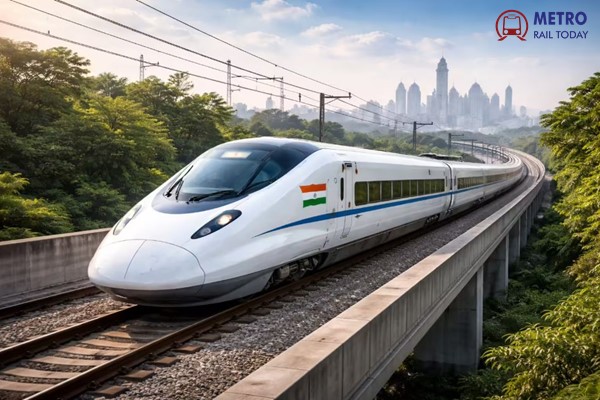 India targets 350 kmph Indigenous Bullet Train to accelerate High-Speed Rail ambitions
- RTA invites bids for $9.2 billion Dubai Metro's Gold Line Expansion Project
 ICT–RINA JV awarded Design Consultancy Contract for Jaipur Metro Phase 2
 J. Kumar Infraprojects achieves TBM Breakthrough at Mahipalpur for Delhi Metro Phase IV
10th Steel Bridge launched on Mumbai–Ahmedabad Bullet Train Corridor in Ahmedabad
MRT Online Desk
Posted on: 2025-10-10 17:30:00
Viewer: 1,657
Comments: 0
Country: India
City: New Delhi
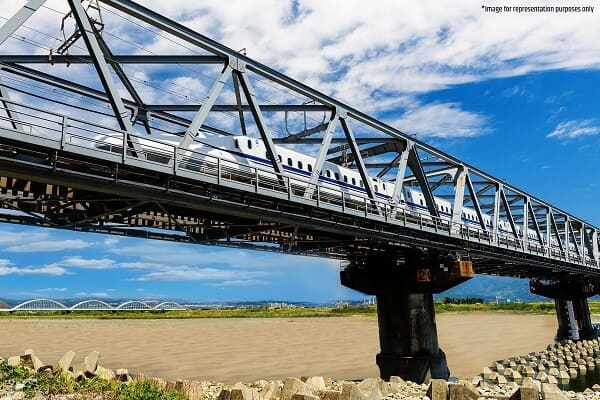
Ahmedabad, India (Metro Rail Today): In a remarkable engineering feat, the National High Speed Rail Corporation Limited (NHSRCL) has successfully launched the 10th steel bridge for India’s first bullet train project — the Mumbai–Ahmedabad High-Speed Rail (MAHSR) corridor.
The 60-meter-long steel bridge was installed over a Western Railway facility (laundry) located near the tracks in Ahmedabad district. This marks the first-ever steel bridge launched in Ahmedabad for the project and was completed with exceptional precision in just seven hours, following months of meticulous planning and preparation.
Engineering Precision and Technique
The bridge, weighing 485 metric tons, was assembled 16.5 meters above ground on temporary trestles before being side-slewed transversely into its final position. The operation used two semi-automatic 200-ton jacks supported by locking trolleys for structural stability.
Fabricated at a specialized facility in Wardha (Nagpur, Maharashtra), the bridge was transported to Ahmedabad using custom-designed heavy-duty trailers. Measuring 12 meters in height and 11.4 meters in width, the structure features 20,360 Tor-Shear Type High Strength (TTHS) bolts, C5 system protective paint coating, and elastomeric bearings to enhance durability and vibration control.
A 35x60-meter temporary assembly platform was constructed for pre-launch preparation, with 14 skid arrangements used—four dedicated to transverse movement. Temporary brackets were also installed to strengthen the track beam during the sliding process.
Strategic Importance and Corridor Overview
The Ahmedabad section of the Mumbai–Ahmedabad bullet train viaduct will traverse 31 crossings, including railway lines, flyovers, canals, a major river bridge over the Sabarmati, and six steel bridges in total.
Across the entire 508-km corridor, 28 steel bridges are planned—17 in Gujarat and 11 in Maharashtra—underscoring the project’s massive scale and technical complexity.
List of Completed Steel Bridges (as of October 2025)
| S.No. | Location | Length (m) | Weight (MT) |
|---|---|---|---|
| 1 | Across NH-53, Surat, Gujarat | 70 | 673 |
| 2 | Over Vadodara–Ahmedabad main line, Nadiad, Gujarat | 100 | 1,486 |
| 3 | Over Delhi–Mumbai Expressway, near Vadodara | 230 (130+100) | 4,397 |
| 4 | Near Silvassa, Dadra & Nagar Haveli | 100 | 1,464 |
| 5 | Over Western Railways, Vadodara | 60 | 645 |
| 6 | Over DFCC & Western Railway tracks, Surat | 100, 60 | 2,040 |
| 7 | Over DFCC tracks, near Vadodara | 70 | 674 |
| 8 | Over DFCC tracks, near Bharuch | 100 | 1,400 |
| 9 | Over NH-48, near Nadiad | 2 x 100 | 2,884 |
| 10 | Over Railway Facility (Laundry), Ahmedabad | 60 | 485 |
Project Background
The Mumbai–Ahmedabad High-Speed Rail (MAHSR) project, being executed with technical and financial assistance from the Government of Japan, is India’s first bullet train initiative. Once operational, it will connect Mumbai and Ahmedabad via 12 stations, covering 508 km in under three hours.
The total project cost is estimated at ₹1.08 lakh crore, with 81% funding from JICA (Japan International Cooperation Agency). As of June 2025, over ₹78,800 crore has been invested, with significant civil progress — including 323 km of viaducts and 399 km of pier work completed.
A Symbol of India’s Engineering Progress
The successful launch of the 10th steel bridge marks another major stride toward India’s first bullet train becoming a reality. It showcases the technical expertise and meticulous planning of NHSRCL engineers and contractors working under challenging site conditions.
As the nation prepares for the first bullet train operations between Surat and Bilimora in 2027, achievements like these continue to highlight India’s growing prowess in high-speed rail infrastructure.


MRT Online Desk
Metro Rail Today is an authentic and global news provider for the Rail & Metro industry from and around the world.